



Denver Board Adopts $1.2B 2025 Budget
The 2025 budget will continue RTD’s pursuit of its strategic initiatives of People Power, Back to Basics, and Welcoming Transit Environment, as well as introduce customer and community connections.

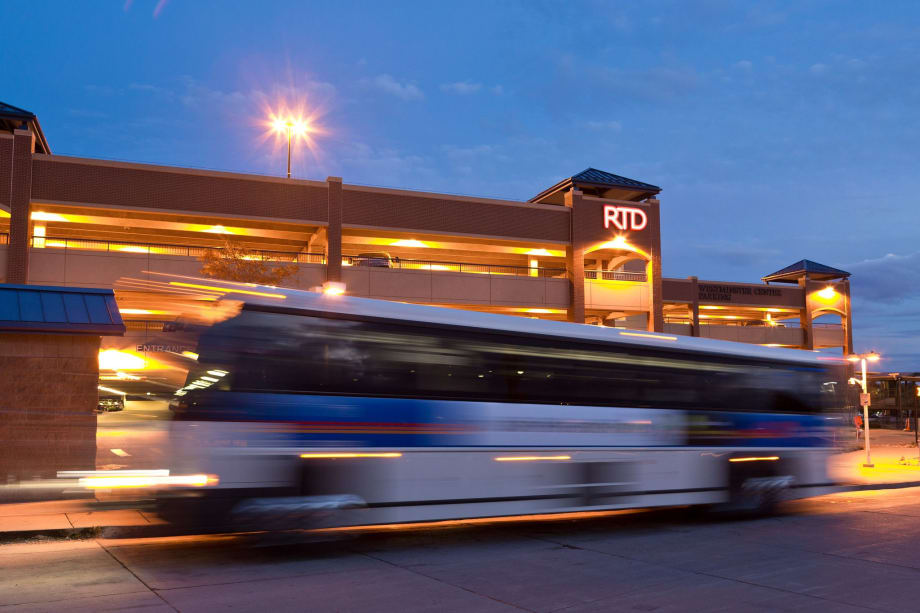
The 2025 budget will continue Denver RTD’s pursuit of its strategic initiatives of People Power, Back to Basics, and Welcoming Transit Environment, as well as introduce customer and community connections.
Photo: Denver RTD
The Denver Regional Transportation District’s (RTD) board unanimously adopted a $1.2 billion budget in 2025 that will result in increased levels of service, continue the agency’s hiring efforts for key frontline positions, and sustain preventative maintenance projects that launched in 2024.
A comprehensive breakdown of the agency’s fiscal year 2025 budget, which starts Jan. 1 and aligns with the calendar year, is available at rtd-denver.com/budget.
RTD’s 2025 Budget
The 2025 budget will continue RTD’s pursuit of its strategic initiatives of People Power, Back to Basics, and Welcoming Transit Environment, as well as introduce customer and community connections.
The four strategic initiatives are tactical in nature and interwoven into individual employee goals to support the agency’s overall 2021-2026 Strategic Plan. The balanced budget was developed to align with the agency’s strategic plan.
"Over the last year, RTD has redoubled its efforts to maintain its assets in a state of good repair, enhanced employee recruitment and retention initiatives, and made significant progress in creating a welcoming transit environment,” said Debra A. Johnson, GM/CEO. “This budget allows the agency to build on that momentum in the year ahead and respond to the ever-changing transit needs of customers in the Denver metro area.”
Budget Snapshot
Sales and use tax revenue, which comprises more than 70% of RTD’s total budget, is expected to grow 4.2% in 2025.
Fare revenue is also projected to slightly increase to align with ridership projections, as well as account for the agency’s Zero Fare for Youth program.
Fares will continue to provide approximately 5% of RTD’s total revenue, and the remaining 25% of the budget comes from grants and other income sources. Grant revenue appears lower in RTD’s 2025 budget due to the one-time $150 million pass-through grant received in 2024 for the East Colfax Bus Rapid Transit Project.
RTD conservatively budgets for projected revenues in accordance with its fiscal policy and only plans for revenue that is reasonably certain to be collected.
Overall, the agency’s revenue is anticipated to keep pace with increases in agency expenditures in 2025. The revenues and expenditures also maintain adequate reserves in support of the agency’s strategic priority of financial success.
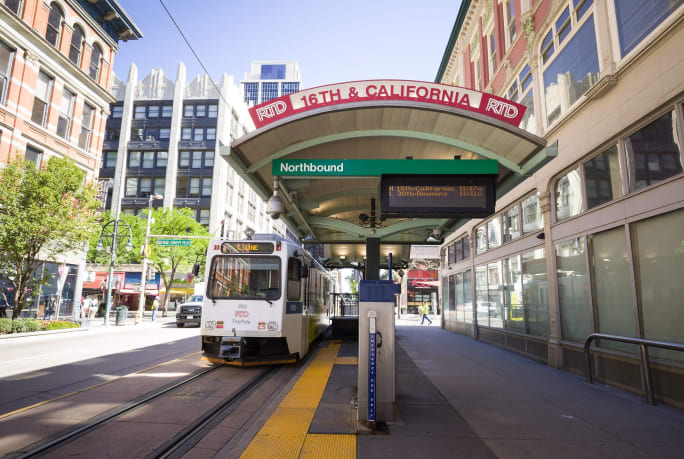
In January, RTD implemented a simpler, more equitable, and more affordable fare structure. Customers now pay less for fares in all categories, including eligible discounts.
Photo: Denver RTD
Denver’s 2025 Budget
The agency’s operating expense budget in 2025 reflects year-over-year increases in salaries, wages, and benefits; materials and supplies; and purchased transportation.
Salaries and wages are to increase next year as RTD continues its efforts to improve hiring and retention, particularly for vacant frontline positions, as well as the expansion of the Transit Police Department.
In the 2025 budget, wages and benefits are to account for 42% of the agency’s expenses and reflect 3,637 budgeted positions.
Purchased transportation is also budgeted to increase next year in accordance with bus fixed-route contractual increases and RTD’s concessionaire agreement for commuter rail services. Contractual increases in purchased transportation account for inflation and periodic maintenance costs.
The periodic increases in payments for purchased transportation will continue through 2027 before being reduced in subsequent years.
Maintaining Fiscal Responsibility
Financially, RTD continues to perform well. In August, the Colorado Office of the State Auditor (OSA) completed a financial performance audit of RTD, which resulted in the agency meeting all nine of the state’s financial health measurements with no warning signs.
During the 2024 fiscal year, RTD’s senior bond credit ratings were also raised by S&P Global to the highest rating of AAA. RTD continues to cash-fund all purchases without the need to borrow funding, and the agency is reducing its debt portfolio exposure through refinancings and the efficient use of financial resources.
Other notable highlights from the 2024 fiscal year include:
In January, RTD implemented a simpler, more equitable, and more affordable fare structure. Customers now pay less for fares in all categories, including eligible discounts.
Between May and August, RTD completed the first phase of its Downtown Rail Reconstruction Project. The project reconstructed 30-year-old rail infrastructure along the agency’s original light rail alignment to protect the long-term integrity of the network. Crews completed the work weeks ahead of schedule, and subsequent phases of the project are slated for 2025.
In September, RTD’s one-year Zero Fare for Youth pilot program became permanent for customers 19 and under. The Colorado Legislature appropriated funding through December 2025 to support the Zero Fare for Youth program.
In 2024, RTD made significant progress on its comprehensive Facilities and Fleet Transition Plan. The plan is assessing the agency’s operations to determine a path forward for lowering emissions. The plan is on track to be completed by mid-December.
More Management

METRO Opens Submissions for 2026 Motorcoach Awards
Nominations are now being accepted for METRO Magazine’s Operator of the Year and Innovative Operator of the Year awards.
Read More →
New York MTA Advances Final Contract for Second Avenue Subway Expansion
Contract Four is the largest in the Second Avenue Subway Phase 2 project and includes construction of station infrastructure, tracks, and signals for the subway expansion, MTA officials said. Work on Contract Four will begin in 2027.
Read More →
Transit Agencies Highlight Safety Gains at National Summit
Leaders from 15 major transit systems shared crime-reduction results and safety initiatives while discussing the role of continued federal support.
Read More →

NITA Names New Leadership, Expands Reduced-Fare Program at First Board Meeting
The new regional transit authority appointed its first board chair and interim executive director while extending reduced fares across CTA, Metra, and Pace for eligible riders.
Read More →
Beyond the Checklist: A Structured Approach to Transit Maintenance
Reliability-Centered Maintenance helps transit agencies move beyond routine checklists to focus limited resources on the assets and failures that have the greatest impact on safety, reliability, and service.
Read More →
APTA 2026 Nominating Committee Selects Leadership Slate, Names Chair and Vice Chair Nominees
Leadership changes will help shape the association’s priorities and its representation of the transportation industry during the 2026–2027 term.
Read More →
DART Launches Major Security, Fare Enforcement Initiative
The 90-day demonstration will deploy coordinated security teams at five light rail stations while testing controlled access and gathering data to guide future investments.
Read More →
Advancing Fare Collection Through Technology and Innovation
Learn about delivering 1300 gates at 91 stations while managing fare evasion. Explore the large scale deployment, solution customization and real-world results that affect the region. Prepare for deployment in your region now.
Read More →
Game Day in Motion: Moving Millions During the 2026 World Cup
Between packed transit stations and team motorcoaches, see how agencies and operators across North America tackled the transportation demands of the 2026 FIFA World Cup.
Read More →
Surface Transportation Extension Averts Shutdown, Leaves Transit Funding Gap
The stopgap keeps federal transportation programs moving, but missing advance funding could complicate the transit and rail projects agencies are planning next.
Read More →