



Intercity Bus Lines are Making Big Moves on Major Corridors, A DePaul Study Finds
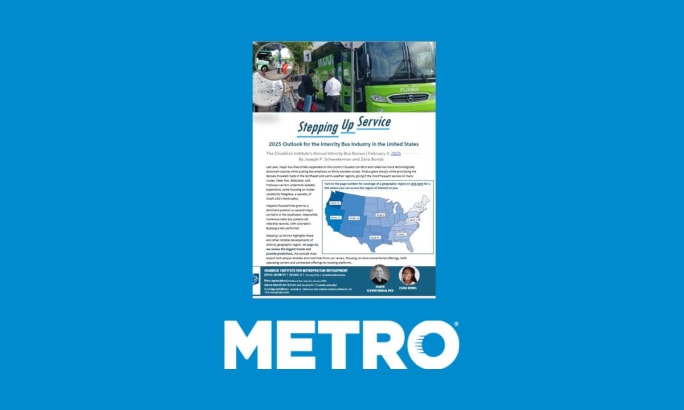
More frequent intercity bus service on the country's busiest routes is giving a boost to an often-overlooked transportation sector, according to “Stepping Up Service, 2025 Outlook for the Intercity Bus Industry,” the latest installment of the Chaddick Institute at DePaul’s annual review of bus travel.


Last year brought much expansion by FlixBus, which has served the U.S. since 2019 and surprised observers in 2021 when it acquired Greyhound Lines — the country's largest bus line at the time.
Photo: FlixBus
More frequent intercity bus service on the country's busiest routes is giving a boost to an often-overlooked transportation sector, according to “Stepping Up Service, 2025 Outlook for the Intercity Bus Industry,” the latest installment of the Chaddick Institute at DePaul’s annual review of bus travel.
"Major bus lines are bullish on major corridors while putting less emphasis on thinly traveled routes,” said Joe Schwieterman, co-author of the study. "The heavy investments to win new customers that disappeared during the pandemic are back on track with the heaviest travel volumes."
Last year brought much expansion by FlixBus, which has served the U.S. since 2019 and surprised observers in 2021 when it acquired Greyhound Lines — the country's largest bus line at the time.
Flix is prioritizing the densely traveled Northeast Corridor (NEC) and warm-weather regions, the study indicates, offering the most frequent service on many routes. Other service providers, however, are also on the move.
Peter Pan, RedCoach, and Trailways carriers undertook sizeable expansions last year, as did lines catering to Spanish-speaking travelers, such as Tornado Bus and Tufesa, which now have dominant positions on several major corridors in the Southwest.
"All of these bus lines are tech-savvy and committed to fleet modernization," said Schwieterman.
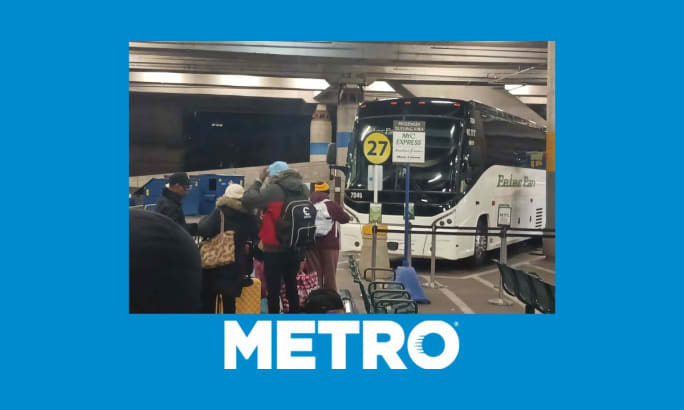
After reportedly hiring 75 new drivers and purchasing many new buses for the expansion, Peter Pan increased its New York–Washington, DC, service to 23 trips in each direction on busy days, up from 8 on busy days early last year, according to Chaddick’s review.
Photo: Joe Schwieterman
New Buses, More Service
Last June, the bankruptcy of Coach USA, the parent of Megabus, rocked the industry.
Within weeks after Megabus’s termination of service in the Northeast Corridor, Peter Pan arranged with Coach USA to tap into the Megabus customer database and expand its offerings.
After reportedly hiring 75 new drivers and purchasing many new buses for the expansion, it increased its New York – Washington, DC, service to 23 trips in each direction on busy days, up from eight early last year, based on Chaddick’s review. This gives Peter Pan more peak-day service than Greyhound (14) and it trails only FlixBus (29), which itself expanded service by around 25%. Peter Pan tickets are sold on megabus.com and trailways.com, strengthening those booking sites.
The New York – Philadelphia (NY – PHL) route also saw a flurry of activity, with Peter Pan growing to have roughly the same service as Greyhound and leaving it behind only Flixbus, which also added service.
The route stands out for now having six players with three-plus trips in each direction daily, with Panda Bus, Wanda Coach (serving New York’s Chinatown), and OurBus (a booking site) also having large presences. All benefit from Amtrak’s comparatively high fares and restrictions on changes after ticketing.
The battle for market share on the Miami – Orlando, Fla., route is similarly heating up, with FlixBus having over a dozen trips on busy days and RedCoach growing to seven to eight trips daily — up one or two from a year ago.
Brightline Florida’s rail-service expansion doesn’t seem likely to significantly impact service levels anytime soon, Schwieterman said, “due to the roughly three-fold difference in fare and Brightline’s capacity constraints until its fleet grows.”
More frequent intercity bus service on the country's busiest routes is giving a boost to an often-overlooked transportation sector, according to “Stepping Up Service, 2025 Outlook for the Intercity Bus Industry,” the latest installment of the Chaddick Institute at DePaul’s annual review of bus travel.
Photo: Joe Schwieterman
Headwinds from Amtrak Competition
Frequent Amtrak service offered at attractive fares creates headwinds for bus lines on specific routes.
Bus lines have shied away from the Raleigh – Charlotte corridor, where there is intense competition from the five daily NC by Train services, the study noted. Riding these state-supported Amtrak trains usually costs $50 or less, mainly negating the cost-saving benefits of taking the bus.
Greyhound has five trips on busy days, and FlixBus generally runs once, but several options are in the middle of the night and there are large gaps at certain times. Rail travel, meanwhile, is setting ridership records.
Heavy competition from Amtrak also creates challenges in Chicago. Routes from the Windy City to Detroit and St. Louis, which have extensive rail options, have only four and two bus trips, respectively, on busy days, primarily Greyhound. Plus, there is concern about the future of Chicago's Intercity Bus Station due to FlixBus having only a month-by-month lease.
Even so, “Stepping Up Service” paints an optimistic portrait of the industry and predicts that ridership will grow 4% this year, exceeding the forecasted growth of air and car travel.
Heavy investments by state governments in intrastate systems, such as Colorado's Bustang, Ohio's GoBus, Oregon's POINT, and Virginia Breeze, are bringing low-cost bus travel to places that otherwise lack scheduled ground travel options.
“It is remarkable how different the competitive dynamics of bus travel are from five years ago, when Greyhound and Megabus were the dominant players on the busiest routes,” said Schwieterman.
DePaul University's Chaddick Institute will hold a free webinar on its new study on February 27 at Noon central time. To register, click here.
Click here and here to read the full report. Or, join the Chaddick Institute's Intercity Bus Listserv or reach the study team by emailing chaddick@depaul.edu.
More Motorcoach

METRO Opens Submissions for 2026 Motorcoach Awards
Nominations are now being accepted for METRO Magazine’s Operator of the Year and Innovative Operator of the Year awards.
Read More →
Biz Briefs: Alstom Lands Canadian Contract, LYT to Supply California TSP, and More
In METRO's latest installment, we take a look at recent news from Complete Coach Works, Beep, FlixBus, and more partnerships making headlines across the transportation sector.
Read More →
Biz Briefs: RIPTA Unveils New Frontrunners, Clevland RTA Adds New Siemens, and More
In METRO's latest installment, we take a look at recent news from Siemens, Prevost, Dodge, and more partnerships making headlines across the transportation sector.
Read More →
People Movement: Holly Arnold Joins Transdev and More
In this edition, we also cover recent appointments and announcements at Pace, CamTran, MCI, and more, showcasing the individuals helping to shape the future of transportation.
Read More →
ABA Report: Motorcoach Travel Generates $161.6B Economic Impact
The 2025 analysis finds motorcoach travel supported nearly 900,000 jobs and generated $28 billion in federal, state, and local taxes.
Read More →
CharterUP’s Armir Harris on Technology, AI, and the Future of Group Mobility
In a recent episode of METROspectives, CharterUP Founder/CEO Armir Harris discussed the company’s evolution from an online charter bus marketplace into a technology platform supporting public- and private-sector mobility and much more.
Read More →
People Movement: ABC Names John Walsh as Chief Commercial Officer
In this edition, METRO also covers recent appointments and announcements at the DART, STV, and more, showcasing the individuals helping to shape the future of transportation.
Read More →
From Surviving to Thriving: Building Stronger Transportation Organizations
Bus Business Consultants founder Brian Dickson shares lessons on leadership, organizational health, and creating options for long-term success in a changing transportation industry.
Read More →
Biz Briefs: Luminator Marks Milestone and More
From manufacturers and suppliers to transit agencies and motorcoach operators, these updates offer a snapshot of the projects, partnerships and business moves driving the industry forward.
Read More →
ABAF Study Reveals Growing Insurance Crisis for Motorcoach Operators
Preliminary findings show 98% of operators faced premium increases over the past five years, while shrinking insurer participation is putting added pressure on businesses and customers.
Read More →