




More News: LA Metro Shows Continued Ridership Growth in January
HID Mass Transit Report Highlights 5 Key Priorities for 2025
HID’s State of Mass Transit Ticketing Hardware Report 2025 shows the continuing shift to contactless and mobile payment methods as companies look for user-friendly interfaces for their fare collection hardware.
March 7, 2025
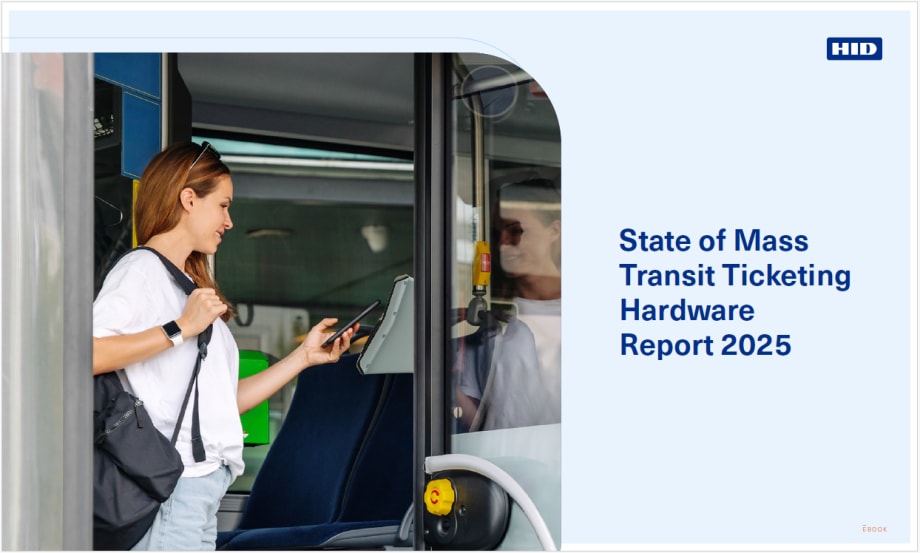
HID's State of Mass Transit Ticketing Report 2025 is based on a survey sent out to 102 mass transit providers worldwide and shows that nearly half of them are looking into deploying new ticketing and fare collection hardware.
Photo: HID
2 min to read
HID’s recently published State of Mass Transit Ticketing Hardware Report 2025 provides data that highlights five key priorities that transit companies should consider investigating.
Based on a survey of 102 mass transit providers worldwide, the report focuses on the shift to touch-free transactions and the adoption of contactless payment systems.
Reducing Reliance on Cash Payments
The first priority highlighted by the report is the reduction of reliance on cash payments and the streamlining of fare collection and operations.
Among agencies surveyed, 46% of them plan to deploy new ticketing and fare collection hardware, of those planning on these deployments, 88% of them are looking at doing so within the next 12-24 months.
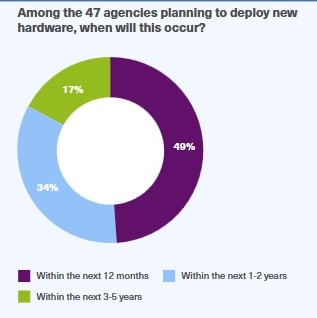
A graph from the report shows when agencies are planning on deploying new fare collection hardware.
Photo: HID
Enhancing Passenger Experience
When looking at new fare collection hardware, nearly two-thirds of agencies rank user-friendly interfaces as the most important feature. By prioritizing convenience and faster ticketing transactions, companies are hoping to enhance the passenger experience.
Expanding Contactless and Mobile Payment
Magnetic stripe ticketing is currently on the way out, while contactless and mobile payment systems are rising in demand.
Currently, 43% of agencies are planning on deploying contactless systems within the next five years. European companies currently lead in mobile ticketing adoption, with 86% using app-based solutions compared to 58% globally.

Collecting Ridership Data to Inform Decisions
More than half of respondents said they would prioritize single ticketing interfaces that can read multiple ticket types and provide data. This is in addition to being user-friendly.
Reducing Dependency on Proprietary Ticketing Systems
The final priority highlighted was the trend of moving away from proprietary systems for ticketing. With 40% of respondents stating that open architecture solutions are a high priority, indicating the need for solutions to evolve as the industry’s needs change.
Proprietary tech remains a significant hurdle for companies, especially in Latin America and the Asia-Pacific.
Other Takeaways
While only five priorities were highlighted, there are some other interesting data points in the report.
According to the survey, 24% of respondents stated that the biggest obstacle to upgrading ticketing hardware is the lack of funding. The second largest obstacle is the use of proprietary technology or legacy fare systems.
Most agencies reported that they have fare collection hardware onboard vehicles at 85%, while approximately half also deploy hardware at stations and interchanges.
Mass transit fare collection and ticketing processes are undergoing a passenger-centric revolution driven by technology. Agencies will need to select the right partner and hardware solutions that can evolve alongside industry demands.
You can find the full report here.
More Management

ENC Lands MATA Contract and More in Biz Briefs
In this edition of Biz Briefs, we spotlight the latest developments shaping the future of mobility.
Read More →
From Surviving to Thriving: Building Stronger Transportation Organizations
Bus Business Consultants founder Brian Dickson shares lessons on leadership, organizational health, and creating options for long-term success in a changing transportation industry.
Read More →
Everett Transit, Community Transit Outline Consolidation Agreement
The proposed agreement calls for a 50% increase in bus service in Everett, a new microtransit zone, continued paratransit service, and the transfer of Everett Transit operations to Community Transit.
Read More →

Strada360’s Steve Lassey on Turning Transit Data Into Better Decisions
From breaking down data silos to preparing for AI, Strada360 CEO Steve Lassey discusses how transit agencies can use technology to improve operations, customer information, and long-term decision-making.
Read More →
People Movement: Phil Washington Joins HNTB, Denver RTD Launches CEO Search, and More
In this edition, we also spotlight recent personnel moves at STV, the Eno Center for Transportation, and more, highlighting the people taking on new roles across the transportation industry.
Read More →
SEPTA Details Accelerate Vision for Transit System
The plan outlines investments in trolley modernization, new Metro and Regional Rail vehicles, accessible stations, and more frequent bus and rail service.
Read More →
FTA Ends Direct Oversight of MBTA Safety Actions
The federal agency closed its remaining special directive to the Massachusetts Department of Public Utilities following a safety review that began in 2022.
Read More →
Report: Transit Bus Manufacturing Supports 34,100 Jobs, $5.1B in GDP
The “Buses Mean Business” report examines the transit bus manufacturing industry’s economic footprint, supply chain, and rising demand for vehicle replacements.
Read More →
LIT Marks 10-Year Milestone at Annual Summit
Hosted by the COTA from September 10 to 13, the Summit carried the theme “Celebrating 10 Years of Excellence, Leadership, and Impact,” with every part of the program honoring the people, agencies, and partners who built LIT over its first decade.
Read More →
People Movement: Dan Dipert Coaches Adds Third-Generation Leader, Keolis Names New Valley Metro VP/GM, and More
In this edition, we also cover recent appointments and announcements at the Wabtec, SilverRide, HNTB, and more, showcasing the individuals helping to shape the future of transportation.
Read More →