



Alstom’s First New SkyTrain Vehicles Begin Service in Vancouver
By the end of 2025, several of these five-car trains will be running on the Expo Line and Millennium Line network, a significant milestone in the modernization of Vancouver’s rapid transit system.

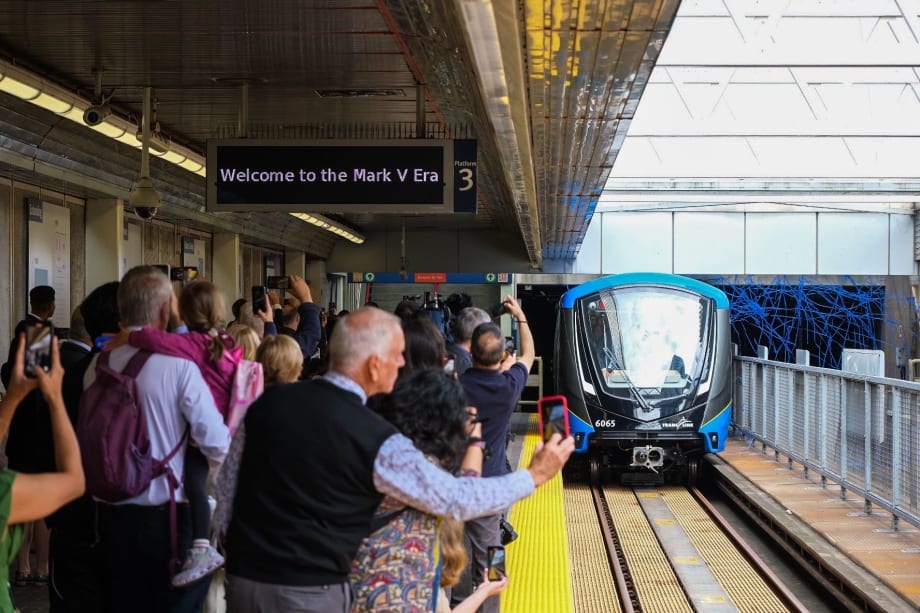
With the additional order from TransLink to supply six five-car Mark V trains for the SkyTrain network in 2024, the agency has ordered a total of 235 Mark V cars (47 trains).
Photo: TransLink
Alstom and its long-time Vancouver partner, TransLink, announced that the first new generation SkyTrain vehicles, an automated light metro fleet known as the Mark V, are going into service.
By the end of 2025, several of these five-car trains will be running on the Expo Line and Millennium Line network, a significant milestone in the modernization of Vancouver’s rapid transit system.
“The entry into service of the state-of-the-art Mark V light metro fleet marks a new chapter in sustainable urban mobility,” said Michael Keroullé, president, Alstom Americas.
“The SkyTrain is more than just transportation – it’s part of the identity of Metro Vancouver,” added Kevin Quinn, TransLink’s CEO. “The Mark V trains represent a bold new chapter, with more space, improved accessibility, and cutting-edge features that will enhance every ride.”
TransLink’s New Alstom Mark Vs
These driverless light metros are the longest and highest-capacity trains on the SkyTrain network to date, according to Alstom.
With the additional order from TransLink to supply six five-car Mark V trains for the SkyTrain network in 2024, the agency has ordered a total of 235 Mark V cars (47 trains). Each five-car Mark V train can carry 672 passengers, a 25% increase in capacity over the current four-car Mark III trains.
Offering more comfort for passengers, the new cars feature improved interior designs, interconnected wagons, new seating and standing configurations, indigenous artwork, enhanced HVAC, and extensive digital displays that show station information.
Made in Canada
The “Made-in-Canada" trains are designed, manufactured, and tested at Alstom facilities in Kingston, Ontario, and La Pocatière and Saint-Bruno-de-Montarville, in Quebec.
At peak production, 282 people were working directly on this project, excluding the jobs and economic benefits generated through our local supply chain.
With approximately 5,000 highly skilled Canadian employees, Alstom is the only global rail mobility manufacturer to have production facilities in the country, the company stated.
More Rail

ENC Lands MATA Contract and More in Biz Briefs
In this edition of Biz Briefs, we spotlight the latest developments shaping the future of mobility.
Read More →
Strada360’s Steve Lassey on Turning Transit Data Into Better Decisions
From breaking down data silos to preparing for AI, Strada360 CEO Steve Lassey discusses how transit agencies can use technology to improve operations, customer information, and long-term decision-making.
Read More →
SEPTA Details Accelerate Vision for Transit System
The plan outlines investments in trolley modernization, new Metro and Regional Rail vehicles, accessible stations, and more frequent bus and rail service.
Read More →
FTA Ends Direct Oversight of MBTA Safety Actions
The federal agency closed its remaining special directive to the Massachusetts Department of Public Utilities following a safety review that began in 2022.
Read More →
Amtrak, CN Reach Agreements to Strengthen Passenger Rail Service, Safety
The agreement resolves a more than decade-long proceeding before the Surface Transportation Board concerning the terms and conditions for Amtrak services, such as the City of New Orleans, Illini/Saluki, and Wolverine.
Read More →
New York MTA Advances Final Contract for Second Avenue Subway Expansion
Contract Four is the largest in the Second Avenue Subway Phase 2 project and includes construction of station infrastructure, tracks, and signals for the subway expansion, MTA officials said. Work on Contract Four will begin in 2027.
Read More →
San Diego MTS Breaks Monthly Trolley Ridership Record
Agency officials said July’s ridership indicates MTS’s continued recovery from the pandemic.
Read More →
Report Examines NJ TRANSIT Reliability, Funding Challenges
The Garden State Initiative analysis examines the roles of Amtrak infrastructure, fleet management, and agency operations while recommending a more performance-based approach to improving reliability.
Read More →
Stadler, CapMetro Sign Long-Term Rail Fleet Support Agreement
Beginning in 2027, Stadler will provide on-site technical expertise, spare parts support, training, and obsolescence management to help extend the reliability and longevity of CapMetro’s GTW fleet.
Read More →
Biz Briefs: Alstom Lands Canadian Contract, LYT to Supply California TSP, and More
In METRO's latest installment, we take a look at recent news from Complete Coach Works, Beep, FlixBus, and more partnerships making headlines across the transportation sector.
Read More →