




Related: USDOT Removes Financing Policy Roadblock, Unlocks Higher TIFIA Limits
U.S. Transportation Secretary Opens Discussions on Surface Transportation Reauthorization
Secretary Sean Duffy outlined the infrastructure agenda, signed the Texas deal, and urged states to accelerate project delivery under NEPA.
July 21, 2025
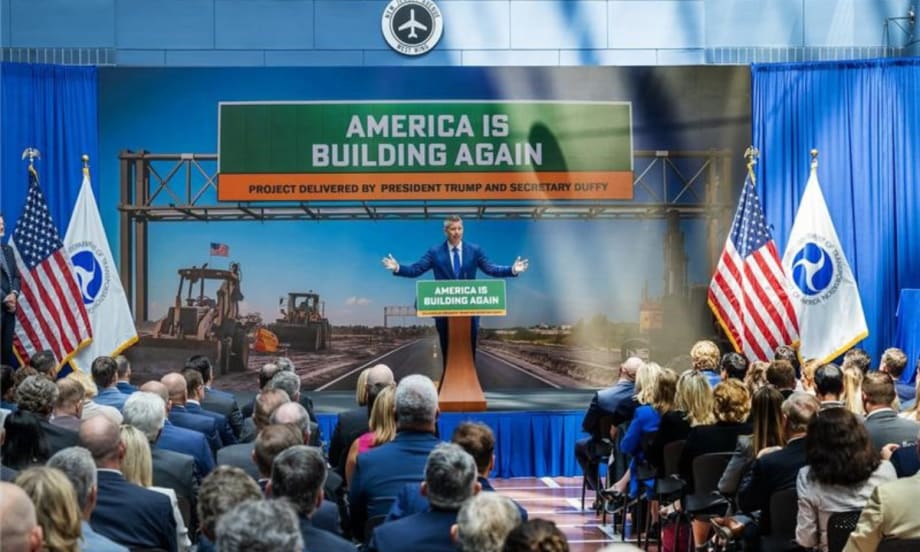
Secretary Sean Duffy hosted an infrastructure event to discuss surface transportation reauthorization.
Photo: U.S. Department of Transportation
2 min to read
U.S. Transportation Secretary Sean P. Duffy recently brought together congressional members and infrastructure stakeholders in a conference to foster collaboration on priorities ahead of Congress’s surface transportation reauthorization process later this fall.
“We’re working through a historic backlog as fast as possible to make sure we can get money out the door to all of you to make sure these projects are moving and moving quickly,” Duffy said. “With our money, we want you to build as fast, and we want to streamline the rules and regulations around what you do as much as possible.”
During his remarks, Secretary Duffy outlined the America is Building Again agenda, including:
Enhancing transportation safety, including bridges, safety for transportation workers and pedestrians, truck parking, and autonomous vehicles.
Accelerating project delivery for transportation projects, including reforming the National Environmental Policy Act (NEPA) and permitting, enhancing One Federal Decision, and increasing the use of technology.
Increasing opportunities through investment in transportation infrastructure that promotes economic growth, including through expanded capacity and mobility, congestion relief, and more private sector investment.
Strengthen partnerships with states and other key stakeholders to improve transportation outcomes, including prioritizing federal interests, achieving greater efficiencies, and conducting research.
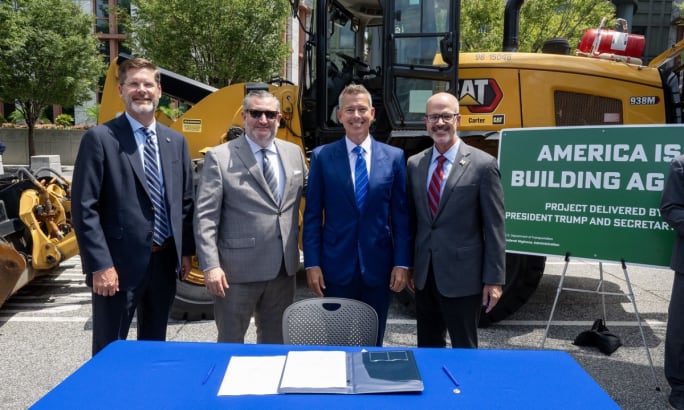
Secretary Duffy signs a Memorandum of Understanding with the Texas Department of Transportation (TxDOT) to help the state build infrastructure projects faster, along side Federal Highways Administrator Nominee Sean McMaster, Senator Ted Cruz and Executive Director of TxDOT Marc Williams.
Photo: U.S. Department of Transportation
Secretary Duffy Signs Agreement with Texas
After his remarks, Duffy signed a final Memorandum of Understanding with the Texas Department of Transportation (TxDOT) to help the state build infrastructure projects faster.
According to a USDOT release, the agreement allows Texas to take “more ownership of environmental permitting requirements,” so highway projects are started and completed faster.
In a letter, Duffy also urged governors nationwide to assume NEPA responsibilities and take the lead on project delivery.
As part of the process to collect feedback, the Department of Transportation announced a Request for Information titled “Advancing a Surface Transportation Proposal that Focuses on America’s Most Fundamental Infrastructure Needs.”
More Management

ENC Lands MATA Contract and More in Biz Briefs
In this edition of Biz Briefs, we spotlight the latest developments shaping the future of mobility.
Read More →
From Surviving to Thriving: Building Stronger Transportation Organizations
Bus Business Consultants founder Brian Dickson shares lessons on leadership, organizational health, and creating options for long-term success in a changing transportation industry.
Read More →
Everett Transit, Community Transit Outline Consolidation Agreement
The proposed agreement calls for a 50% increase in bus service in Everett, a new microtransit zone, continued paratransit service, and the transfer of Everett Transit operations to Community Transit.
Read More →

Strada360’s Steve Lassey on Turning Transit Data Into Better Decisions
From breaking down data silos to preparing for AI, Strada360 CEO Steve Lassey discusses how transit agencies can use technology to improve operations, customer information, and long-term decision-making.
Read More →
People Movement: Phil Washington Joins HNTB, Denver RTD Launches CEO Search, and More
In this edition, we also spotlight recent personnel moves at STV, the Eno Center for Transportation, and more, highlighting the people taking on new roles across the transportation industry.
Read More →
SEPTA Details Accelerate Vision for Transit System
The plan outlines investments in trolley modernization, new Metro and Regional Rail vehicles, accessible stations, and more frequent bus and rail service.
Read More →
FTA Ends Direct Oversight of MBTA Safety Actions
The federal agency closed its remaining special directive to the Massachusetts Department of Public Utilities following a safety review that began in 2022.
Read More →
Report: Transit Bus Manufacturing Supports 34,100 Jobs, $5.1B in GDP
The “Buses Mean Business” report examines the transit bus manufacturing industry’s economic footprint, supply chain, and rising demand for vehicle replacements.
Read More →
LIT Marks 10-Year Milestone at Annual Summit
Hosted by the COTA from September 10 to 13, the Summit carried the theme “Celebrating 10 Years of Excellence, Leadership, and Impact,” with every part of the program honoring the people, agencies, and partners who built LIT over its first decade.
Read More →
People Movement: Dan Dipert Coaches Adds Third-Generation Leader, Keolis Names New Valley Metro VP/GM, and More
In this edition, we also cover recent appointments and announcements at the Wabtec, SilverRide, HNTB, and more, showcasing the individuals helping to shape the future of transportation.
Read More →