



Dallas' DART Adds first of New Gillig Buses
The new buses represent one of the first visible elements of DART Transform, which focuses on upgrading vehicles, stations, passenger facilities, and operating facilities, as well as creating a unified signaling system.

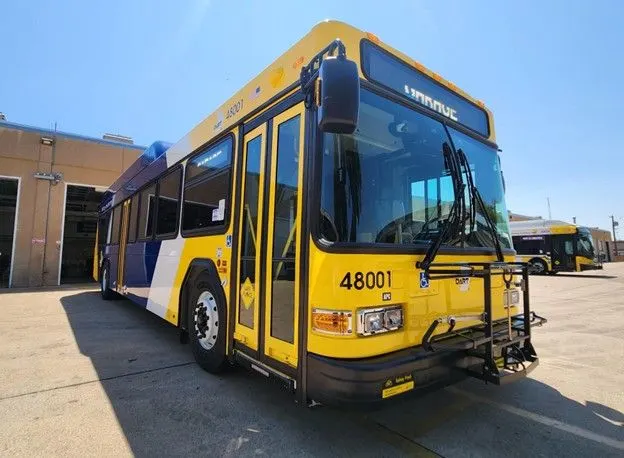
DART’s 476 new buses will begin replacing the current aging fleet as each bus approaches the 500,000-mile or useful lifespan mark.
Photo: DART
Dallas Area Rapid Transit (DART) welcomed the first two buses of its new 476-bus fleet, marking a significant milestone in DART Transform — a comprehensive modernization program designed to improve the customer experience across the entire transit network, the agency said.
The new buses represent one of the first visible elements of DART Transform, which focuses on upgrading vehicles, stations, passenger facilities, and operating facilities, as well as creating a unified signaling system. This effort enables DART to grow transit opportunities in response to the needs of its riders.
Together, these improvements advance DART’s Point B Strategic Plan according to the agency, which focuses on delivering fast, convenient, and easy public transit, creating fantastic spaces utilized by the community, and positioning DART as a key mobility and economic asset to North Texas.
“We’ve made a strategic commitment to improving our entire transit network with DART Transform, and the new buses will be the first major component that every rider will get to experience,” said Nadine S. Lee, DART president and CEO. “We can’t wait to see the positive impact these new vehicles will have on our customers as they travel to their next destination with DART.”
Gillig, a California-based company, is manufacturing the buses.
Set to go into Service Soon
The arrival of the first two buses will allow DART’s maintenance and operations team to inspect and test the vehicles before full production begins in October. Like its current fleet, the new buses will operate on compressed natural gas (CNG).
DART was awarded a $103 million competitive grant from the FTA’s Low- or No-Emission Grant Program, which provides funding for the purchase of low-emission and zero-emission transit buses. The grant helps cover nearly one-third of the total cost of the buses, with DART saving an additional $15 million by purchasing the 476 buses in a single large order.
The agency is ordering 76 30-foot buses and 400 40-foot buses to align with ridership capacity needs. Once the full production is established, DART anticipates receiving 20 to 30 buses per month with operators running the first routes later this fall, in mid- to late-November.
Customers can expect amenities such as vinyl seating, new on-board passenger information displays in both English and Spanish, tinted windows, and upgraded bike racks on the new Gillig buses.
Replacing an Aging Fleet
DART said it replaces its vehicles when they reach the end of their useful life. FTA defines the useful life of a heavy-duty transit bus as 12 to 14 years or 500,000 miles, whichever comes first.
DART’s 476 new buses will begin replacing the current aging fleet as each bus approaches the 500,000-mile or useful lifespan mark.
As the bus fleet has aged, reliability has decreased, and maintenance costs have increased, particularly in the most expensive repair categories, such as engine, HVAC, and transmission, according to the agency.
The new buses will help lower the surge in maintenance and repair costs, as well as address the shortage of parts for some of the oldest vehicles in the fleet.
More Bus

Scenes from APTA TRANSform & EXPO 2026
Transit leaders, manufacturers, and industry professionals gathered in Chicago to explore new technologies, share ideas, and discuss the future of public transportation.
Read More →
More Than a Summer Job: Building the Next Generation of Transit Talent
The Delaware River Port Authority and PATCO have transformed their internship program into a hands-on professional development experience that introduces students to the breadth of transportation careers — and creates a pipeline for future employees.
Read More →
LA Metro Board Awards 220 Battery-Electric Bus Contract to ENC
The contract, which is the largest base award of battery-electric buses by a U.S. transit agency, will be built in Southern California, sustaining good jobs as LA prepares to welcome the world in 2028
Read More →
Public Transit Conference Returning to GFX in 2027, Call for Papers Now Open
The Call for Papers is now open, allowing transit agency professionals and industry experts to help shape the PTC educational program by submitting session ideas for consideration.
Read More →
Indian River Transit’s Community-Focused Approach Earns National Recognition
Named APTA’s 2026 Outstanding Public Transportation System in its size category, Florida’s Indian River County transit system continues to grow ridership through fare-free service and a focus on evolving community needs.
Read More →
ENC Lands MATA Contract and More in Biz Briefs
In this edition of Biz Briefs, we spotlight the latest developments shaping the future of mobility.
Read More →
From Surviving to Thriving: Building Stronger Transportation Organizations
Bus Business Consultants founder Brian Dickson shares lessons on leadership, organizational health, and creating options for long-term success in a changing transportation industry.
Read More →
Everett Transit, Community Transit Outline Consolidation Agreement
The proposed agreement calls for a 50% increase in bus service in Everett, a new microtransit zone, continued paratransit service, and the transfer of Everett Transit operations to Community Transit.
Read More →
SEPTA Details Accelerate Vision for Transit System
The plan outlines investments in trolley modernization, new Metro and Regional Rail vehicles, accessible stations, and more frequent bus and rail service.
Read More →
Report: Transit Bus Manufacturing Supports 34,100 Jobs, $5.1B in GDP
The “Buses Mean Business” report examines the transit bus manufacturing industry’s economic footprint, supply chain, and rising demand for vehicle replacements.
Read More →