



Chicago Transit Proposes 3 Operating Budgets for 2026
The three budget scenarios being presented maintain, build upon, or reverse the successes achieved so far in 2025, and each calls for a modest fare increase, as requested by the Regional Transportation Authority, to provide additional revenue with minimal impact on ridership, as anticipated.

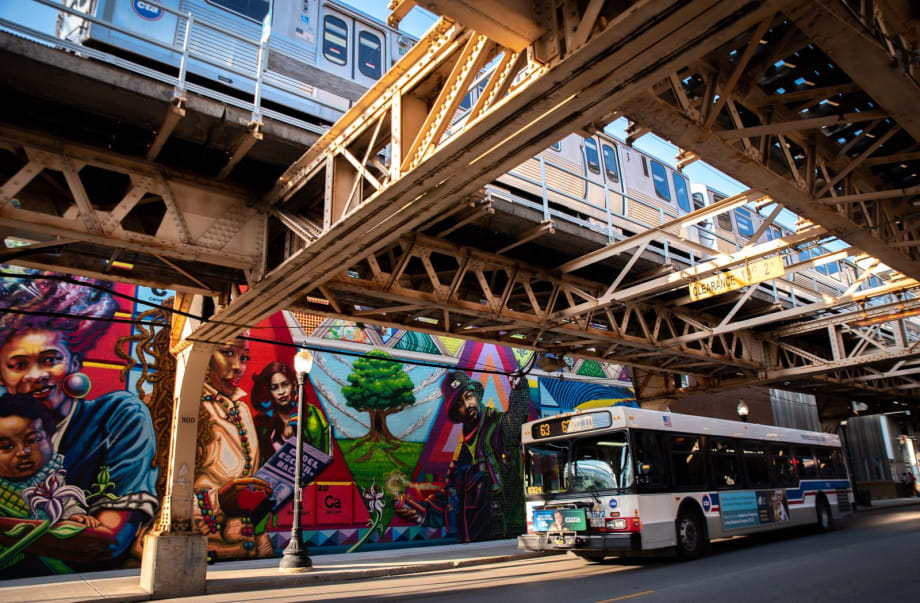
As requested by the RTA, the CTA and regional transit partners, Metra and Pace, have included a fare increase as part of their proposed 2026 operating budgets, according to the agency.
Photo: RTA
The Chicago Transit Authority (CTA) proposed three operating budgets for Fiscal Year 2026, each centered on the needs of its riders and employees, while also reflecting potential funding scenarios the agency could face pending the outcome of ongoing legislative efforts in the state’s capital.
The three budget scenarios being presented maintain, build upon, or reverse the successes achieved so far in 2025, and each calls for a modest fare increase, as requested by the Regional Transportation Authority (RTA), to provide additional revenue with minimal impact on ridership, as anticipated.
“This is a unique and unprecedented budget season for our agency,” said CTA Acting President Nora Leerhsen. “Like transit agencies across the country, CTA has a significant funding need, and we are planning for multiple scenarios for next year.”
2026 Budget Scenarios
Under the leadership of Acting President Leerhsen, unprecedented efforts have been made to engage directly with both riders and employees, utilizing their feedback to guide the agency’s efforts, according to the agency.
So far this year, more than 8,000 riders have spoken directly to agency leadership through the CTA Chats events at rail stations and bus turnarounds, as well as at the three budget town hall meetings in September.
This engagement substantially informed the following 2026 budget scenarios and the prioritization of CTA’s work in the coming years:
Budget A: Baseline budget that assumes typical state funding levels that solely address the existing structural funding gap.
Budget B: Growth budget that fixes the funding disparity and allows CTA to close its budget gap, plus makes significant investments to deliver the services being requested by riders.
Budget C: Reduced budget that has no additional funding to address the structural funding gap, resulting in a significant cut to service.
While one of the proposed budgets takes into account the possibility that there may be no funding solution advanced, the CTA remains optimistic and is continuing to plan with the creation of Budgets A and B, which offer opportunities for the CTA to continue to innovate and seek out new measures for improving key areas of the transit riding experience, including addressing safety and security of riders, enhanced customer communications; continued improvement of transit connections and services; and ongoing investments to provide cleaner, brighter, safer, more modern and accessible facilities.
Raising Fares
As requested by the RTA, the CTA and regional transit partners, Metra and Pace, have included a fare increase as part of their proposed 2026 operating budgets, according to the agency.
On average, more than one million weekday rides are taken on CTA buses and trains each year. Despite the potential for a fare increase, the CTA still offers cheaper travel options in the Chicago region. CTA has not had a fare increase since 2018.
Proposed fare and price plan change details:
The base fare for both bus and rail increases by $0.25.
Pass prices to align with the fare increase: 1-Day Pass increasing $1; 7-Day Pass increasing $5; 30-Day Pass increasing $10; and Regional Connect Pass increasing $15.
Ventra single-ride tickets increase to $3.50.
Pay-as-you-go payments increase to $3 for those using contactless debit or credit cards (including plastic and digital wallets) directly at Ventra readers. These higher fees are to offset additional merchant expenses.
Elimination of the 3-day pass to streamline fare offerings.
Reduced fares remain at or below 50% of full fares, in compliance with federal requirements.
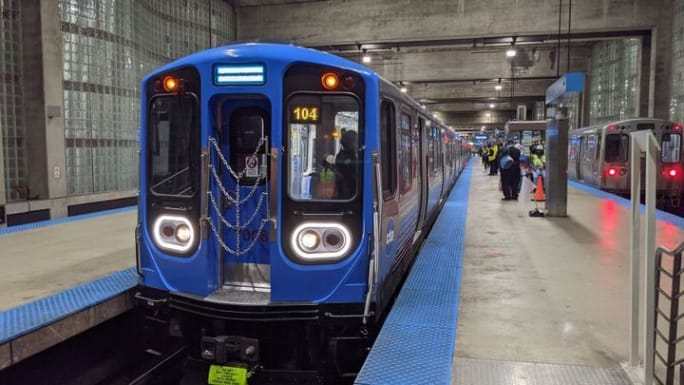
Under the leadership of Acting President Leerhsen, unprecedented efforts have been made to engage directly with both riders and employees, utilizing their feedback to guide the agency’s efforts, according to the agency.
Photo: CTA
Funding Solution Needed to Move Forward
The CTA, like other transit agencies across the country, is facing a sizable structural funding gap.
Gap in 2026 and beyond. With one-time federal pandemic funds running out and a lack of sufficient operating funding sources, CTA and transit agencies across the state are facing some of the most significant budget deficits ever, beginning in 2026 and continuing.
Despite funding challenges, CTA continues to be one of the most efficient transit agencies in the country, as it is the last central transit agency to have exhausted its federal COVID-19 relief funds.
Furthermore, over the previous decade, CTA has achieved more than $800 million in savings and revenue growth through efficiencies such as investments in technology, position eliminations and freezes, changes to procurement management programs, healthcare reforms, fair collection enhancements, fuel and power hedging, and many other initiatives.
CTA officials stated that they will allow interested individuals or agencies to be heard at the public hearing regarding social, economic, environmental, and other related aspects of the Proposed 2026-2030 Capital Program of Projects, the 2026 Operating Budget and Program, and the Financial Plan for 2027 and 2028. Written and oral comments will be taken into consideration before adoption of the Proposed 2026-2030 Capital Program of Projects, 2026 Operating Budget and Program, and the Financial Plan for 2027 and 2028.
More Management

METRO Opens Submissions for 2026 Motorcoach Awards
Nominations are now being accepted for METRO Magazine’s Operator of the Year and Innovative Operator of the Year awards.
Read More →
New York MTA Advances Final Contract for Second Avenue Subway Expansion
Contract Four is the largest in the Second Avenue Subway Phase 2 project and includes construction of station infrastructure, tracks, and signals for the subway expansion, MTA officials said. Work on Contract Four will begin in 2027.
Read More →
Transit Agencies Highlight Safety Gains at National Summit
Leaders from 15 major transit systems shared crime-reduction results and safety initiatives while discussing the role of continued federal support.
Read More →

NITA Names New Leadership, Expands Reduced-Fare Program at First Board Meeting
The new regional transit authority appointed its first board chair and interim executive director while extending reduced fares across CTA, Metra, and Pace for eligible riders.
Read More →
Beyond the Checklist: A Structured Approach to Transit Maintenance
Reliability-Centered Maintenance helps transit agencies move beyond routine checklists to focus limited resources on the assets and failures that have the greatest impact on safety, reliability, and service.
Read More →
APTA 2026 Nominating Committee Selects Leadership Slate, Names Chair and Vice Chair Nominees
Leadership changes will help shape the association’s priorities and its representation of the transportation industry during the 2026–2027 term.
Read More →
DART Launches Major Security, Fare Enforcement Initiative
The 90-day demonstration will deploy coordinated security teams at five light rail stations while testing controlled access and gathering data to guide future investments.
Read More →
Advancing Fare Collection Through Technology and Innovation
Learn about delivering 1300 gates at 91 stations while managing fare evasion. Explore the large scale deployment, solution customization and real-world results that affect the region. Prepare for deployment in your region now.
Read More →
Game Day in Motion: Moving Millions During the 2026 World Cup
Between packed transit stations and team motorcoaches, see how agencies and operators across North America tackled the transportation demands of the 2026 FIFA World Cup.
Read More →
Surface Transportation Extension Averts Shutdown, Leaves Transit Funding Gap
The stopgap keeps federal transportation programs moving, but missing advance funding could complicate the transit and rail projects agencies are planning next.
Read More →