



2012 Women In Transportation: KellyAnne Gallagher
Director of Member Services American Public Transportation Association Washington, D.C.

At the high-speed practicum in Los Angeles in February 2010, Gallagher (third from left) brought over practitioners from various countries to speak at the sessions.

At the high-speed practicum in Los Angeles in February 2010, Gallagher (third from left) brought over practitioners from various countries to speak at the sessions.
In 2000, the American Public Transportation Association (APTA) had successfully bid on a contract to manage the Women’s Transportation Seminar (WTS) and was looking to hire someone for the job. Unlike the typical transit candidate, APTA wanted someone with broad, extensive nonprofit management skills — KellyAnne Gallagher fit the bill.
Until that point, she had spent nearly her entire career in the management of nonprofit organizations. Gallagher did work in human and civil rights, launched a political action campaign, management consulted and volunteered for the Women’s Information Network. She also served as COO of the National Council of Individual Investors and was chief of staff and director at the Ronald H. Brown Foundation.
“At the time, APTA needed a unique set of skills that they wouldn’t normally have had internally,” says Gallagher, who is also a certified association executive (CAE). “I happened to have them, and that’s what brought me to transit.”
She joined APTA that year, stepping in as director of association management services. She oversaw the High Speed Ground Transportation Association and the American Transit Services Council, in addition to WTS.
“The job transition and getting to know the board members took a bit of time, but it allowed me to understand the ins and outs of transit — what it means to peoples’ lives and how individuals working in this industry can impact millions every day just by the decisions they make,” says Gallagher.
For WTS, Gallagher grew the number of chapters, the number of individual members and the size of their scholarship fund. Together with her team, she overhauled the internal processes of the organization and redesigned its newsletter, which went on to win several design awards.
“When I completed my term with WTS, I turned back to that board of directors a bigger, stronger and more cohesive organization than that which I had inherited,” says Gallagher.
In 2006, Gallagher transitioned into the position of director of member services for APTA. Among a handful of duties, she’s staff advisor for transit CEOs and has responsibilities for commuter, high-speed, water-borne and intercity rail issues and their related committees. Her team also manages APTA’s international program and provides for the needs and interests of APTA’s business members and revenue management professionals.
“I didn’t have a background in transit,” says Gallagher. “I came here with the people skills that are essential to building a sense of affiliation for the hundreds of thousands of individual members who make up APTA. I see my primary responsibility is relationship management and focusing on that has served me well.”
In 2010 and 2011 Gallagher spearheaded the international practicums on implementing high-speed rail in the U.S. It was a practical training program, organized in conjunction with the International Union of Railways, for those who were going to be putting the high-speed rail grant money to work.
It focused on everything that goes into planning and executing service for high-speed rail. Gallagher brought over practitioners from Europe and Asia to speak at the sessions, which were held in three cities across the country.
Most recently, Gallagher co-chaired the organizing committee for the just-completed 2012 World Congress on High-Speed Rail in Philadelphia. With about 1,000 attendees from 37 different countries present, it addressed technical and economic issues and held educational sessions on high-speed rail. She also had a major role in the 2011 World Congress in Beijing.
“With APTA, I have been given the freedom to run with new projects,” says Gallagher. “The practicum and world congresses are two examples of that.”
More Bus

Scenes from APTA TRANSform & EXPO 2026
Transit leaders, manufacturers, and industry professionals gathered in Chicago to explore new technologies, share ideas, and discuss the future of public transportation.
Read More →
More Than a Summer Job: Building the Next Generation of Transit Talent
The Delaware River Port Authority and PATCO have transformed their internship program into a hands-on professional development experience that introduces students to the breadth of transportation careers — and creates a pipeline for future employees.
Read More →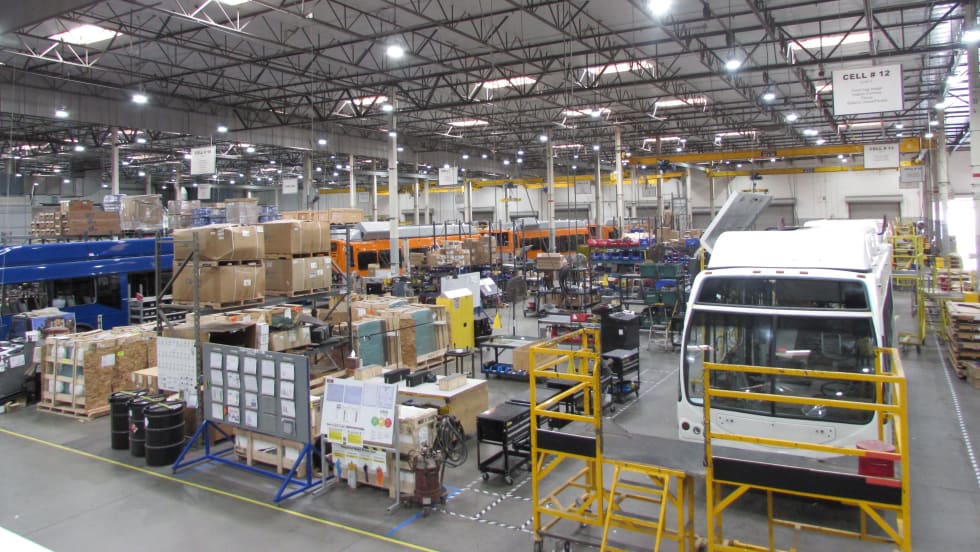
LA Metro Board Awards 220 Battery-Electric Bus Contract to ENC
The contract, which is the largest base award of battery-electric buses by a U.S. transit agency, will be built in Southern California, sustaining good jobs as LA prepares to welcome the world in 2028
Read More →
Public Transit Conference Returning to GFX in 2027, Call for Papers Now Open
The Call for Papers is now open, allowing transit agency professionals and industry experts to help shape the PTC educational program by submitting session ideas for consideration.
Read More →
Indian River Transit’s Community-Focused Approach Earns National Recognition
Named APTA’s 2026 Outstanding Public Transportation System in its size category, Florida’s Indian River County transit system continues to grow ridership through fare-free service and a focus on evolving community needs.
Read More →
ENC Lands MATA Contract and More in Biz Briefs
In this edition of Biz Briefs, we spotlight the latest developments shaping the future of mobility.
Read More →
From Surviving to Thriving: Building Stronger Transportation Organizations
Bus Business Consultants founder Brian Dickson shares lessons on leadership, organizational health, and creating options for long-term success in a changing transportation industry.
Read More →
Everett Transit, Community Transit Outline Consolidation Agreement
The proposed agreement calls for a 50% increase in bus service in Everett, a new microtransit zone, continued paratransit service, and the transfer of Everett Transit operations to Community Transit.
Read More →
SEPTA Details Accelerate Vision for Transit System
The plan outlines investments in trolley modernization, new Metro and Regional Rail vehicles, accessible stations, and more frequent bus and rail service.
Read More →
Report: Transit Bus Manufacturing Supports 34,100 Jobs, $5.1B in GDP
The “Buses Mean Business” report examines the transit bus manufacturing industry’s economic footprint, supply chain, and rising demand for vehicle replacements.
Read More →