



2014 Women In Transportation: Sanja Zlatanic, PE
VP, Chief Tunnel Engineer HNTB Corp. New York City
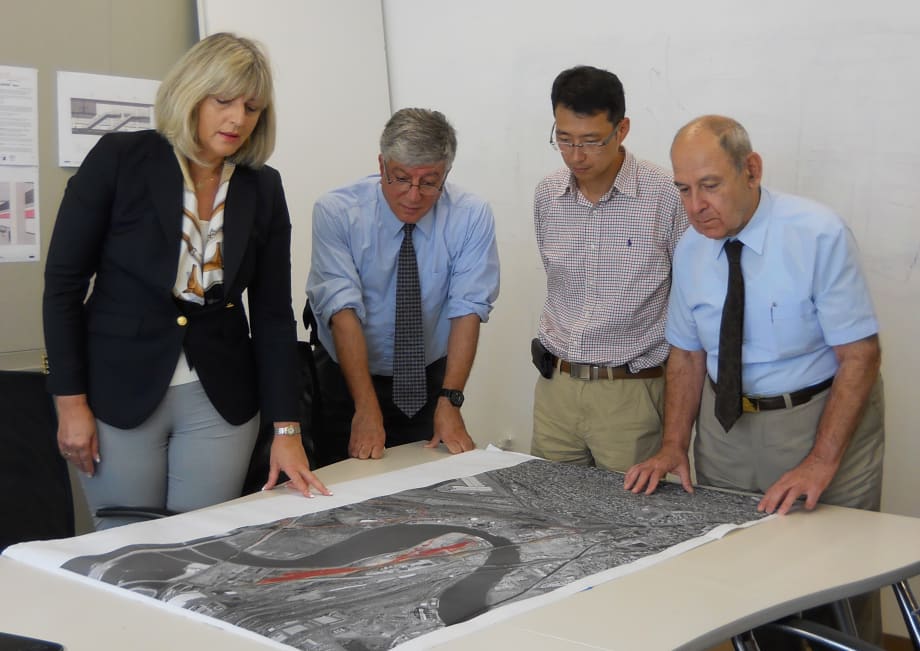
Zlatanic is currently managing a project in Instanbul for HNTB Corp.
Zlatanic is currently managing a project in Instanbul for HNTB Corp.
Born and educated in former Yugoslavia, Sanja Zlatanic graduated in 1988 from Belgrade’s School of Civil Engineering in the top 3% of her class. She earned a degree in structural engineering with a focus on concrete structures. Without delay, she joined Energoprojekt, one of the country’s biggest engineering companies. There, Zlatanic was exposed to a handful of large-scale international projects, including a special project assignment in Iraq.
However, at the start of the civil war in Yugoslavia in 1991, Zlatanic decided to move to the U.S., where she found a job as a structural engineer at Parsons Brinckerhoff, working mainly on the design of complex underground structures and tunnels for transit use.
During her time with Parsons Brinckerhoff, Zlatanic led the design management and technical oversight of East Side Access and the No. 7 Subway Line Extension. Both are notable transit mega-projects of the New York Metropolitan Transportation Authority. She also served as chief engineer from 2006 to 2010 for Access to the Region’s Core, a commuter rail project to increase passenger service capacity on New Jersey transit between Secaucus Junction, N.J. and Manhattan.
“I’ve been lucky over the past 20-plus years to be a part of major public endeavors happening in New York City,” Zlatanic says. “It became logical for me to dedicate my career to underground structures, as I have been fascinated with these mega-projects. With large projects came large responsibilities.”
Zlatanic stayed with Parsons Brinckerhoff until 2011, when an opportunity arose to grow the tunnel practice for HNTB Corp. arose.
In her role as chief tunnel engineer at HNTB, Zlatanic helps identify projects, develops strategy and selects staff. She says she feels personally responsible for quality execution and takes pride in project performance.
“When the client is pleased with the solution we present and we see them reaching out to express their gratitude on the quality of the work, that’s the moment you realize that you have done your duty,” she says. “For an engineer and public servant, this appreciation means everything and is the most rewarding.”
Since starting with HNTB, Zlatanic led the underground engineering group for the Crenshaw LAX project, which will be a part of the Los Angeles County Metro Rail System. It will include a new 8.5-mile light rail line through southwest Los Angeles connecting the Crenshaw District and Leimert Park to Inglewood and the Los Angeles International Airport (LAX). Heavy construction began in the spring of 2014, and initial revenue service is projected to begin by 2019.
Currenlty, Zlatanic is managing a project in Istanbul, where HNTB serves as an independent design verifier.
“We are honored to undertake this important role on the iconic project containing the sixth largest underwater tunnel in the world, which will connect Europe and Asia in Istanbul below the Bosphorus Strait,” Zlatanic says. “The project is P3 and the contractor, our client, is a prominent Turkish-Korean joint venture.”
Outside of work, Zlatanic is the secretary general for the Associated Research Centers for the Urban Underground Space (ACUUS). ACUUS is an international organization that encourages partnerships within the urban underground structures field and promotes sustainable use of underground space in order to preserve urban surfaces for better uses.
“With more people moving into cities, these overbuilt and overcrowded urban habitats shouldn’t be jam-packed with surface transit lines,” Zlatanic says. “Communities shouldn’t be divided by large surface cuts or highways. Placing the transit underground frees the surface for increased greenery, parks and recreational uses, which promotes better quality of life and brings people together.”
On Sept.16, 2014, ACUUS signed a memorandum of understanding with the United Nations’ UN-Habitat in New York City, which Zlatanic attended.
“The UN-Habitat finds it very instrumental to tap into our experience to help countries develop sustainable, planned use of the underground,” Zlatanic says.
More Management

METRO Opens Submissions for 2026 Motorcoach Awards
Nominations are now being accepted for METRO Magazine’s Operator of the Year and Innovative Operator of the Year awards.
Read More →
New York MTA Advances Final Contract for Second Avenue Subway Expansion
Contract Four is the largest in the Second Avenue Subway Phase 2 project and includes construction of station infrastructure, tracks, and signals for the subway expansion, MTA officials said. Work on Contract Four will begin in 2027.
Read More →
Transit Agencies Highlight Safety Gains at National Summit
Leaders from 15 major transit systems shared crime-reduction results and safety initiatives while discussing the role of continued federal support.
Read More →

NITA Names New Leadership, Expands Reduced-Fare Program at First Board Meeting
The new regional transit authority appointed its first board chair and interim executive director while extending reduced fares across CTA, Metra, and Pace for eligible riders.
Read More →
Beyond the Checklist: A Structured Approach to Transit Maintenance
Reliability-Centered Maintenance helps transit agencies move beyond routine checklists to focus limited resources on the assets and failures that have the greatest impact on safety, reliability, and service.
Read More →
APTA 2026 Nominating Committee Selects Leadership Slate, Names Chair and Vice Chair Nominees
Leadership changes will help shape the association’s priorities and its representation of the transportation industry during the 2026–2027 term.
Read More →
DART Launches Major Security, Fare Enforcement Initiative
The 90-day demonstration will deploy coordinated security teams at five light rail stations while testing controlled access and gathering data to guide future investments.
Read More →
Advancing Fare Collection Through Technology and Innovation
Learn about delivering 1300 gates at 91 stations while managing fare evasion. Explore the large scale deployment, solution customization and real-world results that affect the region. Prepare for deployment in your region now.
Read More →
Game Day in Motion: Moving Millions During the 2026 World Cup
Between packed transit stations and team motorcoaches, see how agencies and operators across North America tackled the transportation demands of the 2026 FIFA World Cup.
Read More →
Surface Transportation Extension Averts Shutdown, Leaves Transit Funding Gap
The stopgap keeps federal transportation programs moving, but missing advance funding could complicate the transit and rail projects agencies are planning next.
Read More →