



5 Questions: Ventura County Transportation Commission's Darren Kettle
METRO spoke to Ventura County Transportation Commission Executive Director Darren Kettle about the new vehicles, as well as the agency’s current challenges and new service plans.
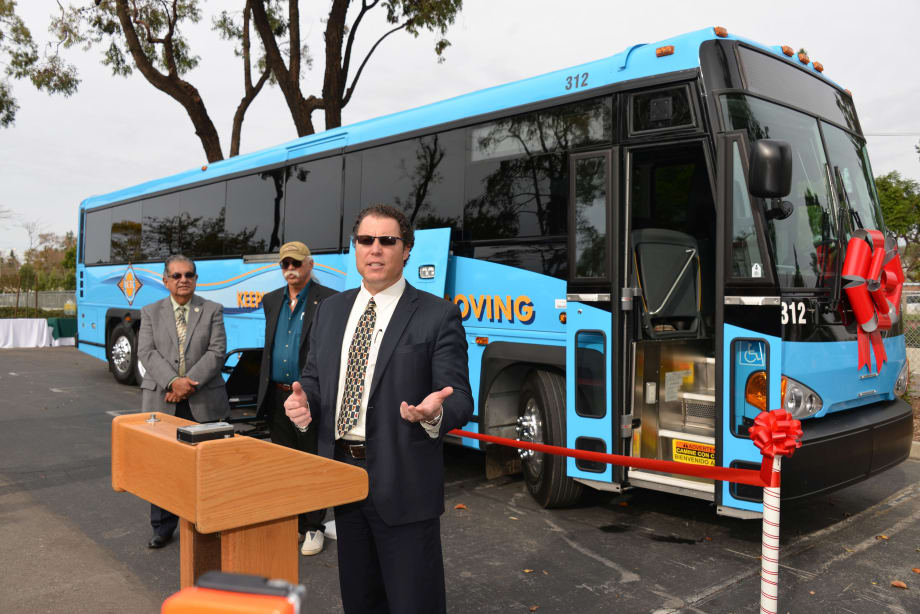
In December, Calif.’s Ventura County Transportation Commission (VCTC), which provides inter-community bus service throughout Ventura County, began unveiling its new fleet of 14 clean-diesel MCI motorcoaches.
The new VCTC Intercity Bus fleet was funded using a portion of California’s Proposition 1B, which allocated nearly $20 billion in general obligation bonds to address air quality and safety projects such as public transportation. The Prop 1B funding allocated to Ventura County is being utilized to fund street and highway improvements, rail safety projects, transit vehicles and other transit improvements.
METRO spoke to VCTC Executive Director Darren Kettle about the new vehicles, as well as the agency’s current challenges and new service plans.
Discuss VCTC’s services and challenges?
VCTC is the regional transportation planning agency for Ventura County, as well as provider of the county’s regional intercity transit service. Since 1994, VCTC Intercity Bus, formerly known as VISTA, has provided regional service between communities throughout Ventura County, with an annual ridership of approximately 1.1 million.
VCTC Intercity Bus currently operates along seven routes, connecting with both local fixed-route services and regional rail.
Up until a few years ago, VCTC Intercity Bus service was known for its comfortable over-the-road coaches. Unfortunately, a 2012 bankruptcy sale of the former contractor’s fleet necessitated temporary use of the traditional transit bus fleet provided by our new operations contractor, which assumed operational responsibility with very short notice.
Now, VCTC is proud to be reintroducing over-the-road coaches to our fleet with the purchase of 14 new MCI Commuter Coaches.
At this time, VCTC is re-launching its popular intercity transit service while also wrestling with the challenges of an antiquated fare media technology. We are trying to recreate the benefits of the prior system in the new system, which is neither simple nor inexpensive. We have had a lot of things happening at the same time — new operating contract, a new service identity and new fare media. It’s a lot of different things to share with our customers and the overall community.
What makes VCTC unique?
Many transit systems serve multiple needs through multiple modes, such as local fixed-route, Dial-A-Ride, commuter services, limited or express services, and BRT. VCTC Intercity Bus is unique in its specific and defined role as an intercity commuter bus service. The service connects three distinct geographies and seven separate local transit systems within Ventura County, as well as linking Ventura County with Santa Barbara County to the north and Los Angeles County to the south. We work in concert with local transit systems throughout the county to offer a comprehensive regional transit network.
How did you fund the new bus fleet?
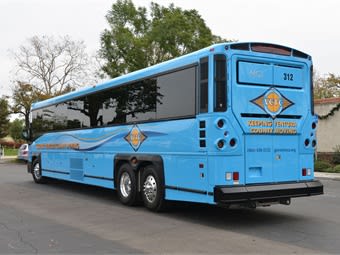
VCTC’s new MCIs are bright blue, featuring new intercity bus branding, and equipped with comfortable high-back seats, Wi-Fi, LED reading lights and electrical outlets.
Absent a dedicated transportation sales tax, the Commission has needed to be strategic about funding decisions. In 2006, California voters passed Proposition 1B — the Highway Safety, Traffic Reduction, Air Quality, and Port Security Bond Act — which allocated funding for transportation purposes, including public transportation, throughout the state.
VCTC chose to use some of its allocated Prop 1B funds to purchase 14 new MCIs. We were able to piggy-back onto a neighboring agency’s procurement already in progress, which cut down the time frame significantly. By doing this, we took delivery of the vehicles just one year after the Commission approved the purchase.
This is the first time in its 20-year history as a transit operator that VCTC has owned its own fleet. We had a rough time back in 2012, when our operations contractor declared bankruptcy and gave us just a month’s notice that it would be going out of business and selling off its fleet. Quick action by the Commission led to a one-month extension, which gave us time to find a new contractor that could also provide a fleet at such short notice.
While we don’t anticipate going through that experience again, owning our own vehicles provides an added sense of security.
All of the MCIs will be used on the VCTC Intercity Bus regional fixed-route service. The new vehicles are hard to miss — they are bright blue, sporting the new VCTC Intercity Bus branding. In addition, each bus features a pull-out tray in the baggage area for safely transporting bicycles and additional bicycles can be carried in the baggage bays without pullout trays. The bicycle storage capacity of the over-the-road coaches was greatly missed during our use of the transit buses. We unveiled the new buses in December 2014.
What is VCTC doing to help generate funding, increase efficiencies and/or improve service?
Given VCTC has been operating its transit system with little change for the last 20 years, we are taking a hard look at the efficiency of our routes as well as the capacity of our buses. For example, some runs on our successful Coastal Express route operate at 50% or 60% capacity during peak hour given the service’s high frequency. We’ll be looking at operational and routing efficiencies that would bring our vehicles closer to 80% capacity.
While this could translate to a reduction in the number of runs, particularly on routes with high frequency, we would still maintain the same span of service.
In addition, given the nature of the service and our use of state-of-the-art motorcoaches, VCTC is looking at potentially introducing vehicle advertising to offset some of the service costs. We are not considering a fare increase at this time, even though we’ve had just one fare increase since the service launched in 1994. The stability of our fares is one thing that makes the service a value for many of our long-time customers.
What are VCTC’s plans for the future?
We anticipate adding to the VCTC-owned fleet later this year, and our operations contractor has also purchased over-the-road coaches as part of the fleet it provides.
Together, this will allow us to better serve our customers, many of whom have stuck with us through the threat of service disruption and the switch to vehicles without many of the features they previously enjoyed. In addition, we are in the process of transitioning from our aging smart card fare system — cutting-edge when it was introduced in 2002 — to state-of-the-art GFI fareboxes.
We will also be re-launching our popular Coastal Express route, which links Ventura with Santa Barbara County to our north. Using state funds associated with a construction project to widen the US 101 freeway, we’ve been providing temporary limited-stop service along the 101 corridor between the two counties as a construction mitigation strategy. That extra service will soon be discontinued, so we are looking to re-launch the existing Coastal Express service in an effort to retain many of the limited-stop service’s riders.
More Management
Brian Dickson on Building Stronger, More Resilient Transportation Organizations
Bus Business Consultants Founder Brian Dickson discusses the leadership principles, operational discipline, and strategic planning that separate transportation companies positioned for long-term success from those stuck in survival mode.
Read More →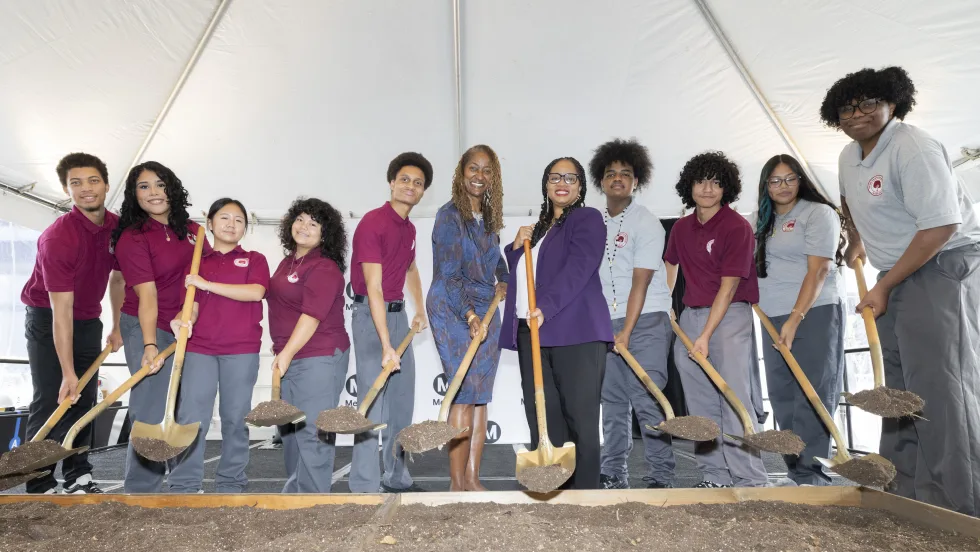
LA Metro Breaks Ground on Vermont BRT Project
The 12.4-mile corridor is projected to serve 66,200 daily riders, reduce travel times by up to 24%, and create the nation's busiest bus rapid transit corridor.
Read More →
Building Stronger Leaders, More Resilient Transit Teams
Dr. Carol Parker Walsh discusses leadership development, employee retention, workplace culture, and preparing transit’s workforce for AI and automation.
Read More →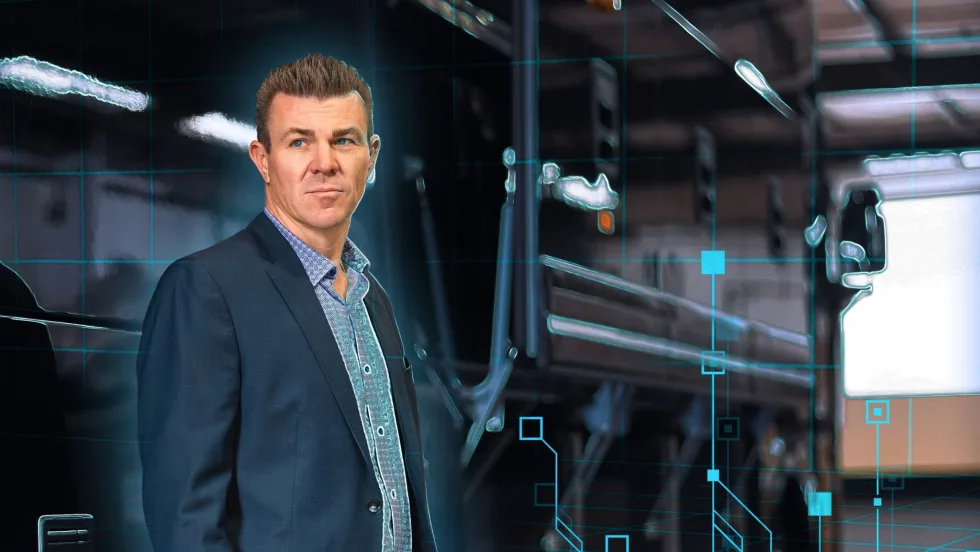
Roman Cornell on ABC Companies’ Evolution and the Future of Passenger Transportation
The company’s CEO discusses carrying forward a third-generation family legacy, ABC’s continued evolution in passenger transportation, support for increasingly complex fleets, and how technology and continued investment could help operators improve uptime.
Read More →
CATS Launches West Charlotte Microtransit Zone, Expands Transit Services
The new microtransit zone connects residents to key destinations as Charlotte Area Transit System rolls out the first phase of its 2055 Transit System Plan.
Read More →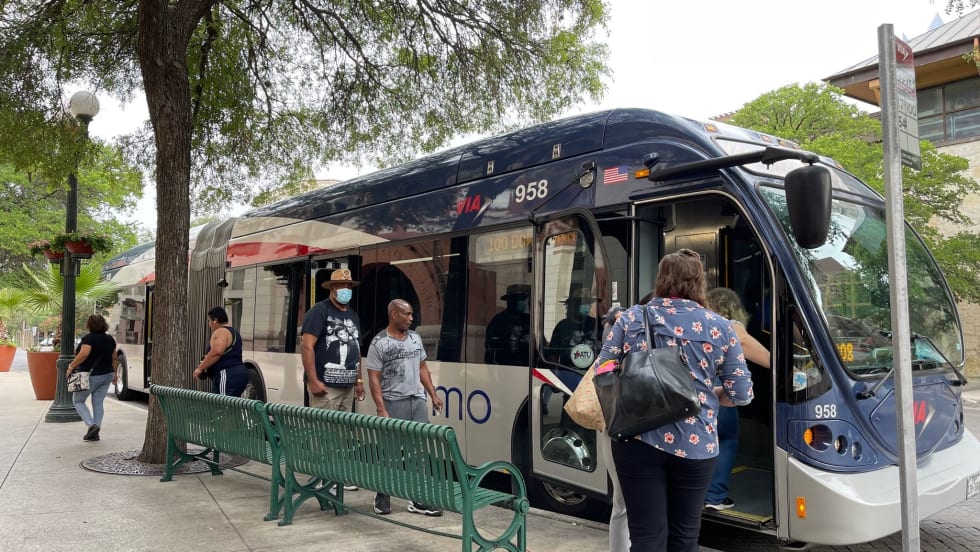
VIA Bus Ridership Grows 10.1% Through August 2026
San Antonio's VIA Metropolitan Transit reported the highest bus ridership growth among major Texas transit systems. Federal Transit Administration data ranked it second among the nation's 50 largest transit systems.
Read More →
CSA Group Releases Climate Resilience Standard for Transit, Passenger Rail
Developed with support from the Standards Council of Canada, CSA D700 guides assessing climate-related risks and planning adaptation measures for transit and passenger rail systems.
Read More →
ETA CEO John Maglio on Transit Technology, Innovation, and Building Agency Trust
ETA founder and CEO John Maglio explores the evolution of transit technology, the importance of reliable systems, and how stronger partnerships can help agencies improve operations and the passenger experience.
Read More →
COTA Launches First Customer Experience Action Plan to Improve Transit Service
The new plan outlines improvements to service reliability, accessibility, communication, and the overall rider experience across Central Ohio's transit system.
Read More →
LA Metro September Ridership Climbs 3.9%, Led by Rail Growth
The agency recorded more than 27.2 million boardings, with rail ridership increasing 12.4% year over year and the D Line posting the largest gains.
Read More →