



ABA, MCC form partnership
Mutual agreement aims to provide both associations’ respective members with better educational, marketing and networking opportunities through the sharing of information.

The American Bus Association (ABA) and Motor Coach Canada (MCC) have established a mutual working arrangement that will initially be known as the North American Motorcoach Alliance. The mutual agreement will not only attempt to better serve the motorcoach and group tour industry in general, but also help provide both associations’ respective members with better educational, marketing and networking opportunities through the sharing of information. “I think it’s a fabulous opportunity to bring together our collective knowledge, and work toward a more meaningful relationship,” said Wayne Asquith, chairman of MCC’s board of directors. The alliance was made official at a ceremony in late May in Niagara Falls, Ontario, when Asquith and ABA Chairman Ron Eyre signed a letter of agreement. Both associations assert that the alliance is not a merger of the two entities, but simply an opportunity to better serve the industry on both sides of the border. Because of the positive working relationship the MCC and ABA staffs and members have shared in the past, the associations began exploring the possibility of establishing a more formal relationship in 2005. Peter J. Pantuso, president and CEO of the ABA, said that the necessity to share information across the two associations is increasingly necessary, as issues facing motorcoach operators have become more international in nature. Both associations’ members are facing an increasing number of similar regulatory and marketing issues in the U.S. and Canada, as well as border, operational, safety and security issues. “There are a lot of issues that we all face commonly in the motorcoach industry, whether we are U.S. or Canadian operators, or typically other operators around the world, and that is the backdrop we’re using to create this alliance,” he said. Representatives of the alliance said that its core mission has three components: advocacy; technical education and training; and marketing, networking and industry awareness. “I think all of us would agree that our industry needs to have a higher profile with the public to get more customers and with the government to obtain more favorable decisions,” said MCC President Brian Crow. He added that the agreement could help create more joint sponsorships, industry events and partnerships, and marketing initiatives. “The whole is greater than the sum of the parts, so together we certainly believe we can achieve far more working in tandem with policymakers, legislators, regulators and even with enforcement personnel,” Crow said. Pantuso hopes that the new agreement will create more opportunities for training maintenance personnel and provide better training to the industry as a whole. He also said that the opportunity to share speakers from both associations’ annual conventions might allow them to create educational programs that tie together. The alliance hopes to expand business opportunities for the industry by developing new products and providing greater visibility for the associations’ members across state and provincial lines and international borders. Aligning the two associations will also create opportunities for all members to get assistance, tracking and briefings from each other on laws and regulations that are of particular interest. Asquith said the first order of business will be to identify issues that are important on both sides of the border. Currently there is no money going into the organization, but as specific projects arise that the associations may want to begin working together on, those projects will be jointly funded not only between the two associations but with other industry partners as well, Pantuso said.
More Management

ENC Lands MATA Contract and More in Biz Briefs
In this edition of Biz Briefs, we spotlight the latest developments shaping the future of mobility.
Read More →
From Surviving to Thriving: Building Stronger Transportation Organizations
Bus Business Consultants founder Brian Dickson shares lessons on leadership, organizational health, and creating options for long-term success in a changing transportation industry.
Read More →
Everett Transit, Community Transit Outline Consolidation Agreement
The proposed agreement calls for a 50% increase in bus service in Everett, a new microtransit zone, continued paratransit service, and the transfer of Everett Transit operations to Community Transit.
Read More →

Strada360’s Steve Lassey on Turning Transit Data Into Better Decisions
From breaking down data silos to preparing for AI, Strada360 CEO Steve Lassey discusses how transit agencies can use technology to improve operations, customer information, and long-term decision-making.
Read More →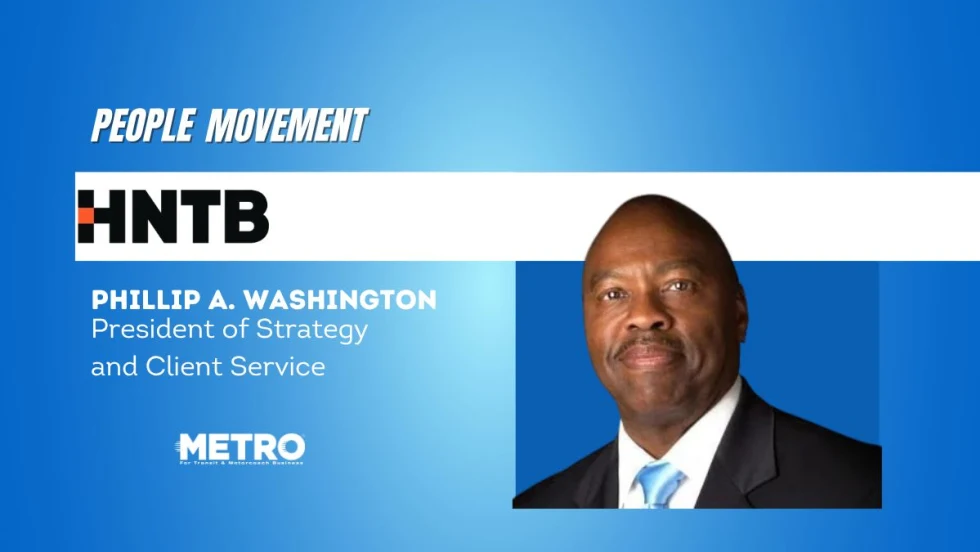
People Movement: Phil Washington Joins HNTB, Denver RTD Launches CEO Search, and More
In this edition, we also spotlight recent personnel moves at STV, the Eno Center for Transportation, and more, highlighting the people taking on new roles across the transportation industry.
Read More →
SEPTA Details Accelerate Vision for Transit System
The plan outlines investments in trolley modernization, new Metro and Regional Rail vehicles, accessible stations, and more frequent bus and rail service.
Read More →
FTA Ends Direct Oversight of MBTA Safety Actions
The federal agency closed its remaining special directive to the Massachusetts Department of Public Utilities following a safety review that began in 2022.
Read More →
Report: Transit Bus Manufacturing Supports 34,100 Jobs, $5.1B in GDP
The “Buses Mean Business” report examines the transit bus manufacturing industry’s economic footprint, supply chain, and rising demand for vehicle replacements.
Read More →
LIT Marks 10-Year Milestone at Annual Summit
Hosted by the COTA from September 10 to 13, the Summit carried the theme “Celebrating 10 Years of Excellence, Leadership, and Impact,” with every part of the program honoring the people, agencies, and partners who built LIT over its first decade.
Read More →
People Movement: Dan Dipert Coaches Adds Third-Generation Leader, Keolis Names New Valley Metro VP/GM, and More
In this edition, we also cover recent appointments and announcements at the Wabtec, SilverRide, HNTB, and more, showcasing the individuals helping to shape the future of transportation.
Read More →