



Alstom Penetrates N.A. Light Rail Market
In late February, Alstom finalized a contract to provide 34 light rail vehicles and 30 years of maintenance services to the Rideau Transit Group consortium that was selected to design, build, finance and maintain the first line of the Ottawa Light Rapid Transit system.
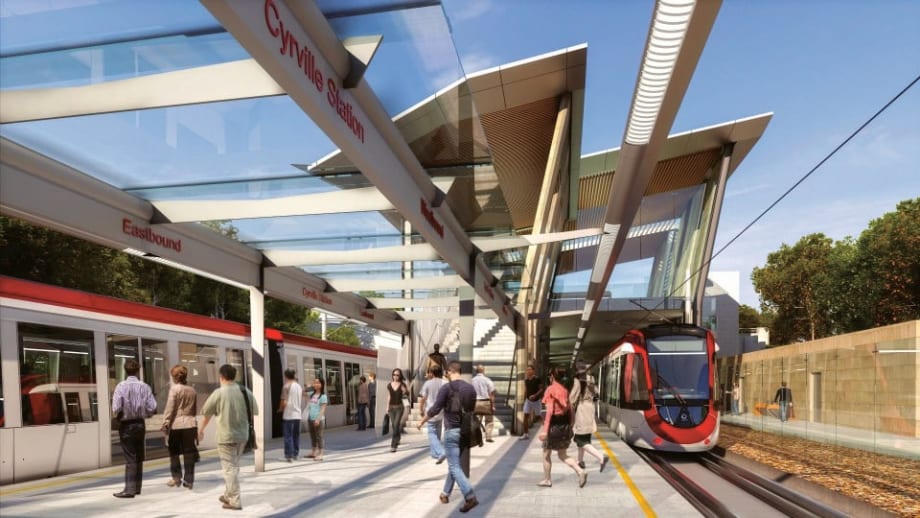
Ottawa’s planned light rail system is touted as the “largest infrastructure project in the city’s history.” The eight-mile starter line features a 1.5-mile downtown tunnel and 13 stations. (Conceptual drawing of Blair Station)
Ottawa’s planned light rail system is touted as the “largest infrastructure project in the city’s history.” The eight-mile starter line features a 1.5-mile downtown tunnel and 13 stations. (Conceptual drawing of Blair Station)
Ottawa, Ontario’s planned light rail transit system — touted as the “largest infrastructure project in the city’s history” — is also significant as it marks Alstom Transport’s breakthrough into the North American light rail market.
In late February, Alstom finalized a contract to provide 34 light rail vehicles and 30 years of maintenance services to the Rideau Transit Group consortium that was selected to design, build, finance and maintain the first line of the Ottawa Light Rapid Transit system — the Confederation Line — worth more than $2 billion. Alstom’s portion of the contract is worth approximately $520 million.
“This contract is important for its size. It’s more than just a starter system,” said Guillaume Mehlman, Alstom president, North America. “We were very excited to procure an order for 34 vehicles and the long-term service of those vehicles. That’s the first step of a strategy to penetrate the market in North America.”
Design flexibility
Alstom will launch a new light rail vehicle (LRV) for the Ottawa system — the Citadis Spirit. Designed as a high-capacity LRV, the Citadis Spirit will be able to operate in extreme winter conditions and reach maximum speeds of up to 65 mph, reducing travel time between suburban areas and the city center.
“The [vehicle] will be able to address cities that are looking for streetcar and cities that are looking for full-blown light rail,” said Mehlman.
“Many cities that start off with streetcar projects have aspirations to do light rail,but they don’t necessarily have the funding or political support initially,” explained Scott Sherin, VP, marketing. “One of the things unique about our vehicle, is that it’s the only 100% low-floor vehicle that allows them to start with this as a streetcar, and then, as their city is able to expand and grow into a full light rail service from the city center out to the suburbs, they can stick with the same vehicle.”
Other features include on-board bicycle storage and full low-floor design, which provides a continuous unobstructed interior path connecting all accessible spaces.
“One of the things the low floor achieves is it really gives a sense of space and comfort to the passenger, which is unique in the market,” Sherin said.
Passenger movement is optimized by seven dual-leaf, four-foot-wide passenger doors, while an air suspension levelling system ensures platform alignment with the vehicle.
The Alstom Citadis can run as a single car, or be joined with multiple cars to meet ridership changes. Each single car measures 160 feet and can accommodate 300 passengers.
“We pushed the capacity to a higher limit than what we’ve seen in Europe,” Mehlman said. “Extending the vehicle length to 160 feet and not adding additional cars has allowed the customer to have smaller stations underground and shorter platforms. That has created overall value for the system when you look at the infrastructure costs and allowed us to be very competitive on the total costs.”
Cost savings to the customer are also achieved via the maintenance contract. “When customers choose this approach, they lock in what their maintenance commitment is going to be,” said Sherin.[PAGEBREAK]
The new 100% low-floor Citadis Spirit (rendering shown), is designed as a high-capacity LRV able to operate in extreme weather conditions. It can reach maximum speeds of 65 mph. The vehicles will be built in the U.S. and assembled in Ottawa.
Cost Savings
A unique aspect of the railcar for this particular project is the power supply. “The customer elected to go with a 1,500-volt power supply, which is pretty innovative, because usually, the power supply for light rail is 750 volts,” Mehlman said.
The 1,500-volt option is more efficient in terms of energy consumption over the whole lifecycle, he added. With more voltage, the number of stations can be reduced and spread further apart along the line. “[They] basically optimize their capital costs up front, because they are going to have less substations to install and their operating costs will be cut because they will have less losses and more energy efficiency,” Mehlman said.
“In some cities, it’s challenging to locate these substations in an urban environment,” Sherin said. “Having fewer of them gives more flexibility.”
Project overview
The Confederation Line’s eight-mile alignment crosses the downtown core underground, connecting Tunney’s Pasture in the west to Blair Station in the east. The downtown tunnel will be 1.5 miles long with three stations.
Thirteen light rail stations will be both transportation hubs and community landmarks. Station features include simple, attractive design; intuitive passenger flows; integration with pedestrian pathways and use of accessibility best practices. It will also serve as a showcase for public art.
Thirty vehicles will enter service on opening day — a peak capacity of 10,700 passengers per hour in each direction. With a projected 25 additional vehicles in service by 2031, the system could move more than 18,000 passengers per hour in each direction, according to Confederation Line project specifications.
Construction is slated for completion October 2017, with full revenue service beginning May 2018.
More Rail

Strada360’s Steve Lassey on Turning Transit Data Into Better Decisions
From breaking down data silos to preparing for AI, Strada360 CEO Steve Lassey discusses how transit agencies can use technology to improve operations, customer information, and long-term decision-making.
Read More →
SEPTA Details Accelerate Vision for Transit System
The plan outlines investments in trolley modernization, new Metro and Regional Rail vehicles, accessible stations, and more frequent bus and rail service.
Read More →
FTA Ends Direct Oversight of MBTA Safety Actions
The federal agency closed its remaining special directive to the Massachusetts Department of Public Utilities following a safety review that began in 2022.
Read More →
Amtrak, CN Reach Agreements to Strengthen Passenger Rail Service, Safety
The agreement resolves a more than decade-long proceeding before the Surface Transportation Board concerning the terms and conditions for Amtrak services, such as the City of New Orleans, Illini/Saluki, and Wolverine.
Read More →
New York MTA Advances Final Contract for Second Avenue Subway Expansion
Contract Four is the largest in the Second Avenue Subway Phase 2 project and includes construction of station infrastructure, tracks, and signals for the subway expansion, MTA officials said. Work on Contract Four will begin in 2027.
Read More →
San Diego MTS Breaks Monthly Trolley Ridership Record
Agency officials said July’s ridership indicates MTS’s continued recovery from the pandemic.
Read More →
Report Examines NJ TRANSIT Reliability, Funding Challenges
The Garden State Initiative analysis examines the roles of Amtrak infrastructure, fleet management, and agency operations while recommending a more performance-based approach to improving reliability.
Read More →
Stadler, CapMetro Sign Long-Term Rail Fleet Support Agreement
Beginning in 2027, Stadler will provide on-site technical expertise, spare parts support, training, and obsolescence management to help extend the reliability and longevity of CapMetro’s GTW fleet.
Read More →
Biz Briefs: Alstom Lands Canadian Contract, LYT to Supply California TSP, and More
In METRO's latest installment, we take a look at recent news from Complete Coach Works, Beep, FlixBus, and more partnerships making headlines across the transportation sector.
Read More →
CATS Gold Line Marks 5 Years of Service, 2.8M Passenger Trips
With a six-mile expansion planned, the Charlotte streetcar is positioned to connect more neighborhoods and major transit hubs across the region.
Read More →