



Automated Bus Rapid Transit: The Future of Urban Transit is Here
ABRT offers a solution that is ideal for today and into the future since it takes advantage of existing streets and infrastructure while increasing efficiency and safety at a minimal cost.
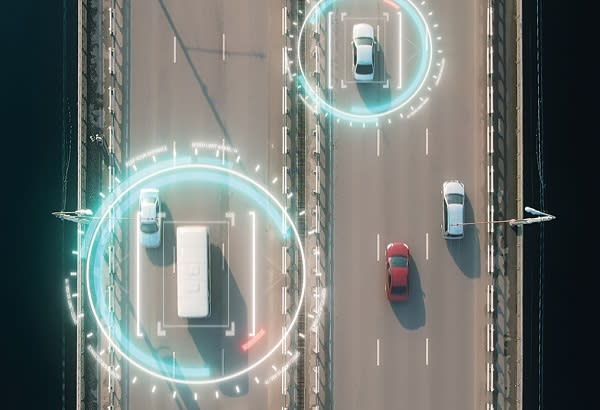
Getty/FlashMovie
Urbanization is on the rise. By 2050, 70% of the population will live in cities. According to the American Public Transportation Association (APTA), public transportation ridership has increased by 28% since 1995 while the U.S. population has grown by 23%, and 1,200 miles of additional transit service have been added between 2010 and 2019, with over half of those miles from new bus lines.
While COVID-19 has had a devastating effect on transit — ridership demand is 72% below normal — municipalities are looking past the pandemic and looking for new strategies to alleviate urban congestion while reducing greenhouse gases and increasing transit safety. Upgrading existing mass transit systems promises to be the best long-term solution to relieve the anticipated stress in our growing cities. Automated Bus Rapid Transit (ABRT), which is being advanced by leading technology companies like Robotic Research, suggests transforming traditional bus rapid transit (BRT) lines by incorporating autonomous technology, in doing so overcoming some of the challenges of traditional bus transit to become a (less costly) competitor to light rail transit (LRT). ABRT offers a solution that is ideal for today and into the future since ABRT takes advantage of existing streets and infrastructure while increasing efficiency and safety at a minimal cost. ABRT also can increase rider capacity and improve traffic flow, reducing stop-and-go delays.
The Many Advantages of ABRT
Deploying ABRT systems is less disruptive than constructing new services such as light rail. The good news is that bus lines can be automated immediately. The roadways are in place and you can add dedicated bus lanes if desired. Some transportation systems already are experimenting with using automated buses on dedicated routes.
ABRT has the potential to substantially reduce urban traffic not only by using dedicated bus lanes but also by using automated traffic controls. More importantly, since the average transit bus has a useful life of about 12 years, existing buses can be retrofitted to accommodate automation, or retired buses can be replaced with automated, zero-emission buses.
ABRT also can evolve and be incorporated with other smart city technologies. For example, as sensors and controls are added to roadways and traffic systems, automated buses can gather data about traffic patterns for analytics. They also can interface with traffic lights, crosswalks, and other systems to optimize traffic flow, essentially creating the foundation for a smart city traffic system with minimal investment using the existing infrastructure.

CTDOT has already commissioned automated New Flyer buses equipped with Robotic Research technology for its CTfastrak BRT route between Hartford and New Britain.
New Flyer
The Technology Behind Automated Buses
When considering the possibilities of automated transit buses, it’s important to appreciate the distinction between automated and autonomous vehicles. The Society of Automotive Engineers (SAE) maintains a Levels of Driving Automation standard, SAE J3016, which identifies six degrees of automation, 0 to 5. Most of the attention has been on Level 5 vehicles, which are fully autonomous and do not require a driver. Automated vehicles, SAE Levels 3 and 4, are defined as having automated driving features but they still require an operator for safety and to drive the bus when needed.
The features included in Level 4 automated buses make bus transit safer and more efficient. For example, they have sensors to detect objects in the side and rear blind spots, lane departure warnings, collision detection for vehicles and pedestrians, and overpass warnings.
They also have parking and docking assistance, which saves time and money. For example, one of the biggest challenges for bus drivers is aligning the bus to pick up handicapped passengers. Level 4 automation enables the bus to align perfectly with less than a three-inch gap to the curb per Americans with Disabilities Act (ADA) standards. Automated precision docking also eliminates damage to the bus and the dock from collisions.
To help improve traffic flow, automated buses are equipped with sensors to keep the vehicle centered in the bus lane. For example, the Minnesota Valley Transit Authority (MVTA) uses automated lane keeping, helping drivers keep express buses centered on narrow freeway shoulders, which improves safety and reduces driver stress.
The bus also can communicate with traffic signals to extend green time, and it can communicate with other buses enabling “platooning,” where buses are synchronized to follow one another to handle additional passengers at peak times. The Port Authority of New York and New Jersey (PANYNJ) is considering platooning for its Exclusive Bus Lanes (XBL), which carries 1,850 buses through the Lincoln Tunnel at peak times each weekday.
These are just a few of the features that are included in ABRT technology today. It’s all a matter of using the right technology to retrofit buses with automation, such as:
Imaging sensors such as cameras, radar, and LIDAR (light detection and ranging) generate a real-time virtual model of the area surrounding the bus.
Drive-by-wire systems to automate control brakes, steering, and throttle.
Locating systems such as GPS and inertial measurement units (IMUs) to detect location, speed, and changes in motion.
Databases with stored information such as high-definition maps and landmarks for guidance.
Computing systems that capture data from sensors, maps, and localized devices and provide directions and instructions to the drive-by-wire system using artificial intelligence.
Communications systems to provide V2X communications with roadside sensors such as traffic signals, and V2V connections with other vehicles such as for bus platooning.
Retrofitting these systems into today’s urban bus fleets will improve the speed and quality of bus service and ease traffic, even without integrated smart traffic lights. Automation will improve on-time scheduling. It also will substantially increase rider safety and reduce driver stress and fatigue. For example, sensors will not only reduce accidents and prevent collision using braking and steering sensors, but it also reduces on-board accidents with smooth acceleration and deceleration.

Imaging sensors such as cameras, radar, and LIDAR (light detection and ranging) generate a real-time virtual model of the area surrounding the bus.
New Flyer
Laying a Foundation for the Future
Bringing automation technology to city buses also enables the gathering of real-time data and other information that can be used to analyze and improve city transit systems. By applying analytics to the raw data, you can identify traffic choke points, peak ridership periods, and other trends that can be used to refine bus routes and schedules. As transit demands change with urban growth, data gathered by the ABRT system can help devise routes and restructure service to meet passenger demand and minimize the impact on traffic.
Robotic Research is one of the leaders in developing ABRT systems. Using mature automation technology proven in the field by the Department of Defense, Robotic Research is working with bus manufacturers and others to install autonomous driving systems, sensors, V2V communications systems, and more to improve transit efficiency, reduce fuel consumption, manage traffic, and improve safety.
Robotic Research ABRT systems are already being tested in 14 different pilot programs across the U.S. For example, the Connecticut Department of Transportation (CTDOT) has already commissioned automated buses equipped with Robotic Research technology for its CTfastrak bus rapid transit route between Hartford and New Britain.
You can expect to see ABRT systems as part of urban transit in the not-too-distant future. Unlike other transit solutions, such as light rail, ABRT is easier to deploy and delivers a much faster return on investment. And it can grow with a city’s transit plans, no matter what they have in mind. Automated buses are the foundation of the future of mass transit, and forward-thinking city transit managers are starting to consider pilot programs today.
Gordon Feller is an innovation expert focused on harnessing the power of data, including mobile platforms and IoT technology. He’s worked with technology leaders such as IBM, Apple, Chevron, Bechtel, The World Bank, United Nations, and Reuters, among others, and has published hundreds of magazine articles. He’s the Founder of MeetingoftheMinds.org, where he serves on the board.
More Bus

New York MTA Plans Largest Bus Fleet Upgrade in More Than a Decade
The agency is seeking manufacturers for 650 new CNG buses to replace aging vehicles, improve reliability, and advance its broader fleet modernization strategy.
Read More →
Building a Flexible Path to Transit Electrification
John Hroncich discusses BAE Systems’ modular and scalable approach, lessons learned from decades of real-world operations, and how agencies can identify electrification strategies that fit their fleets.
Read More →
Bus Tech Talk: Keeping Transit Technicians Ahead of the Technology Curve
LA Metro’s Obed Mejia discusses technician training, evolving maintenance technology, fleet replacement, and strategies for getting the most out of today’s transit fleets.
Read More →
Biz Briefs: RIPTA Unveils New Frontrunners, Clevland RTA Adds New Siemens, and More
In METRO's latest installment, we take a look at recent news from Siemens, Prevost, Dodge, and more partnerships making headlines across the transportation sector.
Read More →
People Movement: Holly Arnold Joins Transdev and More
In this edition, we also cover recent appointments and announcements at Pace, CamTran, MCI, and more, showcasing the individuals helping to shape the future of transportation.
Read More →
The High Cost of Transit Buses: Industry Leaders Look to Procurement Reform
Transit leaders and policymakers examine how standardized bus designs, streamlined procurement, and predictable funding could help agencies stretch budgets and deliver better service.
Read More →
The Business Voice Behind Public Transportation
As chair of APTA’s Business Members Board of Governors, Ray Melleady explains how more than 850 business members are partnering with transit agencies to advance funding, innovation, and industry-wide collaboration.
Read More →
From Surviving to Thriving: Building Stronger Transportation Organizations
Bus Business Consultants founder Brian Dickson shares lessons on leadership, organizational health, and creating options for long-term success in a changing transportation industry.
Read More →
Finding the ‘Happy Medium’: Optimizing Maintenance Without Sacrificing Reliability
The key to maintenance optimization isn’t doing less work—it’s doing the right work at the right time on the right assets.
Read More →
LA Metro, City of West Hollywood, and Partners Advance Smarter Bus Lane Enforcement
The award-winning partnership combines AI-powered detection with human oversight to improve bus reliability, accessibility, and enforcement efficiency.
Read More →