



Bentech pilots driver’s door designs in N.J., N.Y.
Bentech recently acquired a design contract valued at about $150,000 with New York City Transit to install 100 driver’s doors.

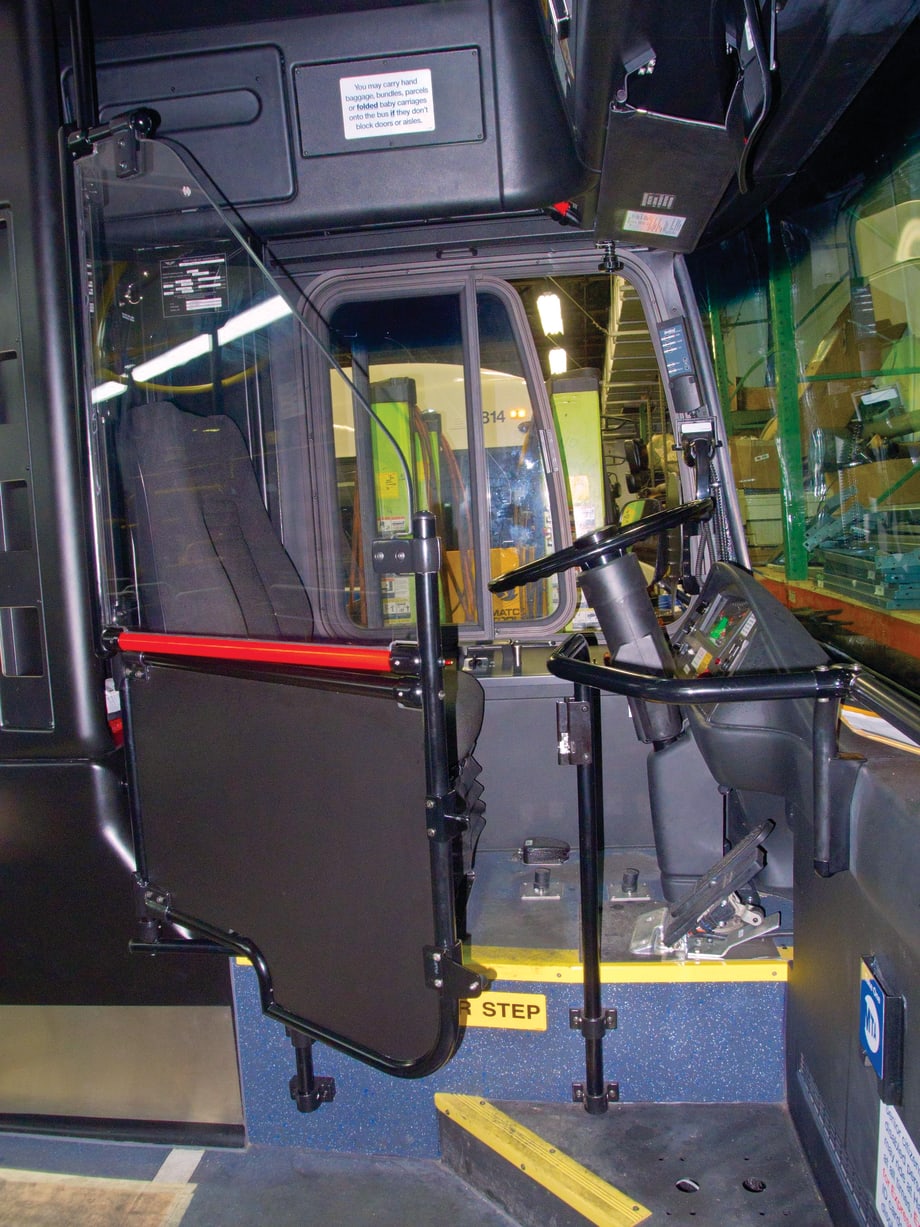
Transit operations, including New Jersey Transit (NJ Transit), New York City Transit (NYC Transit) and the Maryland Transit Administration (MTA) are continuing to research ways to better protect their drivers,
such as installing a partition, or driver’s door. Some of the benefits to installing these doors include curbing abuse from passengers, preventing objects from being thrown at the driver, and to a lesser extent, noise reduction. Since the door gives the driver a certain amount of protection from injuries, having one installed could even generate decreases in insurance premiums.
In 2010, Philadelphia-based design and fabrication firm Bentech designed two types of driver partitions — hinged door and sliding door — for NJ Transit. The hinged design was to equip the agency’s North American Bus Industries (NABI) buses, and the sliding door design was created for its Neoplan vehicles. NJ Transit is currently running a pilot using the doors on five buses.
Bentech has built and delivered 67 hinged doors, which were installed at NABI’s facilities and delivered to NJ Transit, which was the first transit system to pilot these designs.
“[NJ Transit] liked the five pilot buses and wanted additional doors ready to test on a production basis,” Robert Benninghoff, engineering and sales, Bentech, says.
The agency and Bentech extended the pilot to fix a nighttime glare issue with the clear safety glass used in the door.
“We’re waiting to try some low-glare glass, getting that made and delivered. NJ Transit will evaluate four pieces of low-glare glass — similar to the glass that we provide to New York City Transit — to see if this improves nighttime driving on the buses with the driver’s doors,” Benninghoff says.
NJ Transit is planning to buy about 250 driver’s doors later this year, less the 67 already delivered. The cost of the driver’s doors ranges from $1,000 to $2,000, depending on design requirements and quantity ordered, Benninghoff explains.
Additionally, Bentech recently acquired a design contract valued at about $150,000 with NYC Transit to install 100 driver’s doors. The supplier built a pilot door for the agency’s 1999 Nova buses and has delivered 90 of the doors so far.
“The remaining 10 are waiting for some modifications they want to try before they go out for bid on about 700 more for the RTSs,” Benninghoff says.
Bentech also has a second contract with the agency to develop, design and install driver’s doors for four additional models: the Orion 7, Orion 5, 2003 New Flyer articulated and 2004 New Flyer CNG.
Additionally, the company is working on driver’s doors pilots for Washington Metropolitan Area Transit Authority, MTA and Greyhound.
More Bus
Biz Briefs: New Flyer Delivers in Columbus, Houston, Beep and Freebee Merge, and More
In this edition of Biz Briefs, we spotlight the latest developments shaping the future of mobility.
Read More →
People Movement: Dan Dipert Coaches Adds Third-Generation Leader, Keolis Names New Valley Metro VP/GM, and More
In this edition, we also cover recent appointments and announcements at the Wabtec, SilverRide, HNTB, and more, showcasing the individuals helping to shape the future of transportation.
Read More →
New York MTA Plans Largest Bus Fleet Upgrade in More Than a Decade
The agency is seeking manufacturers for 650 new CNG buses to replace aging vehicles, improve reliability, and advance its broader fleet modernization strategy.
Read More →
Building a Flexible Path to Transit Electrification
John Hroncich discusses BAE Systems’ modular and scalable approach, lessons learned from decades of real-world operations, and how agencies can identify electrification strategies that fit their fleets.
Read More →
Bus Tech Talk: Keeping Transit Technicians Ahead of the Technology Curve
LA Metro’s Obed Mejia discusses technician training, evolving maintenance technology, fleet replacement, and strategies for getting the most out of today’s transit fleets.
Read More →
Biz Briefs: RIPTA Unveils New Frontrunners, Clevland RTA Adds New Siemens, and More
In METRO's latest installment, we take a look at recent news from Siemens, Prevost, Dodge, and more partnerships making headlines across the transportation sector.
Read More →
People Movement: Holly Arnold Joins Transdev and More
In this edition, we also cover recent appointments and announcements at Pace, CamTran, MCI, and more, showcasing the individuals helping to shape the future of transportation.
Read More →
The High Cost of Transit Buses: Industry Leaders Look to Procurement Reform
Transit leaders and policymakers examine how standardized bus designs, streamlined procurement, and predictable funding could help agencies stretch budgets and deliver better service.
Read More →
The Business Voice Behind Public Transportation
As chair of APTA’s Business Members Board of Governors, Ray Melleady explains how more than 850 business members are partnering with transit agencies to advance funding, innovation, and industry-wide collaboration.
Read More →
From Surviving to Thriving: Building Stronger Transportation Organizations
Bus Business Consultants founder Brian Dickson shares lessons on leadership, organizational health, and creating options for long-term success in a changing transportation industry.
Read More →