



Build a Marketing Strategy that Focuses on Customers and Products
Too many motorcoach operators focus on their buses. Marketing plans should help to identify and attract new customers while building stronger ties with existing customers. The Internet is helping some companies reach new customers.
One of the most important parts of any motorcoach operator’s business is getting the word out on the company and differentiating it from other operators. Doing that means crafting a marketing plan that targets customers and defines the specific products offered. “The biggest problem is that motorcoach operators never got into the habit of positioning the company as a product—they end up focusing on the motorcoach as being their biggest strength and don’t differentiate themselves from other players,” says Dale Bunce, president and founder of consulting/marketing firm IMD. “All operators can claim they have new, clean buses. They will do better if they define their product and customer segment.” Bunce has spent several years helping motorcoach operators, industry associations, manufacturers and other businesses develop and personalize marketing strategies. Having spoken at numerous industry conferences and met with countless operators, Bunce can say with certainty that the industry has a lot of challenges when it comes to marketing. “The industry is mainly made up of small, family-owned businesses that have always done things the same way,” he says. “One of the problems is that they don’t have a background in marketing and how to put together a plan.” To help create a marketing plan, Bunce offers a motorcoach assessment and a strategic planning program. During the two-day assessment, Bunce visits the company and compares the operation to industry benchmarks, including operating performance, fleet size and marketing strategies. The strategic planning program entails three days of meeting with the operation’s management and building a tailored marketing plan. The programs cost $3,800 and $4,750, respectively. “The motorcoach industry is not used to spending money on outside services to help them get better,” he says. “But, when you’re looking at a bus all day, it’s hard to think creatively.” Regardless of who they get help from, operators need to be focused on marketing their product because they really will never be able to control costs, Bunce says. They also need to start experimenting with other ways to get their revenue up. Bunce says the following four points should be included in any marketing program:
An understanding of the market and the customer. “You must understand more about the customer than the business,” he says.
An understanding of the competition—who they are, what services they offer and their strengths and weaknesses.
An understanding of the product itself. “The motorcoach industry is a service business, so you need to understand service,” says Bunce.
An understanding of the strengths and weaknesses of your own company. “It’s difficult to implement a world class plan if you don’t have world class service,” he says. Eyre Bus Services in Glenelg, Md., is one of several motorcoach operators that used IMD’s marketing services. Though the company already had marketing plans in place, Bunce helped it identify key issues of growth and strategies for each one, says President Ronald Eyre. Those issues include financial goals, creating a new customer base and expanding services, as well as a comprehensive employee training program. “We’ve identified the market and know what they are,” Eyre says. “We’re working on accomplishing those goals.” The plan took about two years to put together, and Eyre says he hopes to see results within one year. Eyre operates 58 vehicles and a full line of services. Learn marketing basics Understanding the basics of marketing is essential when putting together a marketing plan. The Southeast Tourism Society offers a one-week curriculum at the North Georgia College and State University geared specifically toward tourism. Classes offered include market research, motorcoach and group tours, breaking into international marketing and creative advertising. Students attend the curriculum for three consecutive years (each year, the classes become more focused) and, once a student completes the three-year curriculum, he is given a travel marketing professional certificate. In its 10th year, the marketing course will be held August 5 to 10. Last year, there were 160 participants. Dick Trammell, who has taught the motorcoach marketing course for the curriculum for about five years, says motorcoach operators have to resist the urge to begin marketing on a national level right away. Rather, he says, they should begin marketing locally and build up a good customer base. “The motorcoach industry is a relationship business,” he says. “The motorcoach product is not chosen by advertising. It is chosen by the product and quality of service. While advertising can serve a purpose in raising brand awareness, you’ve got to have a service and you’ve got to have a product to back that up.” Having been in the tourism industry for more than 20 years, Trammell, who was state travel director in North Carolina before starting his own company, says operators have had to expand to markets that they normally did not serve. Before, he says, it was mostly retirees that the operators targeted. Now, they are looking at more multigenerational trips involving grandparents, parents and children to draw in potential life-long customers. Trammell recommends also targeting schools and to start marketing to that age group through such things as trips to racetracks. Baby boomers, the hottest market for motorcoach operators, are also getting more into adventure tours and demand more diverse outings, Trammell says. “They are looking for more to do than walking through historic homes and gardens.” Tours are also becoming more multimodal, including planes, trains and ships to reach a broader audience. Trammell recommends conducting focus groups to find out what type of services people do want as well as looking at the national scene for trends. “It’s wise to take a look at the community as a product and see how well it is being sold,” he says. When looking, see how to market the community all year instead of just seasonally. “Sky is the limit as far as developing new products. It really comes down to innovation and breaking away from traditional markets.” Trammell, who is president of Travel and Tourism Development Group, recently began a Website that allows motorcoach operators to plan their itineraries along interstate routes. The site, www.destinationcarolinasusa.com, features links to attractions, dining and events that could be included in a tour. The site, which will be up July 1, focuses on North and South Carolina, but Trammell hopes to create a similar site covering the Southern U.S. Putting your plan to use Though IMD’s Bunce says the Internet is not as big of a player in marketing now as it will someday be, motorcoach operators are taking advantage of the medium. Anderson Coach & Tours in Greenville, Penn., recently began sending out a weekly e-mail newsletter that customers sign up for through Anderson’s Website. There are currently about 500 people signed up for the newsletter. “Our list has increased consistently,” says President Doug Anderson. “It’s cost effective when it comes to publicizing last-minute additions.” Those interested can also submit reservations online. The Website categorizes trips by destinations and is set up, both in style and content, very similar to the company’s tour catalog. Anderson says the company is constantly pushing people to its Website. The site is promoted on the company’s voice-mail, radio advertising and its 55 vehicles. “Developing a Website is a major capital expense and once it’s developed, you have to consider a budget for updating and improving it,” he says. “It’s not just one of those things you work on and it’s done. People have put up sites to say they have one, but have not maintained them.” In trying to reach new markets, Anderson Coach has departures to seven racetracks to attract a younger generation of customers. The company’s traditional traveler is of early retirement age but with trips to sporting events and concerts, the age of the traveler is getting younger, Anderson says. Private Motor Coach Inc. in Gibsonia, Penn., also puts a lot of time and energy into its Website, which features everything from details on the company to pictures from the latest trips. Private also markets through advertising in publications and attending trade shows. “We do everything our budget allows,” says President Edgar Lonsbary. Though it operates only one bus, Private has built a business on running its “Anywhere-Anytime” service. Lonsbary takes people to U.S., Canada, Mexico and Central and South America destinations in a motorhome/bus conversion. The bus features a queen bed, a washer and dryer and a complete kitchen. “The RV business is hotter than a firecracker. We get to go places we normally could not get to,” Lonsbary says. “My goal is to meet expenses, not to turn a big profit.” Last year, Lonsbary ran 33 trips lasting from one to six weeks. He also runs day trips and is moving the business to Texas in a few months because he says there he will find a good customer base. Both Anderson Coach and Private Motor Coach were given vision awards by the United Motorcoach Association for creating new products and services based on customer preferences and becoming the preferred form of travel for enhancing lifestyles, respectively. For more on IMD, click on www.openmarkets.com
More Management

Bus Tech Talk: Keeping Transit Technicians Ahead of the Technology Curve
In this episode of Bus Tech Talk, Complete Coach Works’ Business Development Manager Mark Hollenbeck and METRO’s Executive Editor Alex Roman sit down with Obed Mejia, Senior Technical Trainer for Bus Maintenance, at LA Metro to discuss how rapidly evolving bus technology is changing the maintenance shop — and the skills technicians need to keep pace.
Read More →
Michael Schneider Joins Paslay Group to Expand Transportation Practice
The longtime transportation executive will help Paslay Group grow its advisory and program management work across transit, highway, and other infrastructure sectors.
Read More →
People Movement: Connectpoint Expands Leadership Team, Stadler Names New Group CEO, and More
In this edition, we also spotlight recent personnel moves at Burns, UZURV, and more, highlighting the people taking on new roles across the transportation industry.
Read More →
More Than a Summer Job: Building the Next Generation of Transit Talent
The Delaware River Port Authority and PATCO have transformed their internship program into a hands-on professional development experience that introduces students to the breadth of transportation careers — and creates a pipeline for future employees.
Read More →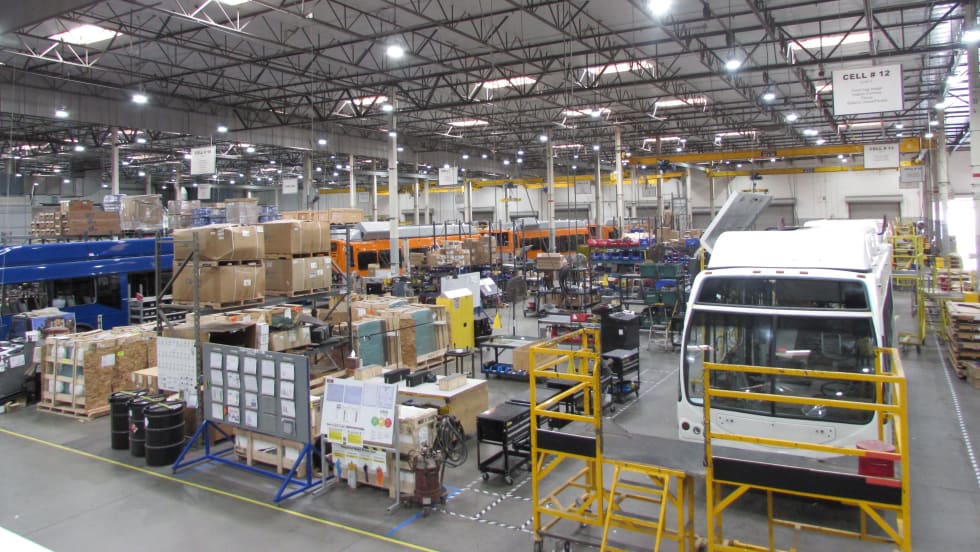
LA Metro Board Awards 220 Battery-Electric Bus Contract to ENC
The contract, which is the largest base award of battery-electric buses by a U.S. transit agency, will be built in Southern California, sustaining good jobs as LA prepares to welcome the world in 2028
Read More →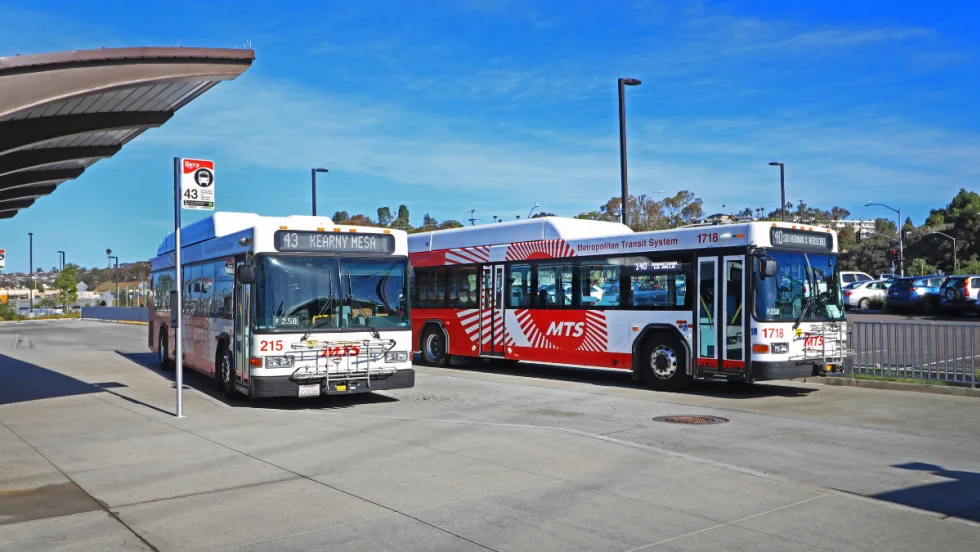
What’s Behind San Diego MTS’s Award-Winning Transit Strategy
Named one of APTA’s 2026 Outstanding Public Transportation Systems with 50 million or more annual passenger trips, California’s San Diego Metropolitan Transit System points to gains in ridership, safety, technology, and reliability as foundations of its success.
Read More →
Public Transit Conference Returning to GFX in 2027, Call for Papers Now Open
The Call for Papers is now open, allowing transit agency professionals and industry experts to help shape the PTC educational program by submitting session ideas for consideration.
Read More →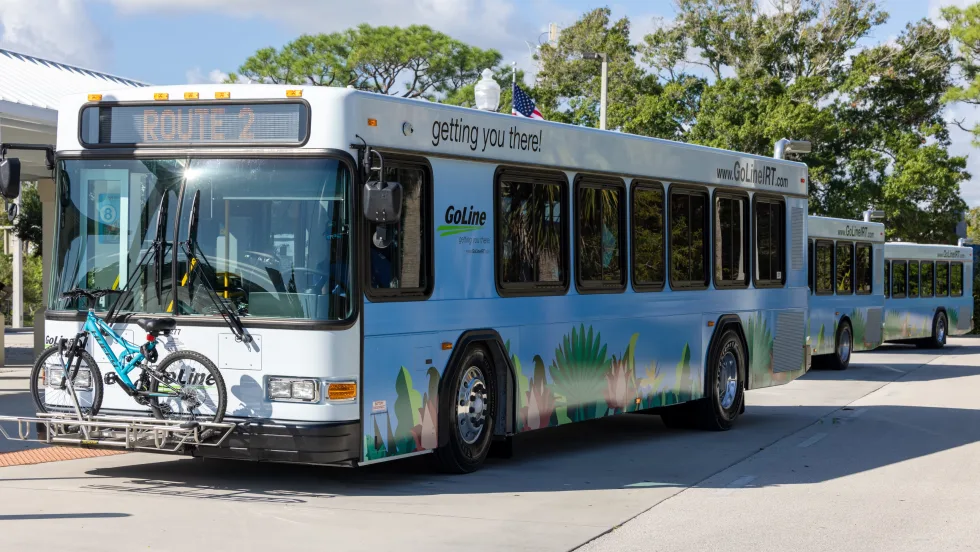
Indian River Transit’s Community-Focused Approach Earns National Recognition
Named APTA’s 2026 Outstanding Public Transportation System in its size category, Florida’s Indian River County transit system continues to grow ridership through fare-free service and a focus on evolving community needs.
Read More →
ENC Lands MATA Contract and More in Biz Briefs
In this edition of Biz Briefs, we spotlight the latest developments shaping the future of mobility.
Read More →From Surviving to Thriving: Building Stronger Transportation Organizations
Bus Business Consultants founder Brian Dickson shares lessons on leadership, organizational health, and creating options for long-term success in a changing transportation industry.
Read More →