METRO’s Executive Editor Alex Roman sat down with David Grannis, Executive Director of Zero Emissions Transit, on a recent episode of METROspectives to talk about the project’s history, technology, community impact, and future.
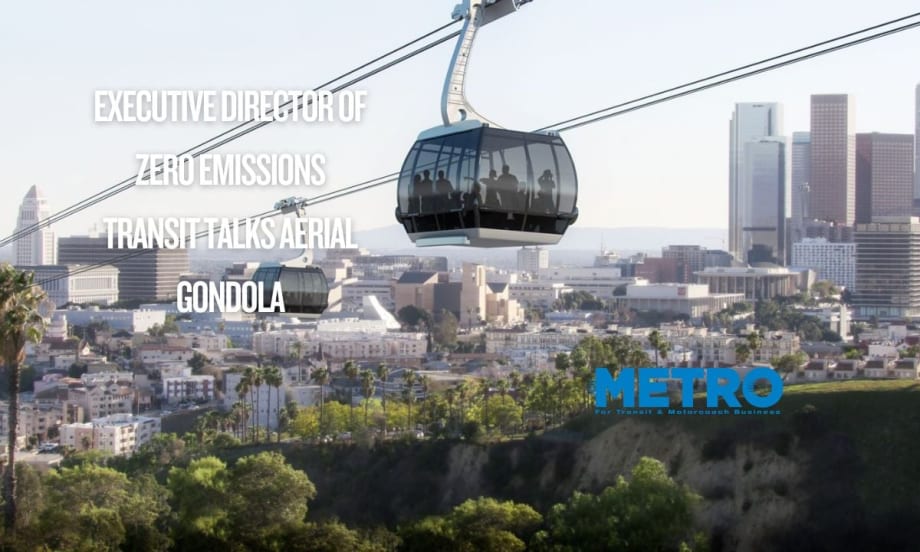
The aerial gondola is in use in several countries, including Mexico City, and could come to LA as soon as the upcoming Olympics.
Photo: Zero Emissions Transit
4 min to read
The METROspectives episode delves into the history of the Dodger Stadium gondola project and its implications for Los Angeles transit.
Alex Roman and David Grannis discuss how this project integrates zero-emission technology to enhance urban mobility.
The conversation highlights the potential impact of the gondola on local communities and its role in shaping the future of city transport.
*Summarized by AI
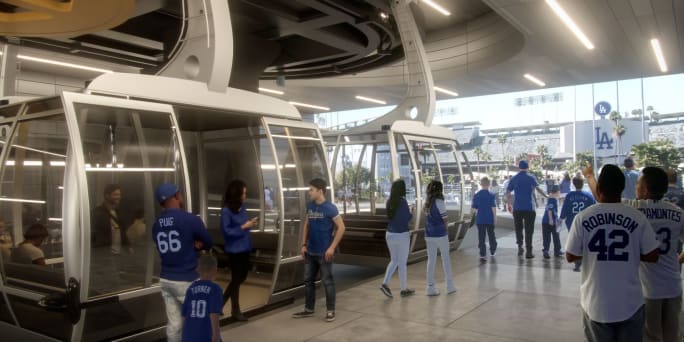
Los Angeles has long struggled with congestion around Dodger Stadium, Major League Baseball’s most-attended venue.
A new idea is now moving forward: an aerial gondola linking Union Station directly to the ballpark.
Ad Loading...
METRO’s Executive Editor Alex Roman sat down with David Grannis, Executive Director of Zero Emissions Transit, to talk about the project’s history, technology, community impact, and future.
About the LA ART Gondola
To start, what exactly is the LA ART gondola project, and why does it matter?
The gondola is a 1.2-mile aerial system connecting Union Station to Dodger Stadium, with an intermediate stop in Chinatown.
Dodger Stadium hosts more than four million visitors a year, not including concerts or parkgoers, and right now the only way in is by car. This project helps fulfill a long-standing requirement to link the stadium to transit, while also reducing traffic and emissions in nearby neighborhoods.
How does the technology work?
A gondola is different from an aerial tram. Instead of two cars going up and down, you have multiple cabins circulating continuously. We’re planning a 3S system, which uses three cables for stability and capacity. Each cabin can hold up to 40 people, with departures every 23 seconds. That means about 6,000 people per hour, per direction. The ride will take about seven minutes.
Why did this project resurface now, after being studied for decades?
Honestly, part of it is persistence.
Ad Loading...
The idea goes back 30 years, but it picked up momentum when Metro created the Office of Extraordinary Innovation and invited proposals. We submitted the gondola as a private-sector idea, and Metro became the lead agency for environmental review. After years of analysis, Metro’s board certified the environmental documents in 2024, which allowed us to move into state approvals.
The Road to Completion
What’s the timeline? Will it be ready for the 2028 Olympics?
We’re aiming for 2028, but I’ll be candid: it’s tight. We still need approvals from California State Parks and Caltrans, since the line passes over LA State Historic Park and the 110 Freeway. If those go through this year, it’s possible, but the schedule is challenging. Even if we miss the Olympic Games, the system will have lasting benefits.
What kind of feedback have you received from the community?
At first, people were skeptical — some thought it was a ski lift idea. But once we explained the capacity and safety, support grew.
We also addressed concerns directly. Cabins are sealed so that nothing can be thrown out, and in privacy-sensitive areas, the windows will fog automatically as they pass. We’ve held extensive outreach; Metro even reported this project had more community engagement than any other they’ve worked on. Today, we see strong support from places like Chinatown and Olvera Street, where local businesses expect an economic boost.
Benefits of a Gondola System
Speaking of business, how could the gondola help local merchants?
Take Olvera Street, for example. The station will sit above the street, and visitors arriving by car or rideshare will walk through the marketplace to reach the gondola. That means more foot traffic, more visibility for retailers.
Ad Loading...
In Chinatown, we’ve committed to branding and promoting the neighborhood as part of the project. It’s not just a ride to a game — it’s a connection to cultural districts that deserve more attention.
Sustainability is central to this project. Can you expand on that?
Yes. First, by taking about 3,000 cars out of circulation on game days, we reduce congestion, vehicle miles traveled, and emissions.
Second, the gondola itself is a zero-emission system powered by clean electricity. We’ll also be the first to use battery backup vaults instead of diesel generators. Those vaults can even feed power back into the grid during peak demand, thereby supporting energy resilience within the community. So sustainability here isn’t just about fewer cars — it’s also about cleaner, more innovative energy use.
From a big-picture standpoint, what excites you most about this project?
Two things. One is the guest experience. You’ll be 275 feet in the air with incredible views of Los Angeles, and it’s free with a game ticket. That “wow factor” matters because good experiences make people want to use transit again.
Second is the symbolism. If you see the gondola on a national broadcast, it tells the world LA is serious about innovation and zero-emission transit. It could become an icon, just like the Hollywood sign or Santa Monica Pier.
Ad Loading...
Los Angeles has long struggled with congestion around Dodger Stadium, Major League Baseball’s most-attended venue.
Photo: Zero Emissions Transit
Final Word on the Project
The LA ART gondola isn’t a one-size-fits-all solution. But in this unique corridor, Grannis believes it offers a rare combination: congestion relief, emissions reduction, community benefit, and rider appeal.
“This project,” he says, “is about more than getting to a baseball game. It’s about rethinking how transit can serve people and places in new ways.”
Timeline: LA ART Gondola Project
Late 1980s – Early 1990s: First studies explore connecting Union Station to Dodger Stadium. Steep grades make rail infeasible, sparking interest in aerial transit.
2014–2015: Renewed interest as Dodger Stadium ownership and surrounding landholders revisit options for transit access.
2018: Proposal submitted to LA Metro’s Office of Extraordinary Innovation as a private-sector project. Metro agrees to sponsor an environmental review.
2019–2023: Extensive environmental studies and community outreach conducted, with record levels of public engagement reported.
February 2024: LA Metro Board certifies the project’s Environmental Impact Report, clearing the way for state-level approvals.
2025: Project enters review with California State Parks and Caltrans for key permits to cross the LA State Historic Park and the 110 Freeway.
Target 2028: The Goal is to complete the gondola in time for the Los Angeles Olympic Games, where Dodger Stadium will host baseball events.
This article, generated using OpenAI, was edited for accuracy and style and based on an episode of METROspectives
Quick Answers
The gondola project aims to provide a sustainable and efficient transportation option to Dodger Stadium, reducing traffic congestion and emissions.
David Grannis, Executive Director of Zero Emissions Transit, is one of the key figures involved in the project, as discussed with METRO’s Executive Editor Alex Roman.
The gondola will employ state-of-the-art zero-emission technology to ensure an environmentally friendly transportation solution.
The gondola is expected to have a positive impact by reducing local traffic and emissions, thus benefiting both the community and the environment.
The long-term vision includes enhancing connectivity to Dodger Stadium while promoting zero-emission transit solutions as a model for future urban transportation projects.
CEO Magnus Friberg discusses Luminator’s shift toward becoming a digital partner, the growing importance of software and interoperability, and how AI can help agencies improve operations and passenger experience.
Reliability-Centered Maintenance helps transit agencies move beyond routine checklists to focus limited resources on the assets and failures that have the greatest impact on safety, reliability, and service.
More than 1,500 buses now feature upgraded technology designed to improve arrival predictions and provide free Wi-Fi, with deployment expected to reach nearly 2,000 buses by the end of 2026.
John Hroncich discusses BAE Systems’ modular and scalable approach, lessons learned from decades of real-world operations, and how agencies can identify electrification strategies that fit their fleets.
In METRO's latest installment, we take a look at recent news from Complete Coach Works, Beep, FlixBus, and more partnerships making headlines across the transportation sector.
What if transit leaders could ask any operational question and get a trusted answer in seconds? Conversational AI is transforming how agencies use their data.
More than $191 million in federal funding will help three transit agencies replace aging rail vehicles and support a new autonomous shuttle service in Chattanooga.
LA Metro’s Obed Mejia discusses technician training, evolving maintenance technology, fleet replacement, and strategies for getting the most out of today’s transit fleets.
In METRO's latest installment, we take a look at recent news from Siemens, Prevost, Dodge, and more partnerships making headlines across the transportation sector.
Pedestrian microsimulation is helping rail planners identify bottlenecks, test station designs, and prepare complex transit hubs for growing passenger volumes.