



Calif.'s Metrolink weathers record storms, plans service upgrades
In December 2010, record Southern California rains, causing damage such as flooded tracks, forced Metrolink to scramble to maintain services for its customers.
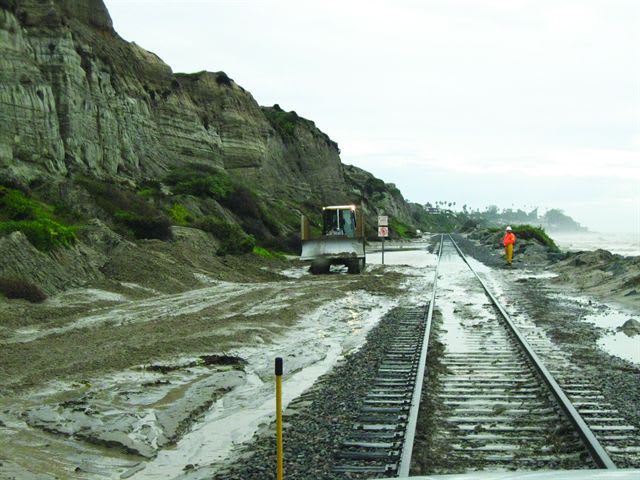
Some of the measures the commuter rail system has in place include round-the-clock surveillance of the situation with changes made to services on the fly, constant updates to its customers via its communications department, having equipment and crew on hand to work on damaged or flooded rails, and motorcoach and transit bus service when its trains are unable to run.
[IMAGE]MET2News-Metrolink2-2.jpg[/IMAGE]In December 2010, record-setting rains forced Southern California's Metrolink to scramble to maintain services for its customers when issues such as flooding and mudslides caused delays.
"There is sort of an adrenaline rush when trying to solve problems like these," said CEO John Fenton the morning after seven to eight inches of water flooded one of its tracks around 9:30 p.m. "I like to say that our staff is at our best when things are at their worst."
Fortunately, the storms only forced Metrolink to put its existing plans into action, explained Fenton, with the commuter rail system planning weeks ahead of Southern California's rainy season, which often becomes treacherous in many areas Metrolink serves.
"Success requires constant problem solving and lots of cooperation and teamwork," Fenton said. To prepare for the storms, the agency conducted a conference call at 11:00 p.m. the night before, with all the Los Angeles County CEOs, to review the details of their strategy and plans on handling service interruptions. They had to anticipate all possible hurdles, one of the biggest being freeway shutdowns.
"A big part of being successful in an outage is anticipation," said Fenton. That evening would be the biggest challenge, with the worst of the storm on its way. Problem solving tactics included establishing bus bridges and cleaning and inspecting tracks. Officials received a call at 4:00 a.m., the morning of the first storm, Fenton recalled, to bring in crews from a remote location to take measures to prevent mudslides and washouts on the tracks.
The morning after one storm was just finishing passing through, with a larger storm predicted to hit that night, Fenton and his staff convened in the "War Room" to both monitor the current situation and to make plans for the issues that may arise later.
In a small conference room, approximately 10 transit officials constantly reviewed rail monitor screens and worked to troubleshoot obstacles caused by the severe rainstorms. They received notifications on the status of the more than 500 miles of railroad they operate through a "bucket line" simulator as well as field reports and accounts from conductors, which appeared on multiple monitors placed throughout the room.
Some of the measures the commuter rail system has in place include round-the-clock surveillance of the situation with changes made to services on the fly, constant updates to its customers via its communications department, having equipment and crew on hand to work on damaged or flooded rails, and motorcoach and transit bus service when its trains are unable to run.
As of September 2010, Metrolink runs seven routes over 388 miles — 512 miles when including services shared with Amtrak — with 55 stations and 144 trains in operation, on average, during the weekdays, serving an area that spans Southern California from the mountains to the deserts to the beaches. Between April and June 2010, Metrolink served a total of 38,684 passengers.
The commuter rail system plans on having 137 new, state-of-the-art cab and passenger Hyundai-Rotem collision-absorption technology railcars, dubbed the Guardian fleet, in service by 2012 and is aggressively pursuing installation of positive train control by the 2015 federal mandate.
Additionally, the agency has partnered with "Wild at Work," an online business-to-business resource that reaches employees at more than 2,000 workplaces in the Metrolink service area. Employees of "Wild at Work" member companies receive coupons and special offers provided by 27,000 partner companies. Metrolink will be able to create special offers for this commuter population and promote its corporate pass program.
Other initiatives include enhancing customer service; station cleanliness; and introducing quiet cars.
More Rail

Strada360’s Steve Lassey on Turning Transit Data Into Better Decisions
From breaking down data silos to preparing for AI, Strada360 CEO Steve Lassey discusses how transit agencies can use technology to improve operations, customer information, and long-term decision-making.
Read More →
SEPTA Details Accelerate Vision for Transit System
The plan outlines investments in trolley modernization, new Metro and Regional Rail vehicles, accessible stations, and more frequent bus and rail service.
Read More →
FTA Ends Direct Oversight of MBTA Safety Actions
The federal agency closed its remaining special directive to the Massachusetts Department of Public Utilities following a safety review that began in 2022.
Read More →
Amtrak, CN Reach Agreements to Strengthen Passenger Rail Service, Safety
The agreement resolves a more than decade-long proceeding before the Surface Transportation Board concerning the terms and conditions for Amtrak services, such as the City of New Orleans, Illini/Saluki, and Wolverine.
Read More →
New York MTA Advances Final Contract for Second Avenue Subway Expansion
Contract Four is the largest in the Second Avenue Subway Phase 2 project and includes construction of station infrastructure, tracks, and signals for the subway expansion, MTA officials said. Work on Contract Four will begin in 2027.
Read More →
San Diego MTS Breaks Monthly Trolley Ridership Record
Agency officials said July’s ridership indicates MTS’s continued recovery from the pandemic.
Read More →
Report Examines NJ TRANSIT Reliability, Funding Challenges
The Garden State Initiative analysis examines the roles of Amtrak infrastructure, fleet management, and agency operations while recommending a more performance-based approach to improving reliability.
Read More →
Stadler, CapMetro Sign Long-Term Rail Fleet Support Agreement
Beginning in 2027, Stadler will provide on-site technical expertise, spare parts support, training, and obsolescence management to help extend the reliability and longevity of CapMetro’s GTW fleet.
Read More →
Biz Briefs: Alstom Lands Canadian Contract, LYT to Supply California TSP, and More
In METRO's latest installment, we take a look at recent news from Complete Coach Works, Beep, FlixBus, and more partnerships making headlines across the transportation sector.
Read More →
CATS Gold Line Marks 5 Years of Service, 2.8M Passenger Trips
With a six-mile expansion planned, the Charlotte streetcar is positioned to connect more neighborhoods and major transit hubs across the region.
Read More →