




From Collaboration to Innovation: Diane Cowin on What’s Next for Transit
How Transit Architecture Is Reshaping the Rider Journey
In this Consultant Roundtable, Carmen C. Cham shares insights on how agencies can create spaces that are intuitive, connected and built for long-term impact.
April 29, 2026
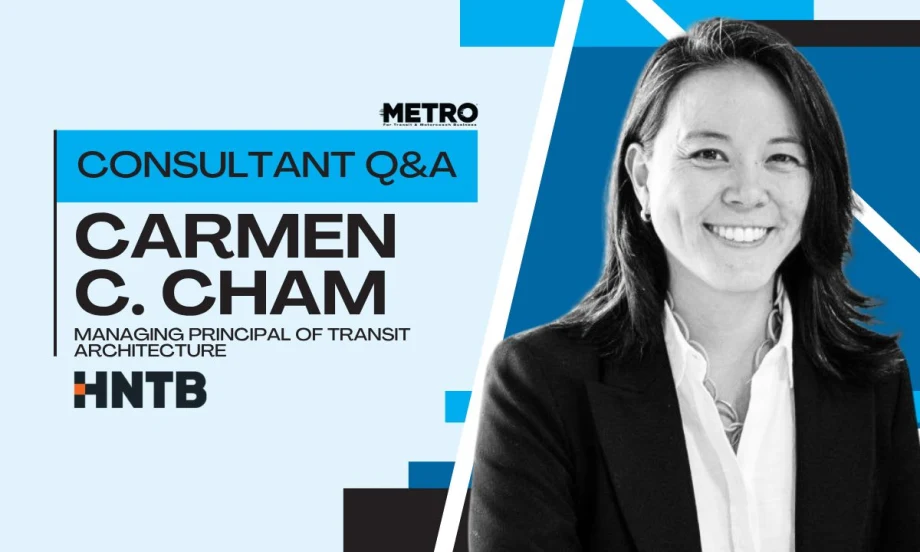
As agencies prioritize rider experience, accessibility, and long-term value, stations are increasingly being designed as civic assets that support development, generate economic activity, and create more seamless, intuitive mobility networks, said HNTB's Carmen C. Cham.
Credit:
HNTB/METRO
4 min to read
- Carmen C. Cham discusses the importance of creating intuitive transit spaces that enhance user experience.
- The roundtable highlights the significance of connected architecture in improving commuter journeys.
- The focus is on designing transit infrastructure with long-term impact in mind, ensuring sustainable development.
*Summarized by AI
Transit architecture is undergoing a fundamental shift. No longer limited to the design of individual stations, it now plays a central role in shaping the entire passenger journey — from first arrival to final destination — while also strengthening the connection between transit systems and the communities they serve.
As agencies prioritize rider experience, accessibility, and long-term value, stations are increasingly being designed as civic assets that support development, generate economic activity, and create more seamless, intuitive mobility networks.
In this consultant roundtable, Carmen C. Cham, managing principal of transit architecture at HNTB, shares insights on how design is evolving to meet these broader expectations, balance operational performance with user experience, and position transit infrastructure for the future.
About Architecture and Design
Q: How has the role of architecture in transit projects evolved in recent years, particularly as agencies focus more on passenger experience and community integration?
Cham: Architecture in transit has expanded well beyond the design of the station itself. Traditionally, the focus was often on the station as an individual facility within the system. Today, agencies are thinking much more broadly about the passenger journey and about the station’s role within the surrounding community.
That means architecture now has to do more than create a functional transit node. It needs to help shape a safe, intuitive, and welcoming experience from arrival to departure, while also strengthening the connection between transit and the neighborhoods around it. Increasingly, stations are being viewed as civic assets and catalysts for broader change. They can support ridership growth, generate revenue, and anchor development that brings together transit, housing, retail, public space, and other community uses.
At the same time, long-standing priorities like safety, security, and state of good repair are being more deliberately integrated into how passenger experience is defined and delivered. So, the role of architecture today is both more expansive and more integrated. It is about system performance, community value, and the quality of the experience all at once.
Q: You’ve worked on complex, high-profile transit facilities across the country. What are the most important design considerations when creating stations that must serve both operational efficiency and welcoming public spaces?
Cham: Today, transit is one of many mobility options people can choose from, fundamentally changing key design considerations. Riders are no longer a captive audience. They are making decisions among traditional transit, driving, rideshare, micromobility, and the option to replace some trips altogether with remote work.
Because of that, the most important consideration is creating an experience that is safe, seamless, and genuinely easy to use — one that removes as much friction as possible and makes transit a preferred option.
As such, operational efficiency and public experience are not separate goals. Clear circulation, intuitive wayfinding, visibility, and well-placed amenities all improve system performance and make the space feel more welcoming and legible to users.
Getting that balance right requires a design process grounded in close collaboration with operators, agency staff, and community stakeholders. That collaboration helps ensure stations support day-to-day operational efficiency while also advancing inclusive access and meaningful connections to the surrounding community.
Connecting Communities, Trends
Q: Transit agencies are increasingly looking to stations as catalysts for neighborhood development. Based on your experience, how can architectural design help strengthen those connections between transit infrastructure and surrounding communities?
Cham: Architectural design can help make transit feel like part of the community rather than separate from it. At its best, a station isn’t just a place to pass through. It’s a part of daily civic life, connected to where people live, work, shop, gather, and spend time.
Design plays an important role in this by creating facilities that are open, accessible, and responsive to the local context. That starts with meaningful outreach and community-led planning, so the project reflects local needs and priorities. It also means integrating transit with housing, retail, public space, and other civic uses in ways that make the station more active and useful beyond the commute itself.
Equally important is the pedestrian experience. Stations should be designed to connect people safely and comfortably to the surrounding neighborhood, jobs, housing, and other mobility options. When design supports those connections well, transit infrastructure can become a driver of community development and long-term resilience.
Q: From your perspective, what trends in transit facility design — whether related to sustainability, resilience, or passenger amenities — do you think will most influence how stations and transit spaces are built in the next decade?
Cham: Three priorities are increasingly shaping the next generation of transit facilities — and they go well beyond traditional design considerations.
First, making transit destinations, not just stops. Developers are looking to transit hubs to anchor mixed-use and entertainment districts, turning stations into vibrant places that attract people rather than move them.
Second, making the experience seamless. Advances in mobile technology — from contactless payment to real-time information — are reshaping how riders navigate systems, creating more intuitive, connected journeys and redefining expectations for station design, amenities, and passenger flow.
Finally, making investments that endure. The most successful transit infrastructure delivers long-term value for communities. That means balancing upfront capital costs with lifecycle performance while exploring value-capture strategies such as joint development and public-private partnerships to generate sustainable revenue over time.
Quick Answers
Carmen C. Cham focuses on creating transit spaces that are intuitive, connected, and designed for long-term impact.
*Summarized by AI
Subscribe to Our Newsletter
More Management
Indian River Transit’s Community-Focused Approach Earns National Recognition
Named APTA’s 2026 Outstanding Public Transportation System in its size category, Florida’s Indian River County transit system continues to grow ridership through fare-free service and a focus on evolving community needs.
Read More →
ENC Lands MATA Contract and More in Biz Briefs
In this edition of Biz Briefs, we spotlight the latest developments shaping the future of mobility.
Read More →
From Surviving to Thriving: Building Stronger Transportation Organizations
Bus Business Consultants founder Brian Dickson shares lessons on leadership, organizational health, and creating options for long-term success in a changing transportation industry.
Read More →

Everett Transit, Community Transit Outline Consolidation Agreement
The proposed agreement calls for a 50% increase in bus service in Everett, a new microtransit zone, continued paratransit service, and the transfer of Everett Transit operations to Community Transit.
Read More →
Strada360’s Steve Lassey on Turning Transit Data Into Better Decisions
From breaking down data silos to preparing for AI, Strada360 CEO Steve Lassey discusses how transit agencies can use technology to improve operations, customer information, and long-term decision-making.
Read More →
People Movement: Phil Washington Joins HNTB, Denver RTD Launches CEO Search, and More
In this edition, we also spotlight recent personnel moves at STV, the Eno Center for Transportation, and more, highlighting the people taking on new roles across the transportation industry.
Read More →
SEPTA Details Accelerate Vision for Transit System
The plan outlines investments in trolley modernization, new Metro and Regional Rail vehicles, accessible stations, and more frequent bus and rail service.
Read More →
FTA Ends Direct Oversight of MBTA Safety Actions
The federal agency closed its remaining special directive to the Massachusetts Department of Public Utilities following a safety review that began in 2022.
Read More →
Report: Transit Bus Manufacturing Supports 34,100 Jobs, $5.1B in GDP
The “Buses Mean Business” report examines the transit bus manufacturing industry’s economic footprint, supply chain, and rising demand for vehicle replacements.
Read More →
LIT Marks 10-Year Milestone at Annual Summit
Hosted by the COTA from September 10 to 13, the Summit carried the theme “Celebrating 10 Years of Excellence, Leadership, and Impact,” with every part of the program honoring the people, agencies, and partners who built LIT over its first decade.
Read More →