



Capitol Corridor’s TrainManager: A Digital Revolution in Rolling Stock Management
The project was named one of METRO’s Innovative Solutions Award Winners, earning the honor for the Rail category.

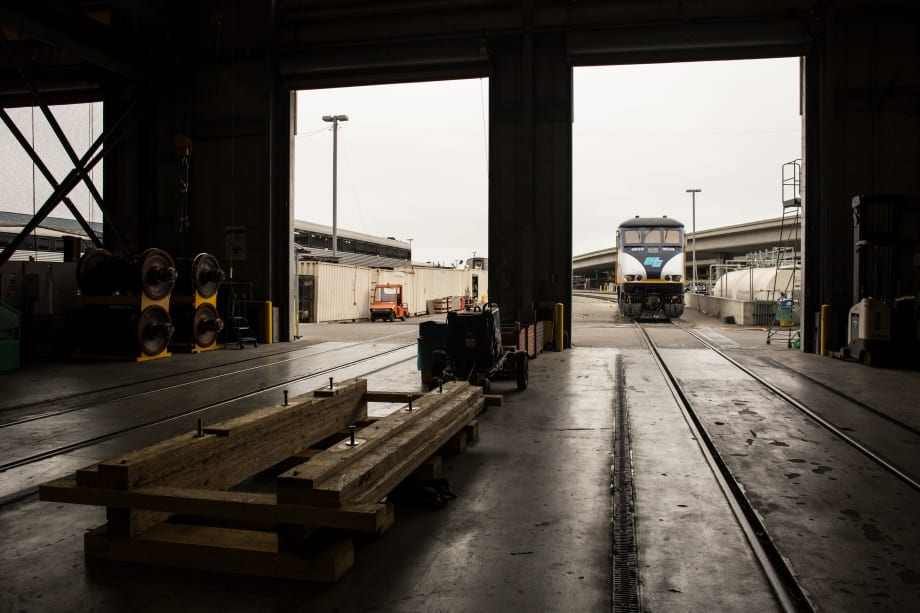
Developed in collaboration with San Francisco-based tech consultant Xentrans, TrainManager provides a modern, web-based interface that enables yard administrators to build and modify trains, consisting of multiple cars, visually.
Photo: CCJPA
- The TrainManager project is a significant advancement in managing rolling stock for Capitol Corridor.
- The project received the Innovative Solutions Award from METRO.
- It was recognized specifically in the Rail category for its innovative approach.
*Summarized by AI
Oakland, Calif.’s Capitol Corridor Joint Powers Authority (CCJPA) has achieved a transformative leap in rail operations by implementing TrainManager, a custom-built, cloud-based software platform created by Xentrans that has modernized the planning, management, and maintenance of Northern California’s intercity rail fleet.
TrainManager is now the cornerstone of a more responsive, efficient, and forward-looking rail service. It replaces outdated analog methods with a centralized, visual, and API-enabled system.
It was also named one of METRO’s Innovative Solutions Award Winners, earning the honor for the Rail category.
For CCJPA, adopting TrainManager is both a culmination of years of operational insight and a bold step into the digital age of rail management.
“We’re elated to see TrainManager recognized for what it is: not just a solution to a spreadsheet problem, but a platform with multiplicative impacts on operational efficiency and data reliability,” said Jim Allison, manager, planning, at CCJPA. “Innovation was overdue in this aspect of our industry, and we’re happy to have taken this step.”
From Spreadsheets to Smart Systems
For years, the daily configuration of trains across the Capitol Corridor and the San Joaquin Joint Powers Authority (SJPA) — Northern California’s two intercity passenger rail services — was managed using an Excel workbook circulated by email. These spreadsheets tracked train schedules, rolling stock assignments, and key maintenance needs for a shared fleet of 26 locomotives and 124 passenger cars.
With the makeup of train sets changing frequently due to rerouting, servicing, or operational adjustments, updates often triggered multiple email versions in a single day.
“Use of the Excel method perpetuated human errors, took more time, and prevented any linkages to API based downstream use of the data, but now with this tool, it can be a one-stop digital source of truth that can further eliminate other human errors and system/data reliability errors,” said Allison. “It had a multiplicative effect on improving operations, not just eliminating the use of spreadsheets as if they are data — which they are not — but becoming a platform to do even more.”
Developed in collaboration with San Francisco-based tech consultant Xentrans, TrainManager provides a modern, web-based interface that enables yard administrators to build and modify trains, consisting of multiple cars, visually.
The platform displays current train layouts and journey schedules, including critical car-level details such as seating capacity, Wi-Fi status, bicycle storage, cleaning schedules, and preventive maintenance requirements.
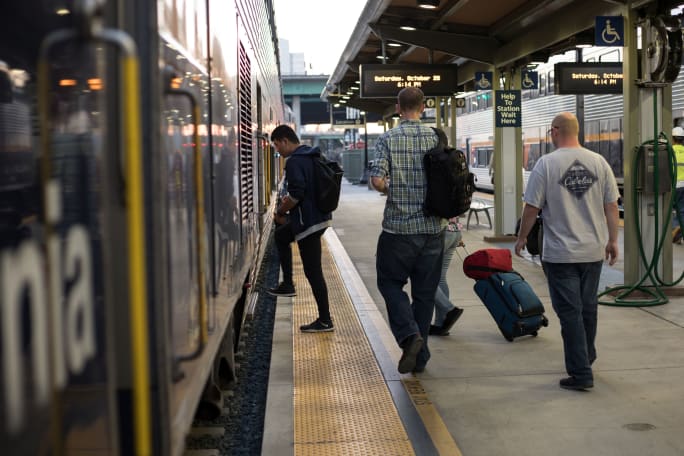
For CCJPA, adopting TrainManager is both a culmination of years of operational insight and a bold step into the digital age of rail management.
Photo: CCJPA
Enhancing Coordination and Accuracy
One of the most significant operational gains since adopting TrainManager has been the stabilization and accessibility of vital consist data.
TrainManager has strengthened the collaborative ecosystem between Amtrak, CCJPA, SJJPA, and third-party contractors by offering a centralized, read-only portal for personnel across organizations.
By eliminating the margin for error inherent in spreadsheet-based updates and creating a digital record of operational decisions, the platform significantly reduces the likelihood of miscommunication and outdated information being passed to crews and support teams.
Built for Integration and the Future
Perhaps TrainManager's most forward-looking feature is its API-first design, which enables seamless integration with other rail technologies. From real-time passenger counters and onboard signage to contactless payment systems and Wi-Fi equipment diagnostics, TrainManager provides the authoritative source of consistent data on which these subsystems depend.
“The TrainManager data is the foundation of accuracy for other on-train systems,” said Allison. “By being the single point of entry for consistent building decisions, it supports an ecosystem of technologies without the inconsistencies that used to cause customer service failures.”
In tandem with CCJPA’s Insights analytics dashboard, TrainManager’s data is already laying the groundwork for broader digital transformation. It combines ridership, schedules, equipment performance, and maintenance metrics in a unified analytical environment.

One of the most significant operational gains since adopting TrainManager has been the stabilization and accessibility of vital consist data.
Photo: CCJPA
A Scalable Model for the Industry
TrainManager is more than a software upgrade; it represents a new model of rail operations management for regional and intercity providers across North America.
“It removes the methods of a prior generation of consistent building from a yard and elevates into a format that reduces and corrects for human input errors, and records those decisions as data. Thus, in addition to the API basis of the Train Manager tool for digitally recording the line-up for the day, or the recent line-up changes, it builds a digital history of car usage and mileage data, which can be used to examine maintenance and utilization analysis,” explained Allison. “Other rail operating companies can leverage the workflow and seek the same benefits and avoid the customer service failures of the past when train consist and data information could cause key customer amenities to fail via perpetuated mistakes.”
By capturing data on consistent composition, maintenance schedules, and car-level usage trends in real time, TrainManager optimizes day-to-day operations and provides a robust platform for long-term strategic planning.
Quick Answers
The Capitol Corridor's TrainManager is a project focused on digital innovations in rolling stock management.
*Summarized by AI
More Rail

New York MTA Advances Final Contract for Second Avenue Subway Expansion
Contract Four is the largest in the Second Avenue Subway Phase 2 project and includes construction of station infrastructure, tracks, and signals for the subway expansion, MTA officials said. Work on Contract Four will begin in 2027.
Read More →
San Diego MTS Breaks Monthly Trolley Ridership Record
Agency officials said July’s ridership indicates MTS’s continued recovery from the pandemic.
Read More →
Report Examines NJ TRANSIT Reliability, Funding Challenges
The Garden State Initiative analysis examines the roles of Amtrak infrastructure, fleet management, and agency operations while recommending a more performance-based approach to improving reliability.
Read More →
Stadler, CapMetro Sign Long-Term Rail Fleet Support Agreement
Beginning in 2027, Stadler will provide on-site technical expertise, spare parts support, training, and obsolescence management to help extend the reliability and longevity of CapMetro’s GTW fleet.
Read More →
Biz Briefs: Alstom Lands Canadian Contract, LYT to Supply California TSP, and More
In METRO's latest installment, we take a look at recent news from Complete Coach Works, Beep, FlixBus, and more partnerships making headlines across the transportation sector.
Read More →
CATS Gold Line Marks 5 Years of Service, 2.8M Passenger Trips
With a six-mile expansion planned, the Charlotte streetcar is positioned to connect more neighborhoods and major transit hubs across the region.
Read More →
Why Simulating Pedestrian Movement Has Become Essential for Modern Rail Stations
Pedestrian microsimulation is helping rail planners identify bottlenecks, test station designs, and prepare complex transit hubs for growing passenger volumes.
Read More →
Amtrak Begins Major Construction at New York’s Sunnyside Yard
The new maintenance facility will support Amtrak’s Airo trainsets while improving maintenance efficiency and turnaround times in New York.
Read More →
Chicago Leaders Unveil Plans for O’Hare Airport Express Train
The privately developed project would offer a 15-minute trip between downtown and O’Hare’s Terminal 2, with trains operating every 15 minutes on a dedicated track. The service would use battery-electric trains and three existing freight rail rights-of-way.
Read More →
OCTA Maps Out 30-Year Strategy to Protect Coastal Rail Corridor
The draft feasibility report identifies strategies to protect the coastal rail line for decades as the agency continues near-term stabilization and sand placement efforts.
Read More →