
CEO Patton Gregg explains why transit agencies need a hybrid approach—and how unified content management is shaping the future of rider information.
As transit agencies push to improve real-time communication and rider experience, Connectpoint is expanding beyond its established ePaper roots with a growing focus on LED signage.
The move reflects a broader industry reality: no single display technology can meet every operational need. Instead, agencies are increasingly adopting hybrid approaches that combine LED, ePaper, and LCD solutions based on environmental conditions, visibility requirements, and cost considerations.
For Connectpoint, that strategy has been in place from the beginning.
CEO Patton Gregg says the company’s platform was designed to support multiple display types through a single, unified content management system, giving agencies the flexibility to scale and adapt without adding complexity.
As demand for clearer, more immediate service information grows, Gregg argues that integrated, stop-level signage will play a critical role in reducing rider uncertainty and building confidence across increasingly complex transit networks.
METRO: Connectpoint has built a strong reputation around ePaper signage. What drove the decision to expand into LED, and where does it fit within your overall product strategy?
LED was always part of the plan. We set out to give transit agencies the broadest range of passenger information displays on the market, all from one manufacturer.
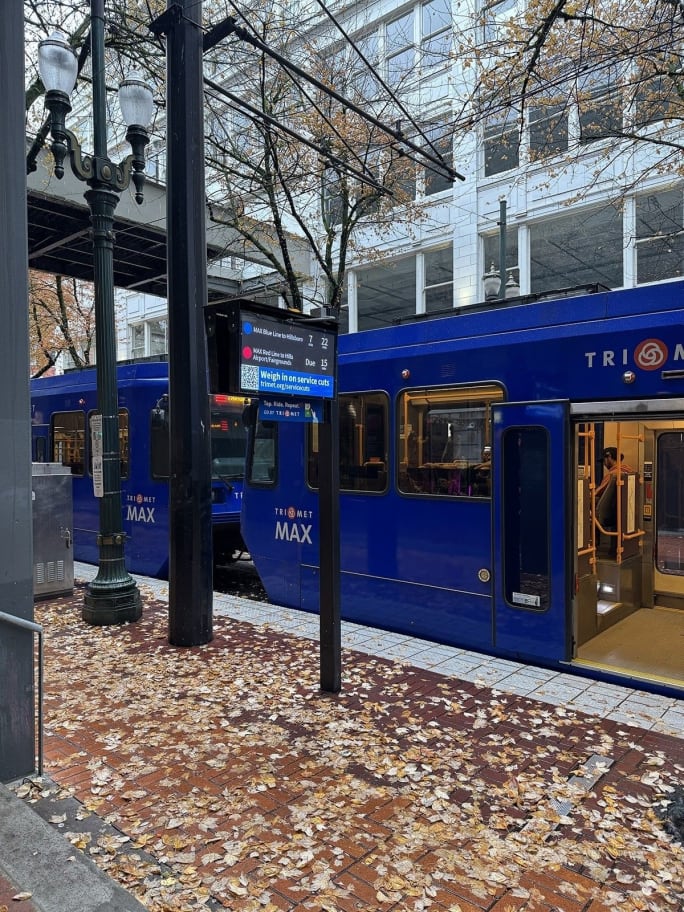
We won our first major LED contract in 2019 and have continued building on that momentum. LED gives agencies vibrant, full-color displays that riders can read from long distances, even in direct sunlight. That matters at busy transit centers, BRT stations, and rail platforms where information needs to reach people quickly and clearly.
Connectpoint
METRO: With LED, ePaper, and LCD all competing for space in transit systems, is the industry moving toward a single dominant display technology, or will agencies need a hybrid approach?
No single technology fits every application. A solar-powered ePaper sign at a neighborhood bus stop has very different requirements than a large-format LED at a downtown transit center.
Several of our clients deploy multiple display types across their networks, matching the right technology to each location based on power availability, environment, and what riders need there. Agencies that follow best practices take a network-wide view, selecting the right mix of technologies rather than defaulting to a single one.
METRO: How does your LED line compare to other display technologies in terms of visibility, durability, and energy efficiency?
LED has a long track record of performing well outdoors for good reason. The displays cut through direct sunlight without the glare and washout issues common with outdoor LCD installations. LEDs are solid-state devices with no liquid components, so they handle temperature extremes and physical impacts well. They typically last 50,000 to 100,000 hours, and individual modules can be swapped in the field without taking the entire sign offline. Full-color capability also lets agencies use color coding for routes, alerts, and service disruptions, a long-standing best practice in rider information design
METRO: Transit agencies are increasingly focused on real-time information and rider experience. How does LED signage enhance communication compared to other display technologies?
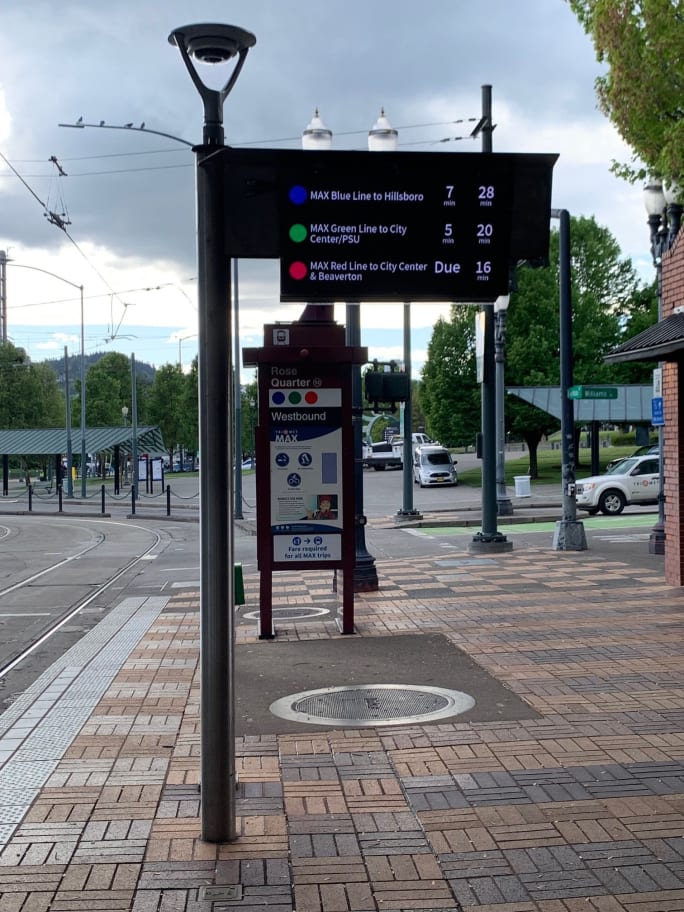
The display is only as good as the system behind it. Our platform, CPAM, ingests live GTFS-RT and AVL feeds so arrival predictions and service alerts flow automatically to every sign in the network. But it also gives agencies full control over custom messaging, emergency communications, and scheduled content. When the content management system is purpose-built for transit, as CPAM is, LED becomes a powerful tool for delivering real-time information that riders can see and trust.
Connectpoint
METRO: Connectpoint emphasizes a unified content management system across multiple display types. How important is that integration for agencies managing large, multimodal networks?
It's essential. Agencies that inherit signage from multiple vendors end up with a patchwork of software platforms, logins, and support contacts. That complexity grows with every new sign. CPAM manages LEDs, ePaper, LCDs, as well as Connectpoint Smart Lighting and TTS devices from a single interface. One platform, one support team, regardless of display type. For any agency considering new signage, the question worth asking every vendor is: What happens when we want to add a different display type in two years?
METRO: Looking ahead, how do you see digital signage evolving in transit as agencies balance sustainability, cost, and the need for more dynamic passenger information?
Riders need better information delivered directly to them at the stop. Agencies that rely on riders to find service information through apps or personal devices are falling short of what research consistently shows works best. Public transportation is cognitively demanding. Riders navigate complex systems, often in unfamiliar environments, under time pressure. Stop-level signage is one of the most powerful tools an agency has to lower those barriers and transform occasional riders into confident, frequent users. Clear, accurate, agency-provided service information at the stop isn't just a best practice — it's the foundation of a rider experience that builds loyalty and drives ridership.
This article reflects the views of Connectpoint and does not necessarily represent the views of Metro Magazine or Bobit Business Media.