



Consultant Achievements: DART Green Line extension
STV has worked with Dallas Area Rapid Transit (DART) since the mid-1990s to bring a light rail network to the Dallas area.
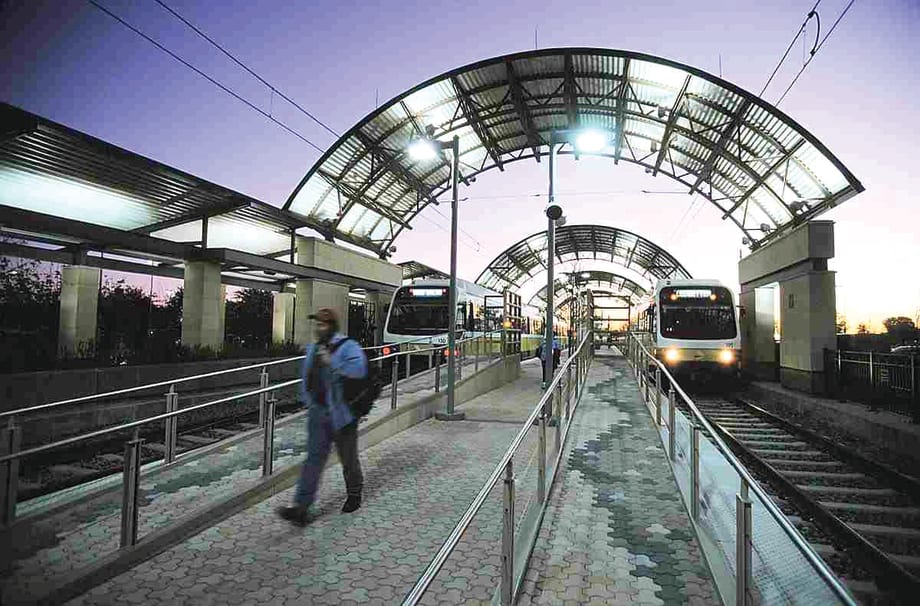
STV was part of a joint venture that was the general engineering consultant for DART's Green Line Phase II project. (Photo of Downtown Garland Station courtesy of STV.)
STV was part of a joint venture that was the general engineering consultant for DART's Green Line Phase II project. (Photo of Downtown Garland Station courtesy of STV.)
STV Inc.
Head Executives: Dominick M. Servedio, PE, Chairman/CEO;
Milo Riverso, PhD, PE, President
Headquarters: New York City & Douglassville, Pa.
Employees: 1,700
Website: www.stvinc.com
STV has worked with Dallas Area Rapid Transit (DART) since the mid-1990s to bring a light rail network to the Dallas area. With two phases now complete, area residents have a fast, efficient light rail system that connects residential and work centers with major community and entertainment destinations.
STV, in a joint venture, provided program management, design and construction management for Phase I of the light rail project - a 25-mile, 13-station light rail build-out of the DART system that was completed in 2003 for $400 million. In total, the joint venture managed 11 major construction packages that ranged in value from $9 million to $50 million. These packages covered the entire infrastructure, bridges, utilities, grade crossings, roadway improvements and park-and-rides. It also covered the expansion of existing maintenance facilities and the construction of a new Northwest Rail Operating Facility.
The first section of the Green Line opened in September 2009, connecting Pearl Station on the east side of Downtown Dallas to MLK Jr. Station on the west side of Fair Park.
STV won first place in the 2003 Engineering Excellence Awards from the Texas Council of Engineering Companies for its work on the first phase.
In addition, STV was part of a four-firm joint venture that was the general engineering consultant for the Green Line in Phase II - a 28-mile, 20-station portion that connects southeast Dallas to the cities of Farmers Branch and Carrollton in the northwest. This segment was completed in December 2010.
The DART Green Line light rail expansion was named the 2010 Texas Outstanding Civil Engineering Achievement by the American Society of Civil Engineers Texas Section.
More Rail

Strada360’s Steve Lassey on Turning Transit Data Into Better Decisions
From breaking down data silos to preparing for AI, Strada360 CEO Steve Lassey discusses how transit agencies can use technology to improve operations, customer information, and long-term decision-making.
Read More →
SEPTA Details Accelerate Vision for Transit System
The plan outlines investments in trolley modernization, new Metro and Regional Rail vehicles, accessible stations, and more frequent bus and rail service.
Read More →
FTA Ends Direct Oversight of MBTA Safety Actions
The federal agency closed its remaining special directive to the Massachusetts Department of Public Utilities following a safety review that began in 2022.
Read More →
Amtrak, CN Reach Agreements to Strengthen Passenger Rail Service, Safety
The agreement resolves a more than decade-long proceeding before the Surface Transportation Board concerning the terms and conditions for Amtrak services, such as the City of New Orleans, Illini/Saluki, and Wolverine.
Read More →
New York MTA Advances Final Contract for Second Avenue Subway Expansion
Contract Four is the largest in the Second Avenue Subway Phase 2 project and includes construction of station infrastructure, tracks, and signals for the subway expansion, MTA officials said. Work on Contract Four will begin in 2027.
Read More →
San Diego MTS Breaks Monthly Trolley Ridership Record
Agency officials said July’s ridership indicates MTS’s continued recovery from the pandemic.
Read More →
Report Examines NJ TRANSIT Reliability, Funding Challenges
The Garden State Initiative analysis examines the roles of Amtrak infrastructure, fleet management, and agency operations while recommending a more performance-based approach to improving reliability.
Read More →
Stadler, CapMetro Sign Long-Term Rail Fleet Support Agreement
Beginning in 2027, Stadler will provide on-site technical expertise, spare parts support, training, and obsolescence management to help extend the reliability and longevity of CapMetro’s GTW fleet.
Read More →
Biz Briefs: Alstom Lands Canadian Contract, LYT to Supply California TSP, and More
In METRO's latest installment, we take a look at recent news from Complete Coach Works, Beep, FlixBus, and more partnerships making headlines across the transportation sector.
Read More →
CATS Gold Line Marks 5 Years of Service, 2.8M Passenger Trips
With a six-mile expansion planned, the Charlotte streetcar is positioned to connect more neighborhoods and major transit hubs across the region.
Read More →