



Consultant Achievements: NYC No. 7 Line Subway
The extension of the No. 7 line will provide a connection to an expanded Jacob K. Javits Convention Center and the Hudson Yards area.
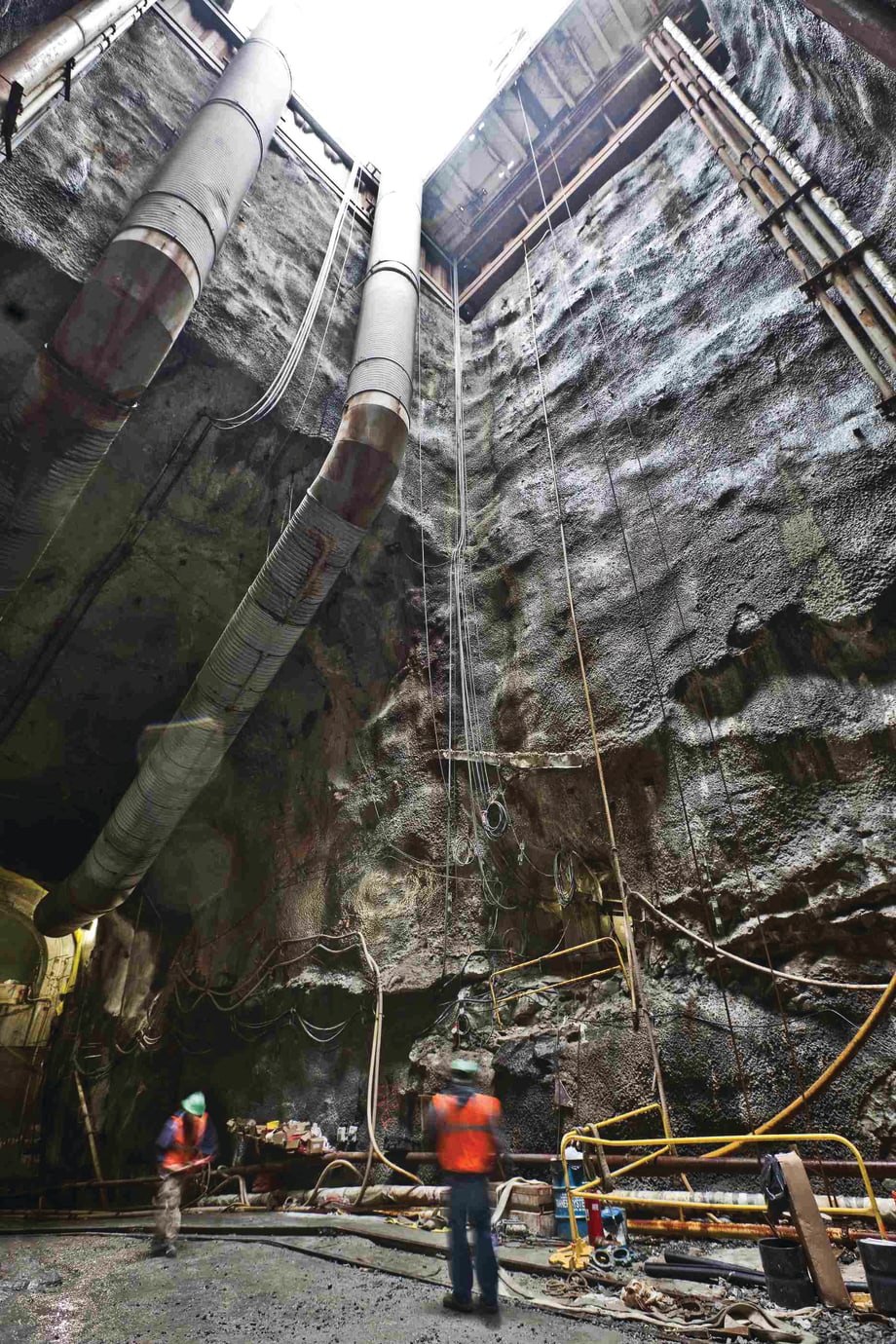
Construction of a shaft in connection with the extension of New York City's No. 7 line subway, which is being extended 1.5 miles from Times Square to the far west side of Manhattan. (Photo by David Sailors. Courtesy of Parsons Brinckerhoff.)
Construction of a shaft in connection with the extension of New York City's No. 7 line subway, which is being extended 1.5 miles from Times Square to the far west side of Manhattan. (Photo by David Sailors. Courtesy of Parsons Brinckerhoff.)
Parsons Brinckerhoff
Head Executive: George J. Pierson, President/CEO
Headquarters: New York City
Employees: 14,000 (worldwide)
Website: www.pbworld.com
New York City's No. 7 line subway is being extended 1.5 miles from its current terminus at Times Square to a new terminal station at West 34th Street and Eleventh Avenue, on Manhattan's far west side. The planned extension, being carried out by New York's Metropolitan Transportation Authority (MTA), is a key part of an initiative to transform the far west side of midtown Manhattan into a vibrant, transit-oriented mixed-use district.
The extension of the No. 7 line will provide a connection to an expanded Jacob K. Javits Convention Center and the Hudson Yards area. Bounded by West 43rd Street on the north, Hudson River Park on the west, West 28th and West 30th streets on the south, and Seventh and Eighth avenues on the east, Hudson Yards offers the opportunity for public and private development that will be equivalent to the creation of a new mid-sized city within Manhattan.
Parsons Brinckerhoff is the permanent works designer of the No. 7 Line Extension, providing final design services to MTA Capital Construction and design support during construction. Prior to construction, Parsons Brinckerhoff had prepared alternative alignment studies, conceptual designs and an environmental impact statement (EIS) for the No. 7 Line Extension and Hudson Yards redevelopment. The EIS is believed to be the most extensive ever prepared for a project in New York City.
The $1.15 billion project recorded a major milestone in July 2010 with the on-time, on-budget completion of the excavation of the No. 7 line tunnels. At a ceremony marking the occasion, New York City Mayor Michael Bloomberg said, "The extension of the No. 7 subway line, combined with our rezoning and our investment in world-class open space, will attract major private sector interest and transform the underutilized Hudson Yards into a vibrant neighborhood that will fuel New York City's economy."
The No. 7 line extension is proceeding within budget and is on schedule for final completion in December, 2013.
More Rail

ENC Lands MATA Contract and More in Biz Briefs
In this edition of Biz Briefs, we spotlight the latest developments shaping the future of mobility.
Read More →
Strada360’s Steve Lassey on Turning Transit Data Into Better Decisions
From breaking down data silos to preparing for AI, Strada360 CEO Steve Lassey discusses how transit agencies can use technology to improve operations, customer information, and long-term decision-making.
Read More →
SEPTA Details Accelerate Vision for Transit System
The plan outlines investments in trolley modernization, new Metro and Regional Rail vehicles, accessible stations, and more frequent bus and rail service.
Read More →
FTA Ends Direct Oversight of MBTA Safety Actions
The federal agency closed its remaining special directive to the Massachusetts Department of Public Utilities following a safety review that began in 2022.
Read More →
Amtrak, CN Reach Agreements to Strengthen Passenger Rail Service, Safety
The agreement resolves a more than decade-long proceeding before the Surface Transportation Board concerning the terms and conditions for Amtrak services, such as the City of New Orleans, Illini/Saluki, and Wolverine.
Read More →
New York MTA Advances Final Contract for Second Avenue Subway Expansion
Contract Four is the largest in the Second Avenue Subway Phase 2 project and includes construction of station infrastructure, tracks, and signals for the subway expansion, MTA officials said. Work on Contract Four will begin in 2027.
Read More →
San Diego MTS Breaks Monthly Trolley Ridership Record
Agency officials said July’s ridership indicates MTS’s continued recovery from the pandemic.
Read More →
Report Examines NJ TRANSIT Reliability, Funding Challenges
The Garden State Initiative analysis examines the roles of Amtrak infrastructure, fleet management, and agency operations while recommending a more performance-based approach to improving reliability.
Read More →
Stadler, CapMetro Sign Long-Term Rail Fleet Support Agreement
Beginning in 2027, Stadler will provide on-site technical expertise, spare parts support, training, and obsolescence management to help extend the reliability and longevity of CapMetro’s GTW fleet.
Read More →
Biz Briefs: Alstom Lands Canadian Contract, LYT to Supply California TSP, and More
In METRO's latest installment, we take a look at recent news from Complete Coach Works, Beep, FlixBus, and more partnerships making headlines across the transportation sector.
Read More →