



Dallas’ DART stepping up rail security in wake of shooting
Redeployed its 140 police and fare enforcement officers so it has a uniformed presence on every train.

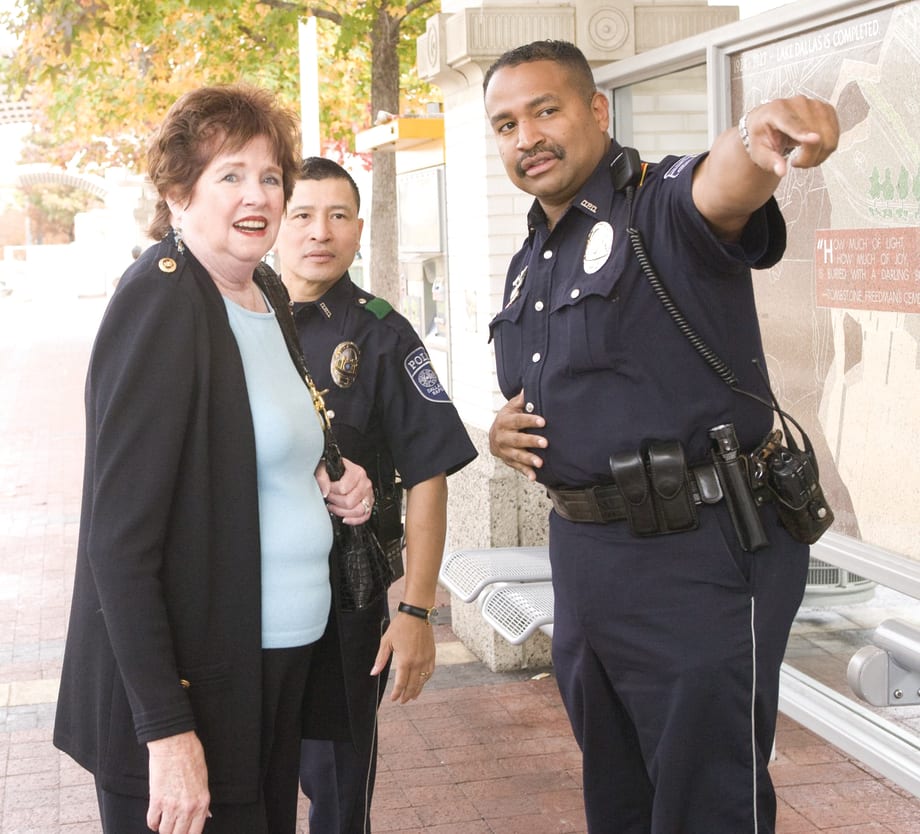
Following a shooting at a Dallas Area Rapid Transit (DART) station in February that left one passenger dead and another passenger and DART Police officer injured, the agency is increasing its security efforts. DART added a uniformed security presence on every train, will add closed-circuit cameras at all light rail stations and implemented a texting program, enabling passengers to send text messages to DART police to report suspicious behavior.
DART redeployed its 140 police and fare enforcement officers so it has a uniformed presence on every train. The system operates up to 42 trains, in sets of two or three railcars, during its peak service. The uniformed staff will be on the vehicles during regular operating hours.
"We're making sure that we've got people out in the field, out of cars, on the trains," DART President/CEO Gary Thomas said. "There's some overtime as well."
The transit system also continues to use armed security guards in a variety of capacities.
DART Police conduct sweeps of stations and is stepping up enforcement of the agency's Code of Conduct in an effort to maintain system safety and the passenger's sense of security.
"Our customers like seeing the uniformed presence," Thomas said.
While it's a bit premature to talk about actual statistics this early in this process, he added, anecdotally, it appears the fare evasion rate and incidents are decreasing.
The agency also placed more police and fare enforcement officers at some of its busiest stations and increased the security guard presence on its rail platforms and bus transfer centers that interface between the rail and buses.
Thomas added that DART increased security on its buses as well. "We still have the complement of patrol focusing on the buses," Thomas said.
The agency's police officers and sergeants are working with its supervisors to make sure they understand the challenges on certain bus routes. "That way our operators can make sure that we stepped up our plainclothes officers' presence on the buses and trains, as well as the uniformed presence — at least one fare enforcement and police officer — on each of our trains," Thomas said.
One of the challenges that has arisen in increasing security staff, Thomas said, is often, a fare enforcement officer or a police officer needs to leave a train to assist a passenger or respond to an incident. DART put a system in place that sends one officer to a train as another leaves.
Additionally, the 13 member cities in DART's service area have stepped up their presence on train platforms and buses with undercover officers. DART continues to allow uniformed officers to ride free on its trains.
The agency also continued adding closed-circuit cameras at all 55 light rail stations and will begin a security camera pilot program with its new CNG bus fleet, scheduled to be put in service later this year. DART also plans to install nearly 7,000 cameras throughout the system.
This spring, customers will also be able to send text messages to DART Police to report suspicious behavior. "Oftentimes, if someone's on a train platform or bus [they may] not be comfortable in that kind of situation putting a phone to their ear and complaining to someone on the other end," Thomas said. "But, you can text within your comfort zone a little more inconspicuously."
Police will use an analytic set of criteria to determine what, how and when to respond to text messages.
More Rail

New York MTA Advances Final Contract for Second Avenue Subway Expansion
Contract Four is the largest in the Second Avenue Subway Phase 2 project and includes construction of station infrastructure, tracks, and signals for the subway expansion, MTA officials said. Work on Contract Four will begin in 2027.
Read More →
San Diego MTS Breaks Monthly Trolley Ridership Record
Agency officials said July’s ridership indicates MTS’s continued recovery from the pandemic.
Read More →
Report Examines NJ TRANSIT Reliability, Funding Challenges
The Garden State Initiative analysis examines the roles of Amtrak infrastructure, fleet management, and agency operations while recommending a more performance-based approach to improving reliability.
Read More →
Stadler, CapMetro Sign Long-Term Rail Fleet Support Agreement
Beginning in 2027, Stadler will provide on-site technical expertise, spare parts support, training, and obsolescence management to help extend the reliability and longevity of CapMetro’s GTW fleet.
Read More →
Biz Briefs: Alstom Lands Canadian Contract, LYT to Supply California TSP, and More
In METRO's latest installment, we take a look at recent news from Complete Coach Works, Beep, FlixBus, and more partnerships making headlines across the transportation sector.
Read More →
CATS Gold Line Marks 5 Years of Service, 2.8M Passenger Trips
With a six-mile expansion planned, the Charlotte streetcar is positioned to connect more neighborhoods and major transit hubs across the region.
Read More →
Why Simulating Pedestrian Movement Has Become Essential for Modern Rail Stations
Pedestrian microsimulation is helping rail planners identify bottlenecks, test station designs, and prepare complex transit hubs for growing passenger volumes.
Read More →
Amtrak Begins Major Construction at New York’s Sunnyside Yard
The new maintenance facility will support Amtrak’s Airo trainsets while improving maintenance efficiency and turnaround times in New York.
Read More →
Chicago Leaders Unveil Plans for O’Hare Airport Express Train
The privately developed project would offer a 15-minute trip between downtown and O’Hare’s Terminal 2, with trains operating every 15 minutes on a dedicated track. The service would use battery-electric trains and three existing freight rail rights-of-way.
Read More →
OCTA Maps Out 30-Year Strategy to Protect Coastal Rail Corridor
The draft feasibility report identifies strategies to protect the coastal rail line for decades as the agency continues near-term stabilization and sand placement efforts.
Read More →