



DMU: Fast Track to the Future of Rail?
Everything old is new again as the RDC is reinvented as a clean, quiet, self-propelled railcar.
Even the most ardent rail enthusiast would have to agree: No one wants a locomotive hurtling through his own backyard. Communities across the country have long struggled with the conflict between quality of life and quality of service, but that battle may have entered a new, more amicable phase with the introduction of the diesel multiple unit (DMU). Described by Tom Janaky, vice president of sales for Colorado Railcar, as the evolution of the rail diesel car (RDC), DMUs offer the potential for cleaner, quieter rail transportation along existing freight right-of-ways, without time separation. Running on diesel bus engines, and without the added weight of a locomotive, there is also a significant improvement in fuel economy. The combination of cost savings, neighborliness and flexibility has made DMUs especially attractive to transit properties developing feeders to existing lines, as well as those considering an investment in rail for the first time. Joint RFP in the works Among the transit agencies considering DMU are TriMet in metropolitan Portland, Ore., and the Triangle Transit Authority (TTA) in the Raleigh-Durham area of North Carolina. The two are preparing a joint procurement, with the RFP for 17 two-car trains (four for TriMet, and the remaining 13 for TTA) expected to hit the street by the end of the year. According to Joe Walsh, TriMet’s project director for Washington County commuter rail, DMU technology was the perfect fit for them. “It’s our first choice by a bunch,” he says. “We’d have to get back to our third or fourth fallback plan to start thinking about locomotive passenger cars.” Each DMU car can be expected to accommodate 200 to 300 passengers, making them sufficient for TriMet’s projected daily line ridership of 4,000. The cars will move suburb to suburb along a 15-mile, five-stop line that will share track with freight rail, as well as travel along a short in-street segment and tie into existing light rail. “The folks along the line had a strong preference for this old-new style of vehicle and the perception that it will have less community impact because it’s quieter and cleaner than an older generation of locomotive. From the operator side, this is a better match of capacity and demand,” says Walsh. Meeting both operator and community needs in one vehicle is what originally drew the county government to DMU technology. “ We can handle the capacity, even if we exceed our ridership estimates,” says Kathy Lehtola, director of the Washington County Department of Land Use and Transportation. “The main thing was the in-street running. The DMU units are usually quieter, and you’re going through some old neighborhoods, so you want to not add to noise levels if you can help it.” Reduced infrastructure costs TTA, TriMet’s partner in this procurement, has been exploring rail possibilities since 1995. Its decision to pursue DMU not only accommodates the property’s financial restrictions, but allows for a future expansion onto Amtrak or other active freight lines. Thomas Janssen, vehicle engineer at TTA, says the agency will save substantially by not buying a right-of-way or running catenary along the 35 miles of track it plans to operate rail service along. Janssen also sees considerable environmental benefits to DMU. “They should be able to operate on ultra-low sulfur diesel fuel that will become mandatory for cars and trucks,” he says. “We want particulate filters. We like to call them clean diesel engines.” The specifications that TTA and TriMet are finalizing come from both the needs of the transit properties, as well as an industry review session sponsored by TTA in late January of this year. There, several invited agencies, as well as seven car builders, discussed the best ways to put self-propelled, Federal Railroad Administration (FRA)-compliant railcars on the market. Since then, other car builders have contacted TTA to express interest in the project. Manufacturers interested “We’re surprised by the amount of interest we’ve seen so far. We expect four car builders to propose; it could be more, but I don’t think it’ll be less. And I think that’ll be good, and result in some competition,” Janssen says. Because DMU is a new incarnation of the passenger rail car, Janssen acknowledges that being a guinea pig for new combinations of technologies could be a drawback. Both Bombardier and Siemens have proposed vehicle designs that combine FRA compliance with existing European technology. Another participant at the review session, Colorado Railcar, has already developed a prototype DMU and spent the summer touring the country with it. Among the places visited by the sample DMU was the South Florida RTA. Following Rail-Volution in Atlanta, Colorado Railcar ran a test for the agency at the invitation of Brad Barkman, its director of operations. Pulling two Bombardier passenger cars in a run that replicated regular conditions, as well as a short limp home, noise levels were 20 decibels lower than locomotive-powered service, and the fuel economy was two and a half times greater. “The fuel savings were incredible. Plus, it’s much cleaner and EPA-certified. It intrigued me because when I started at the B&O we had 13 of those [RDCs] and they couldn’t get out of their own way, let alone pull something,” Barkman says. Power to spare Barkman’s other concern — power generation — was also relieved by the test. The cars ran with all lights on, and air conditioners at maximum capacity. The success of the demonstration bodes well for DMUs on an east-west extension along CSX freight lines past the Miami airport. Maintenance of these new railcars was not a concern for Barkman, Walsh or Janssen. Because DMUs use diesel engines similar to bus engines, most transit properties already have the technical skills to service them. Colorado RailcarÕs DMUs come with 1,200-horsepower Detroit Diesel engines that meet on and off road emissions standards, and surpass 2005 locomotive standards. Says Walsh, “The basic components are well known to us on the bus side, because this is a diesel engine and either an electric drive or direct-drive transmission. Those are parts and pieces that we’re very familiar with. In terms of reliability, we think we’ll make a huge leap on that front.” Stateside excitement about DMU may be new, but Europe has run similar passenger trains for years now. FRA compliance is key to transitioning that technology to use in the U.S. Although an alternative, light DMU (not FRA compliant) is possible on abandoned or time-separated rail lines, the allure of these cars is their potential to mesh with existing freight and passenger traffic for start-up, off-peak and connector service. “DMU fits a need because you don’t need to lay track, you don’t need to put up catenary. It’s a chance for a community that wants light rail to get started without spending an enormous amount of money as long as the infrastructure is already there,” says Colorado Railcar’s Janaky. Caroline Casey is a freelance writer in Los Angeles.
More Rail
The Business Voice Behind Public Transportation
As chair of APTA’s Business Members Board of Governors, Ray Melleady explains how more than 850 business members are partnering with transit agencies to advance funding, innovation, and industry-wide collaboration.
Read More →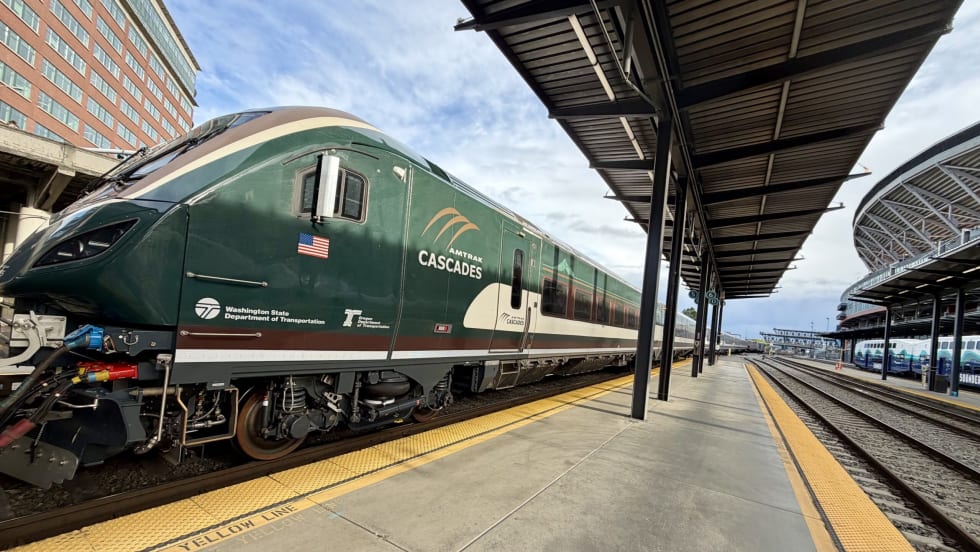
FRA Announces $5.3B in Rail Investments, Including $2B for Amtrak
Funding will support grade-crossing improvements, infrastructure upgrades, and new Amtrak equipment in 23 states.
Read More →
Finding the ‘Happy Medium’: Optimizing Maintenance Without Sacrificing Reliability
The key to maintenance optimization isn’t doing less work—it’s doing the right work at the right time on the right assets.
Read More →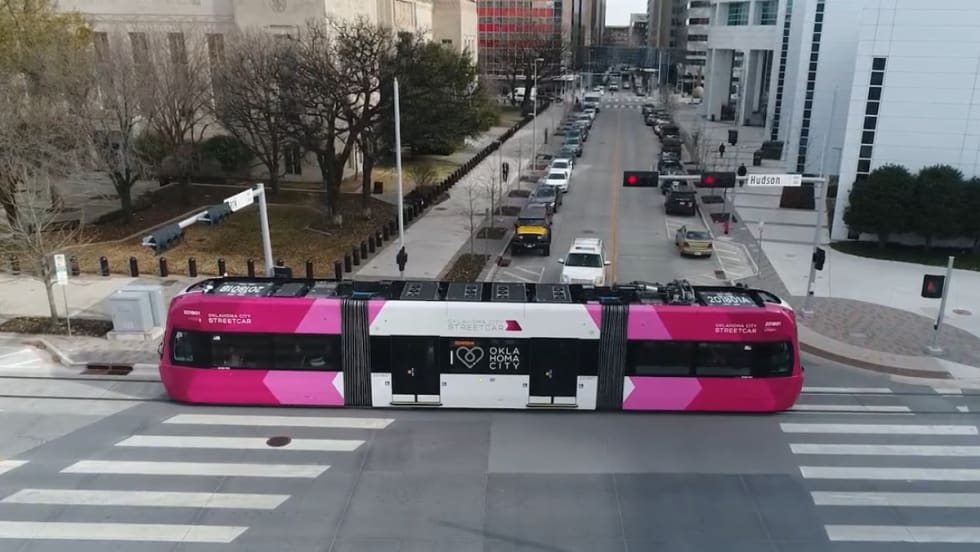
OKC Streetcar Makes Zero-Fare Service Permanent
Ridership increased an average of 71% compared with the same period a year earlier during the fare-free pilot.
Read More →
DART Customer Satisfaction Reaches Six-Year High
Overall satisfaction rose to 74.9%, while the agency’s Net Promoter Score reached a record 33.7.
Read More →
How DART's GoPass Is Redefining Regional Mobility
Serving 14 transit agencies, GoPass simplifies multimodal travel by allowing riders to plan, pay for, and manage an entire trip through one app.
Read More →
Amtrak Board Advances Plan to Restructure Organization, Seeks Public Input
The proposal, developed by Amtrak management and approved by the board for further consideration, is intended to modernize the organization's structure while improving accountability, operational efficiency, and customer service.
Read More →
Biz Briefs: STV teams with Amtrak, Motorcoach Operators Boost Fleet and Land Contracts, and More
From manufacturers and suppliers to transit agencies and motorcoach operators, these updates offer a snapshot of the projects, partnerships and business moves driving the industry forward.
Read More →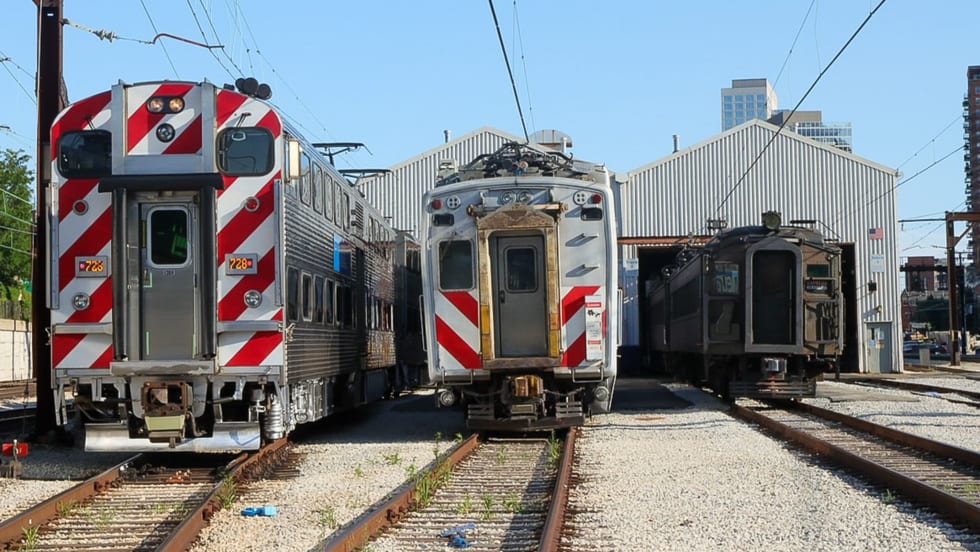
Metra Celebrates 100 Years of Electric Rail, Looks to the Future
The event was also a celebration of recent reforms to public transportation in the Chicago area, changes that could be as transformative in the future as the major civic achievement a century ago, said officials.
Read More →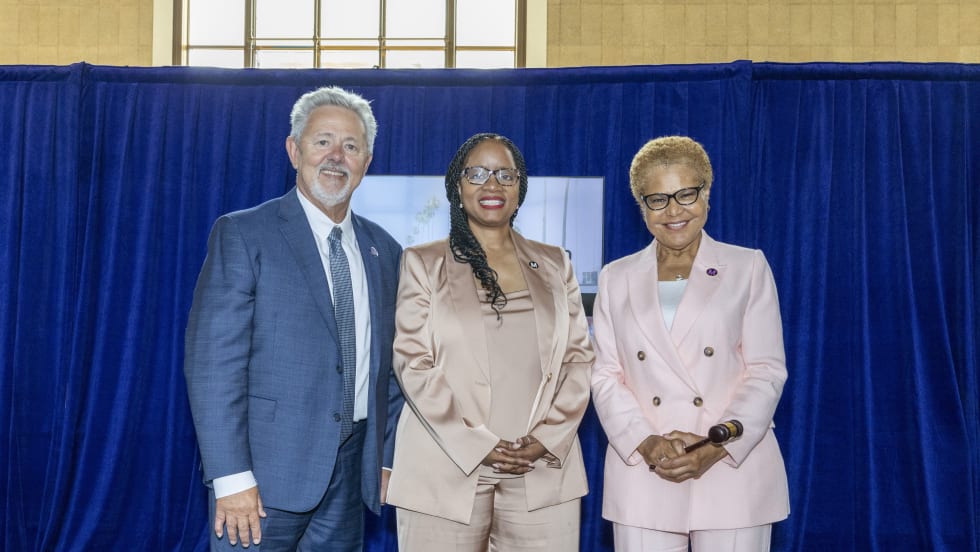
LA Metro Marks Banner Year, Sets Ambitious Goals for New Fiscal Year
Incoming LA Metro Board Chair and Los Angeles Mayor Karen Bass joined outgoing Board Chair Fernando Dutra and LA Metro CEO Stephanie Wiggins to review accomplishments from fiscal year 2026, which included the opening of new rail extensions, advancement of major transit projects, expanded safety programs, and new rider amenities.
Read More →