



Denver's RTD Celebrates 10th Anniversary of the A Line
With more than 59,400,000 boardings since the service’s debut, the A Line’s utilization surpassed that of all other RTD rail services in 2025, the agency reported.

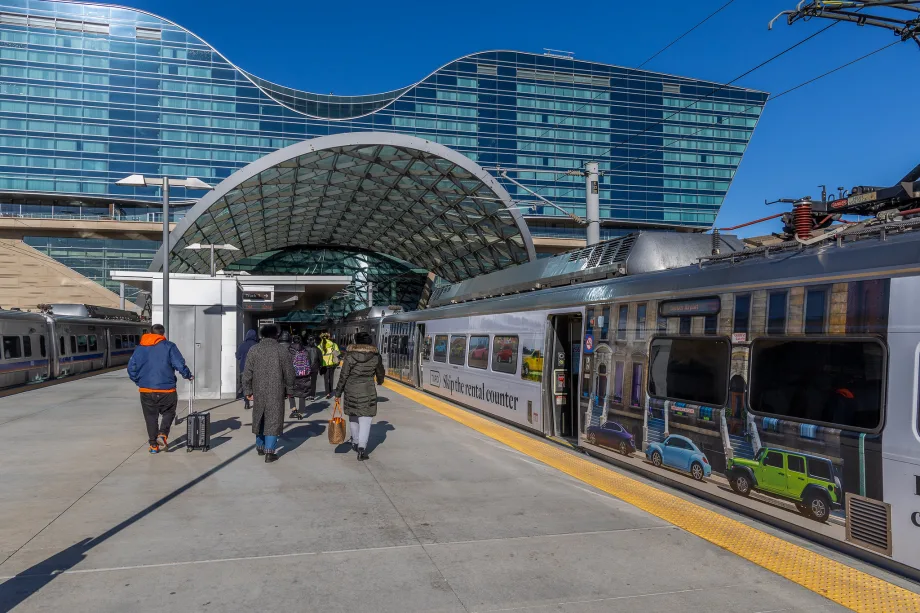
When the A Line launched in 2016, it became the first commuter rail service completed under the 2004 voter-approved FasTracks project.
Denver RTD
- The Regional Transportation District (RTD) celebrated the 10th anniversary of Denver's A Line, which connects Denver Union Station to Denver International Airport.
- Since its launch, the A Line has had over 59.4 million boardings, surpassing usage of all other RTD rail services by 2025.
- The anniversary event featured RTD executives and local leaders, highlighting the A Line's role in enhancing connectivity and access in the region.
*Summarized by AI
Denver’s Regional Transportation District (RTD) celebrated the 10th anniversary of the A Line, the commuter rail service known as the Train to the Plane.
The 23-mile A Line runs from Denver Union Station (DUS) to Denver International Airport (DEN), offering customers fast, reliable connections for domestic and international travel. With more than 59,400,000 boardings since the service’s debut, the A Line’s utilization surpassed that of all other RTD rail services in 2025, the agency reported.
Celebrating 10 Years
To mark a decade of the A Line, RTD held a media conference with speakers including its GM/CEO Debra A. Johnson, RTD Board Chair Patrick O’Keefe, Aurora Mayor Mike Coffman, and Denver Transit Partners (DTP) Project Manager and CEO Nate Morgan.
“Celebrating the 10th anniversary of the A Line is truly a milestone for the entire region. From day one, this service has strengthened connections and created opportunities for customers and visitors alike, expanding access to destinations throughout the Denver metro area,” Johnson told attendees. “The launch of the A Line in 2016 made it easier than ever to reach key activity centers while supporting economic growth and sustainable mobility.”
When the A Line launched in 2016, it became the first commuter rail service completed under the 2004 voter-approved FasTracks project. Customers aboard the electric commuter rail train can skip bumper-to-bumper traffic and airport parking costs, all while being conveniently dropped off near the main airport terminal. The service operates at speeds up to 79 mph, faster than the light rail’s top speed of 55 mph, for a 37-minute trip to DEN from DUS.
Successful Ridership Numbers
The Train to the Plane has maintained strong utilization throughout its decade in service. During the COVID-19 pandemic, the A Line led the nation in terms of commuter rail utilization and revenue hours, according to a 2024 report.
In January 2026, the most recent month for which data is available, A Line ridership increased 17.7% compared with the same time last year. In 2025, ridership increased by 4.3%, the highest increase among all RTD commuter rail lines. From January 2025 through February 2026, boardings totaled 7,166,178, bringing total ridership close to 60 million since its launch, said officials.
Because timely service is crucial for making travel connections, the A Line’s notable on-time performance averaged 90% overall last year and 91% as recently as March 2026.
On-time performance measures how often vehicles arrive at stations according to the posted schedule. Service availability — the percentage of trips that operate as scheduled — reached 97.7% for the A Line in 2025. The combined metrics make the A Line a reliable solution for customers to bridge travel connections to and from the airport.
For customer ease of access, the A Line departs every 15 minutes from DUS from 6 a.m. to 8 p.m. and 30 minutes during early morning and late evening hours, identical to the service hours when the A Line first launched in April 2016.
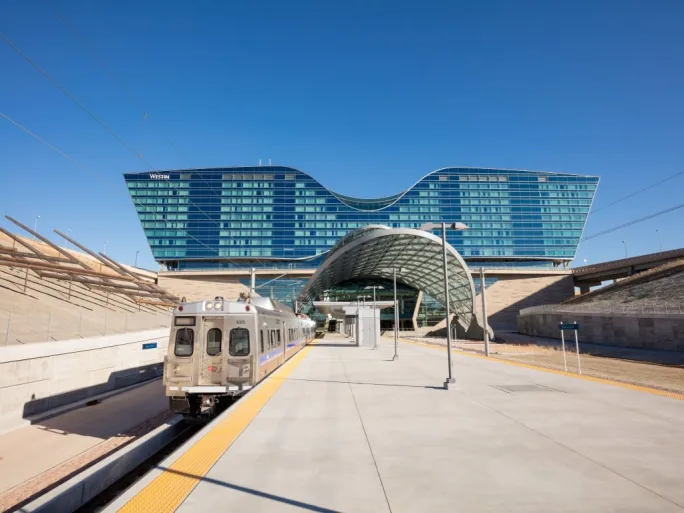
RTD designated the letter “A” to be reserved for the “Airport” commuter rail line almost 30 years ago.
Denver RTD
The Road to the A Line
To deliver the A Line, RTD and its concessionaire operator, DTP, entered into the first public-private partnership for transit in the US. The A Line was the first of three commuter rail lines to open in Denver, made possible by that partnership.
Plans for RTD’s first commuter rail between downtown Denver and DEN began in 1997. RTD conducted an investment study to evaluate recommendations for commuter rail, light rail, and highway development plans. The A Line’s final track was constructed in 2014, followed by testing and safety compliance in 2015 ahead of the A Line’s 2016 debut.
RTD designated the letter “A” to be reserved for the “Airport” commuter rail line almost 30 years ago. Crews on the A Line worked over seven million hours to complete the project, averaging 800 employees per day, said officials.
Since the line’s 2016 launch, the cost of an Airport Day pass has increased by only $1. Today, a $10 Airport Day Pass provides full-day travel for customers who arrive in Denver and want to continue their journey using RTD’s mobility options to reach their next local destinations.
Quick Answers
The A Line is a commuter rail service operated by Denver's Regional Transportation District (RTD), known as the Train to the Plane, running from Denver Union Station to Denver International Airport.
*Summarized by AI
More Rail
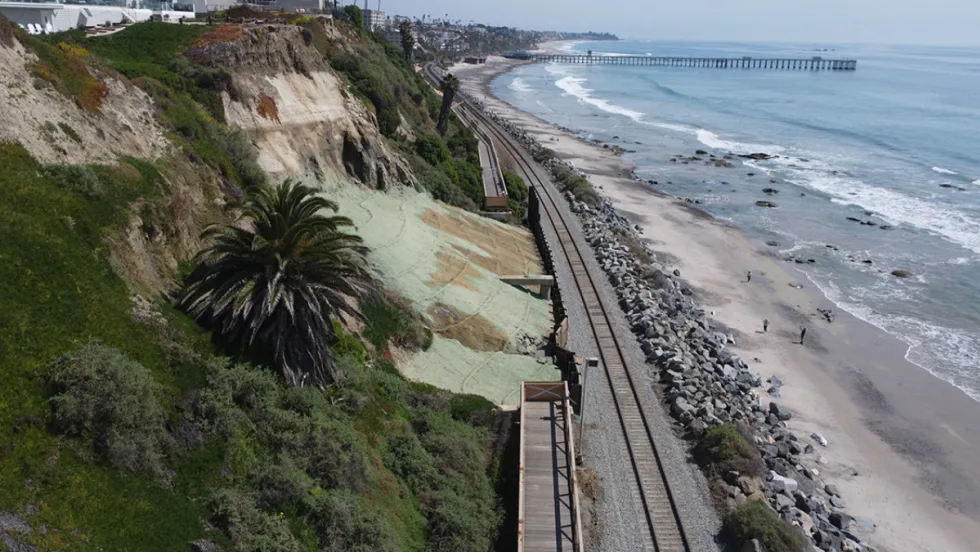
OCTA Declares Emergency to Protect Rail Corridor From Coastal Erosion
The California agency is accelerating shoreline protection and plans to place approximately 690,000 cubic yards of sand along the San Clemente coast to protect a key passenger and freight rail link.
Read More →
More Than a Summer Job: Building the Next Generation of Transit Talent
The Delaware River Port Authority and PATCO have transformed their internship program into a hands-on professional development experience that introduces students to the breadth of transportation careers — and creates a pipeline for future employees.
Read More →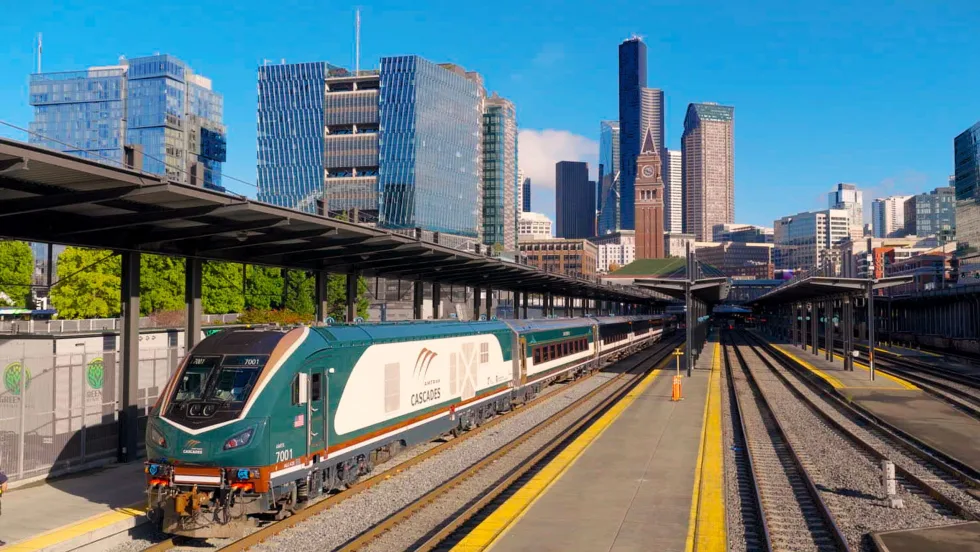
Airo Trains Make Their Amtrak Cascades Debut in the Pacific Northwest
Effective immediately, two cutting-edge Airo trainsets will join the Amtrak Cascades route, operating four daily trips between Vancouver, B.C., Seattle, Portland, and Eugene, Oregon, marking the first introduction of Airo trains into passenger service anywhere in the country.
Read More →
Florida's Brightline Announces Financial Restructuring
Brightline Florida says train operations will continue as normal as certain parent entities enter Chapter 11 and financial stakeholders provide $490 million in new long-term capital.
Read More →
ENC Lands MATA Contract and More in Biz Briefs
In this edition of Biz Briefs, we spotlight the latest developments shaping the future of mobility.
Read More →
Strada360’s Steve Lassey on Turning Transit Data Into Better Decisions
From breaking down data silos to preparing for AI, Strada360 CEO Steve Lassey discusses how transit agencies can use technology to improve operations, customer information, and long-term decision-making.
Read More →
SEPTA Details Accelerate Vision for Transit System
The plan outlines investments in trolley modernization, new Metro and Regional Rail vehicles, accessible stations, and more frequent bus and rail service.
Read More →
FTA Ends Direct Oversight of MBTA Safety Actions
The federal agency closed its remaining special directive to the Massachusetts Department of Public Utilities following a safety review that began in 2022.
Read More →
Amtrak, CN Reach Agreements to Strengthen Passenger Rail Service, Safety
The agreement resolves a more than decade-long proceeding before the Surface Transportation Board concerning the terms and conditions for Amtrak services, such as the City of New Orleans, Illini/Saluki, and Wolverine.
Read More →
New York MTA Advances Final Contract for Second Avenue Subway Expansion
Contract Four is the largest in the Second Avenue Subway Phase 2 project and includes construction of station infrastructure, tracks, and signals for the subway expansion, MTA officials said. Work on Contract Four will begin in 2027.
Read More →