



Austin Transit Partnership Names Contractor for Light Rail Operations Facility
The ATP board’s approval of the KAP team enables ATP to begin pre-construction activities, including advancing design, initiating permitting, and preparing the site for future construction.


Following board approval, KAP will begin work immediately, co-locating in the ATP office to advance design, conduct field investigations, coordinate utilities, and prepare permitting packages.
Austin Transit Partnership
- The Austin Transit Partnership has appointed Kiewit Austin Partnership as the design-build contractor for its Operations and Maintenance Facility.
- The ATP board's decision allows for the commencement of pre-construction activities such as advancing design and initiating permits.
- This collaboration aims to benefit the local economy by creating jobs and leveraging the expertise of both a global infrastructure leader and a local firm.
*Summarized by AI
Texas’s Austin Transit Partnership (ATP) selected Kiewit Austin Partnership (KAP), a joint venture between Kiewit Building Group Inc. (Kiewit) and Austin Commercial, as the design-build contractor for the system’s Operations and Maintenance Facility.
The ATP board’s approval of the KAP team enables ATP to begin pre-construction activities, including advancing design, initiating permitting, and preparing the site for future construction.
“The Operations and Maintenance Facility is integral to the success of the system — it’s where trains are maintained, cleaned, and prepared for service each day,” said ATP CEO Greg Canally. “By bringing together a world-class construction partner with deep local experience, we are setting this project up for long-term success while creating jobs and economic opportunity across Central Texas.”
ATP’s New Partner
The KAP team represents a strategic partnership between Kiewit, a global leader in infrastructure construction, and Austin Commercial, a local firm with extensive experience delivering complex projects in Austin, including landmarks such as Q2 Stadium and Circuit of the Americas. Together, the team brings a combination of international expertise and local knowledge to design and build the facility to meet the needs of both the transit system and the surrounding community, according to officials.
“Kiewit brings extensive experience delivering complex transit infrastructure and design-build projects across North America,” said Mike Johnson, executive vice president of Kiewit Building Group Inc. “We’re proud to support this important investment in Austin’s mobility and deliver a high-quality project that will serve the community for years to come.”
KAP will lead the design and construction of the Operations and Maintenance Facility, where Austin’s light rail vehicles will be stored, serviced, and dispatched.
The facility will also serve as a workplace for operators, maintenance crews, and support staff who will keep the system running safely and efficiently.
KAP was identified as the highest-ranked firm following a rigorous, competitive procurement process that evaluated elements including firms’ experience, personnel qualifications, technical approach, and design innovation.
ATP completed the procurement in approximately one year, faster than many comparable mega projects nationwide.
The selected team includes approximately 10 subcontractors for the design phase of work, roughly half of whom are in the Austin region. It will provide many more opportunities for local businesses to participate in construction.
The OMF project is expected to support thousands of jobs during design and construction, including roles for architects, engineers, skilled construction trades, and suppliers. Once operational, the facility will also create hundreds of long-term careers in operations and maintenance, contributing to Austin’s growing workforce and economy, ATP officials said.
What’s Next?
Following board approval, KAP will begin work immediately, co-locating in the ATP office to advance design, conduct field investigations, coordinate utilities, and prepare permitting packages. The efforts will help optimize the project’s design, constructability, schedule, and cost to ensure it is ready for future construction.
The Operations and Maintenance Facility is being designed with a strong focus on integration with its surrounding environment. The facility will be thoughtfully planned to be a good neighbor, incorporating design elements that prioritize safety, functionality, and a high-quality work environment for employees.
Austin’s first light rail system will feature 15 stations along a nearly 10-mile alignment with all-electric trains running every five to 10 minutes throughout most of the day. According to officials, the system is designed to be fully expandable to support future growth.
Quick Answers
Kiewit Austin Partnership (KAP) has been selected as the design-build contractor for the Austin Transit Partnership's Operations and Maintenance Facility, where their role includes advancing design, initiating permitting, and preparing the construction site.
*Summarized by AI
More Rail
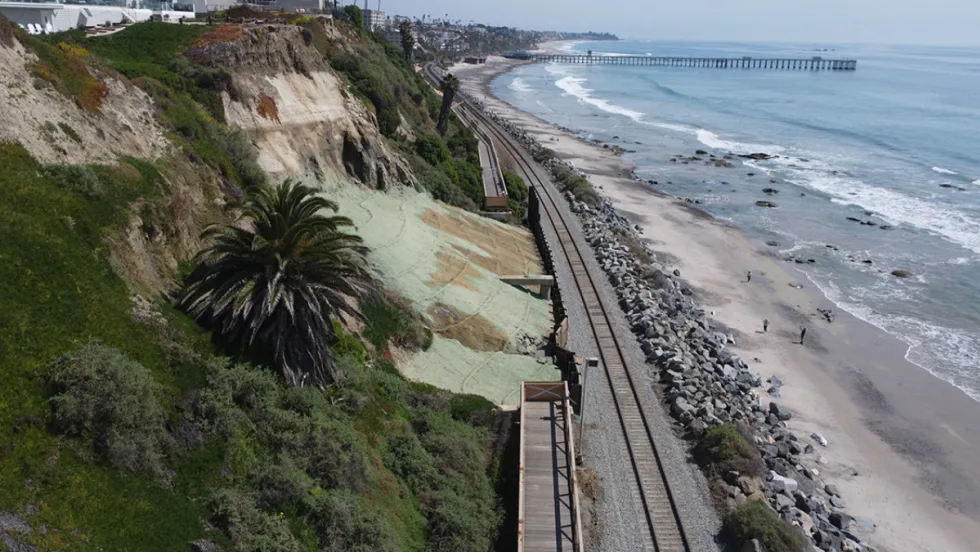
OCTA Declares Emergency to Protect Rail Corridor From Coastal Erosion
The California agency is accelerating shoreline protection and plans to place approximately 690,000 cubic yards of sand along the San Clemente coast to protect a key passenger and freight rail link.
Read More →
More Than a Summer Job: Building the Next Generation of Transit Talent
The Delaware River Port Authority and PATCO have transformed their internship program into a hands-on professional development experience that introduces students to the breadth of transportation careers — and creates a pipeline for future employees.
Read More →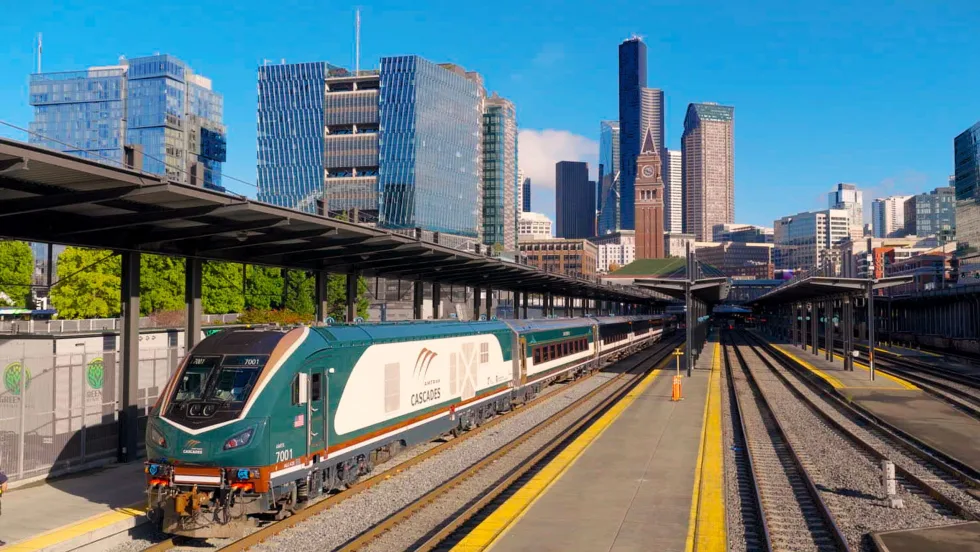
Airo Trains Make Their Amtrak Cascades Debut in the Pacific Northwest
Effective immediately, two cutting-edge Airo trainsets will join the Amtrak Cascades route, operating four daily trips between Vancouver, B.C., Seattle, Portland, and Eugene, Oregon, marking the first introduction of Airo trains into passenger service anywhere in the country.
Read More →
Florida's Brightline Announces Financial Restructuring
Brightline Florida says train operations will continue as normal as certain parent entities enter Chapter 11 and financial stakeholders provide $490 million in new long-term capital.
Read More →
ENC Lands MATA Contract and More in Biz Briefs
In this edition of Biz Briefs, we spotlight the latest developments shaping the future of mobility.
Read More →
Strada360’s Steve Lassey on Turning Transit Data Into Better Decisions
From breaking down data silos to preparing for AI, Strada360 CEO Steve Lassey discusses how transit agencies can use technology to improve operations, customer information, and long-term decision-making.
Read More →
SEPTA Details Accelerate Vision for Transit System
The plan outlines investments in trolley modernization, new Metro and Regional Rail vehicles, accessible stations, and more frequent bus and rail service.
Read More →
FTA Ends Direct Oversight of MBTA Safety Actions
The federal agency closed its remaining special directive to the Massachusetts Department of Public Utilities following a safety review that began in 2022.
Read More →
Amtrak, CN Reach Agreements to Strengthen Passenger Rail Service, Safety
The agreement resolves a more than decade-long proceeding before the Surface Transportation Board concerning the terms and conditions for Amtrak services, such as the City of New Orleans, Illini/Saluki, and Wolverine.
Read More →
New York MTA Advances Final Contract for Second Avenue Subway Expansion
Contract Four is the largest in the Second Avenue Subway Phase 2 project and includes construction of station infrastructure, tracks, and signals for the subway expansion, MTA officials said. Work on Contract Four will begin in 2027.
Read More →