



Driving Toward a Greener Future: A Conversation with Panorama Tours’ Michelle Petelicki
In this conversation, she shares how her company is putting sustainability into practice, how motorcoaches are stepping up during moments of crisis, and why events like the FIFA World Cup could be pivotal opportunities for the industry.

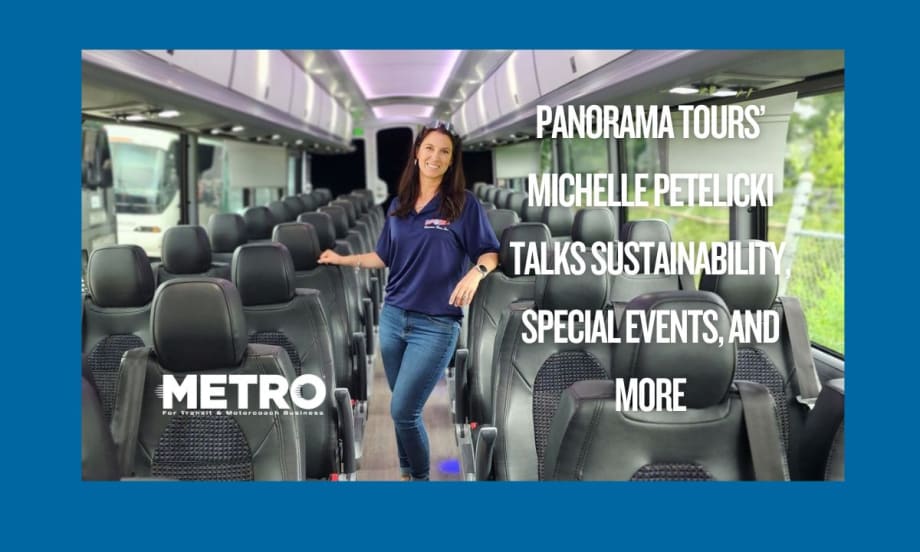
METRO’s Executive Editor Alex Roman sat down with Michelle Petelicki, president of New Jersey’s Panorama Tours, for a recent episode of METROspectives.
Photo: Panorama Tours
- Michelle Petelicki discusses Panorama Tours' commitment to implementing sustainable practices within the company.
- The role of motorcoaches in providing crucial support during times of crisis is highlighted in the conversation.
- Events like the FIFA World Cup are identified as significant opportunities for growth and visibility in the motorcoach industry.
*Summarized by AI
Sustainability has become a central theme across the transportation industry; yet, motorcoaches are often left out of the conversation, despite being one of the most energy-efficient modes of travel.
A new report from the American Bus Association (ABA) aims to change that by highlighting the environmental benefits of motorcoach travel, as well as its role in easing congestion and reducing emissions.
To dig deeper into the report’s findings and what they mean for operators, legislators, and consumers, METRO’s Executive Editor Alex Roman sat down with Michelle Petelicki, president of New Jersey’s Panorama Tours, for a recent episode of METROspectives.
In this conversation, she shares how her company is putting sustainability into practice, how motorcoaches are stepping up during moments of crisis, and why events like the FIFA World Cup could be pivotal opportunities for the industry.
About ABA’s Recent Sustainability Report
Why do you think this was the right time for ABA to release its sustainability report?
The timing is spot-on. We’re seeing a shift toward motorcoach travel due to frustrations with air travel, including cancellations, higher costs, and lengthy TSA lines.
People also appreciate the comfort of traveling with those they know, and motorcoaches offer that, along with the door-to-door convenience that planes and trains can’t provide. Bringing sustainability into that conversation makes our value proposition even stronger.
Are you seeing that play out at Panorama Tours?
Yes. A great example was the rail strike in New Jersey. Panorama expanded our Bergen Bullet commuter run to help stranded commuters. That reliability, showing up when others couldn’t, has grown our market even after the strike.
The data clearly show motorcoaches are a green option, yet the public perception doesn’t match. Why is that?
We’re a smaller industry without the PR reach of airlines or rail. There’s still a stigma that motorcoaches are old, smoky vehicles, when in reality they’re modern, clean, and equipped with emissions-reducing technologies. DEF, DPF filters, and clean idle certifications have dramatically reduced emissions. We need to keep telling that story.
You mentioned clean idle technology. Why is it important?
It cuts NOx emissions by about 50% below regulatory limits. That’s significant. Combined with DEF systems and particulate filters, we’ve made real progress. Some people even say the air going out is cleaner than the air going in. Whether or not that’s literally true, the reductions are undeniable.
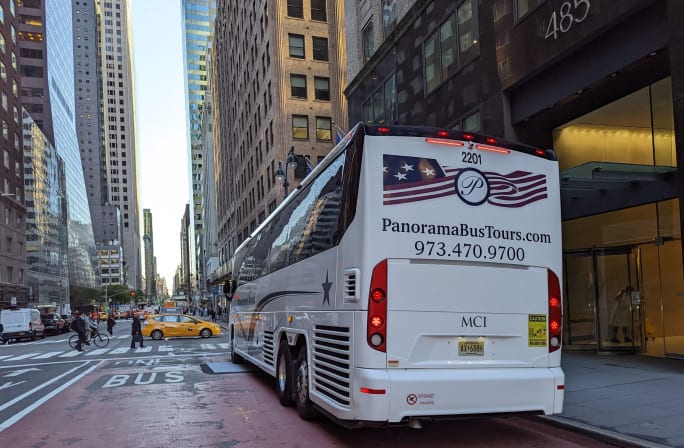
Operators like Panorama Tours play a vital role in moving people during special events, such as the upcoming FIFA World Cup of soccer.
Photo: Panorama Tours
Taking it to Capitol Hill, Playing a Part in Major Events
Beyond technology, the industry has become more engaged in Washington. How have you seen that change?
It’s night and day. Years ago, legislators didn’t even know what a motorcoach was. Now, through advocacy efforts by the ABA, UMA, and local associations, lawmakers view us as part of the solution to congestion and sustainability. I’ve had legislators call Panorama directly for help because they now know we’re a resource. Reports like this give us credibility when we advocate.
Let’s talk about significant events. How do motorcoaches fit into the bigger sustainability picture?
They’re essential. Whether it’s concerts at MetLife Stadium or the upcoming World Cup, motorcoaches move people efficiently and reduce the number of cars on the road. That means less congestion and fewer emissions. Ground transportation will be critical to the success of these events, and this report helps prove that.
What’s Next?
Was there anything in the ABA report that surprised you?
The energy efficiency numbers. Motorcoaches use about 710 BTUs per passenger mile — less energy than it takes to toast two slices of bread. That blew me away. It’s such a simple, relatable comparison that I’ll use it whenever I explain our sustainability benefits.
How do you plan to use the data from this report?
We’re incorporating it into our marketing and messaging. People understand carpooling; we’re just doing it on a larger scale. Younger generations, in particular, are seeking sustainable options, so being able to support our green message with credible data is a decisive advantage.
Any final thoughts?
Just grateful that this report exists. Having current data to share with policymakers, customers, and the public is invaluable. It shows that motorcoaches aren’t just reliable and convenient, they’re also one of the most sustainable ways to travel.
This article, generated using OpenAI, was edited for accuracy and style and based on an episode of METROspectives
Quick Answers
Panorama Tours is actively integrating sustainability by implementing eco-friendly practices in their motorcoach operations, focusing on reducing emissions and enhancing energy efficiency.
*Summarized by AI
More Motorcoach

METRO Opens Submissions for 2026 Motorcoach Awards
Nominations are now being accepted for METRO Magazine’s Operator of the Year and Innovative Operator of the Year awards.
Read More →
Biz Briefs: Alstom Lands Canadian Contract, LYT to Supply California TSP, and More
In METRO's latest installment, we take a look at recent news from Complete Coach Works, Beep, FlixBus, and more partnerships making headlines across the transportation sector.
Read More →
Biz Briefs: RIPTA Unveils New Frontrunners, Clevland RTA Adds New Siemens, and More
In METRO's latest installment, we take a look at recent news from Siemens, Prevost, Dodge, and more partnerships making headlines across the transportation sector.
Read More →
People Movement: Holly Arnold Joins Transdev and More
In this edition, we also cover recent appointments and announcements at Pace, CamTran, MCI, and more, showcasing the individuals helping to shape the future of transportation.
Read More →
ABA Report: Motorcoach Travel Generates $161.6B Economic Impact
The 2025 analysis finds motorcoach travel supported nearly 900,000 jobs and generated $28 billion in federal, state, and local taxes.
Read More →
CharterUP’s Armir Harris on Technology, AI, and the Future of Group Mobility
In a recent episode of METROspectives, CharterUP Founder/CEO Armir Harris discussed the company’s evolution from an online charter bus marketplace into a technology platform supporting public- and private-sector mobility and much more.
Read More →
People Movement: ABC Names John Walsh as Chief Commercial Officer
In this edition, METRO also covers recent appointments and announcements at the DART, STV, and more, showcasing the individuals helping to shape the future of transportation.
Read More →
From Surviving to Thriving: Building Stronger Transportation Organizations
Bus Business Consultants founder Brian Dickson shares lessons on leadership, organizational health, and creating options for long-term success in a changing transportation industry.
Read More →
Biz Briefs: Luminator Marks Milestone and More
From manufacturers and suppliers to transit agencies and motorcoach operators, these updates offer a snapshot of the projects, partnerships and business moves driving the industry forward.
Read More →
ABAF Study Reveals Growing Insurance Crisis for Motorcoach Operators
Preliminary findings show 98% of operators faced premium increases over the past five years, while shrinking insurer participation is putting added pressure on businesses and customers.
Read More →