



Dynamic Pricing Can Help Transport Charge Accurately for Services
Practice could also be leveraged to customize better services, accelerate digitization, and adopt sophisticated forecasting.
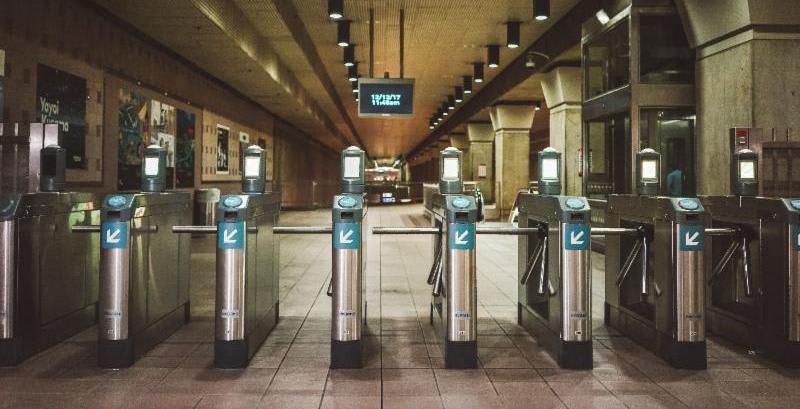
For transport, the advent of mobile technology and embedded sensors make dynamic pricing possible based on variables such as time of day, road congestion, speed, occupancy, and even carbon emissions.
Metrolink
For transport, the advent of mobile technology and embedded sensors make dynamic pricing possible based on variables such as time of day, road congestion, speed, occupancy, and even carbon emissions.
Metrolink
The transport industry is at an inflection point — companies need to embrace a new digital world order now, or risk being left behind. Independent, startup competitors from low-cost airlines to carpool services are the norm and a future of self-driving vehicles is on the horizon. The pressure is on like never before to maintain profit expectations but also to outperform competitors.
New entrants often have disproportionately lower start-up and operating costs, more labor flexibility, and fewer constraints than public or government-backed organizations. And new analytically-driven entrants are pursuing the Amazon-model, which is changing industry dynamics and raising customer expectations.
Capitalizing on demand
Enter dynamic pricing. Dynamic pricing is a straightforward concept: prices automatically fluctuate based on data about supply, historical demands, prevailing market conditions, and competition to quickly adapt to changes in the marketplace and improve profitability.
For transport, the advent of mobile technology and embedded sensors make dynamic pricing possible based on variables such as time of day, road congestion, speed, occupancy, and even carbon emissions. It’s not just a case of looking at booking levels and adjusting pricing according to obvious ebbs and flows of demand of one variable — rush hour or lunch hour as the only input, for example — but to taking a far more rigorous, scientific, data-driven approach to flexible pricing.
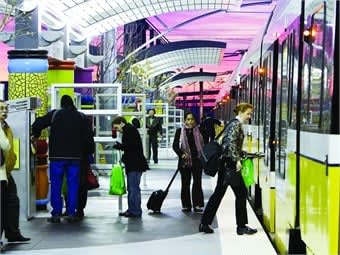
Dynamic pricing is a straightforward concept: prices automatically fluctuate based on data about supply, historical demands, prevailing market conditions, and competition to quickly adapt to changes in the marketplace and improve profitability.
DART
Obviously, dynamic pricing results in more efficient cost-income forecasting. But dynamic pricing in transportation could also be leveraged to customize better services. Single “order” management — as pioneered by some airlines — could be used to create seamless end-to-end journeys combining multiple services, such as booking for a customer a taxi + train + hotel package, online, or from a mobile device.
Rather than changing the base fare of the ticket, dynamic bundling works by generating individual offers with a tailored package of ancillary extras based on known customer behaviors, e.g., prefers first class tickets, needs assistance with a pet, or requires wheelchair service. And it could be generated in milliseconds. Such services, to a greater or lesser extent, are already in place in piecemeal. But, they can and should be more robust.
Adopting dynamic pricing would help companies:
Improve customer segmentation: Research finds few companies have a good handle on customer segmentation. Typically, it isn’t data-derived, or evidence based — at least not to the granularity needed to design effective pricing strategies. And if they do, it’s likely to be operationally or geographically driven — few are measuring behavioral segmentation. For example, an occasional rider may be more likely to change schedule because of a rate discount compared to an everyday business rider.
Adopting sophisticated forecasting: Many companies rely on only one forecast or forecast model, rather than a segmented application with multiple models to verify accuracy. Companies also tend to use internal data rather than also incorporating external and competitive data sources, meaning they can struggle to scale forecasting for complex business needs.
Reversing spiral-down discounting: Without data analysis, customer segmentation, and enhanced forecasting capabilities, untargeted spiral-down discounting can lead to margin loss, industry-wide price erosions, complete price transparency, annual price-shopping on long-term contracts, and a race to the bottom — without driving incremental demand.
Accelerating digitization: Today’s rail businesses require new data sets and advanced analytics. But while legacy technology and lack of modernization erode incumbents’ competitive posture, new entrants are gaining ground by deploying the sales and merchandizing tools customers and passengers increasingly expect, which can typically be accessed on their smart phones.
Embracing personalization: Rail companies have been late to personalization. Even in freight, they have struggled to dynamically design a tailored “product.” With base pricing becoming completely transparent, personalization around bundling and ancillary sales — plus curated loyalty offers — open new routes to drive revenue.
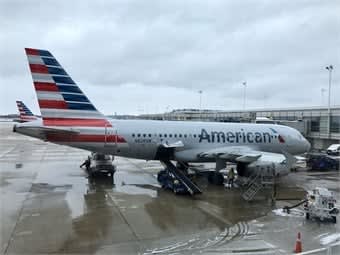
Single “order” management — as pioneered by some airlines — could be used to create seamless end-to-end journeys combining multiple services.
Janna Starcic
For this to happen, transportation companies need to embrace disruptive digital tech — the Internet of Things (IoT), smart products, real-time intelligence, and connectivity, plus artificial intelligence and data analytics — to form the backbone of rail and transit travel.
Using dynamic pricing strategies can boost profits — most executives know that — but it should also be embraced because it can create positive customer experiences. That’s because the data required to implement it also can be mined to create new offerings that customers want.
Alden Cuddihey is a managing director overseeing rail and transit global business for Accenture
More Management

LIT Marks 10-Year Milestone at Annual Summit
Hosted by the COTA from September 10 to 13, the Summit carried the theme “Celebrating 10 Years of Excellence, Leadership, and Impact,” with every part of the program honoring the people, agencies, and partners who built LIT over its first decade.
Read More →
People Movement: Dan Dipert Coaches Adds Third-Generation Leader, Keolis Names New Valley Metro VP/GM, and More
In this edition, we also cover recent appointments and announcements at the Wabtec, SilverRide, HNTB, and more, showcasing the individuals helping to shape the future of transportation.
Read More →
METRO Opens Submissions for 2026 Motorcoach Awards
Nominations are now being accepted for METRO Magazine’s Operator of the Year and Innovative Operator of the Year awards.
Read More →

New York MTA Advances Final Contract for Second Avenue Subway Expansion
Contract Four is the largest in the Second Avenue Subway Phase 2 project and includes construction of station infrastructure, tracks, and signals for the subway expansion, MTA officials said. Work on Contract Four will begin in 2027.
Read More →
Transit Agencies Highlight Safety Gains at National Summit
Leaders from 15 major transit systems shared crime-reduction results and safety initiatives while discussing the role of continued federal support.
Read More →
NITA Names New Leadership, Expands Reduced-Fare Program at First Board Meeting
The new regional transit authority appointed its first board chair and interim executive director while extending reduced fares across CTA, Metra, and Pace for eligible riders.
Read More →
Beyond the Checklist: A Structured Approach to Transit Maintenance
Reliability-Centered Maintenance helps transit agencies move beyond routine checklists to focus limited resources on the assets and failures that have the greatest impact on safety, reliability, and service.
Read More →
APTA 2026 Nominating Committee Selects Leadership Slate, Names Chair and Vice Chair Nominees
Leadership changes will help shape the association’s priorities and its representation of the transportation industry during the 2026–2027 term.
Read More →
DART Launches Major Security, Fare Enforcement Initiative
The 90-day demonstration will deploy coordinated security teams at five light rail stations while testing controlled access and gathering data to guide future investments.
Read More →
Advancing Fare Collection Through Technology and Innovation
Learn about delivering 1300 gates at 91 stations while managing fare evasion. Explore the large scale deployment, solution customization and real-world results that affect the region. Prepare for deployment in your region now.
Read More →