



Fare Technologies Adapt to Growing Ridership Needs
Trends include the shift to open payments and account-based solutions, tapping mobile applications and integrating equipment, and software to enhance customer service offerings.
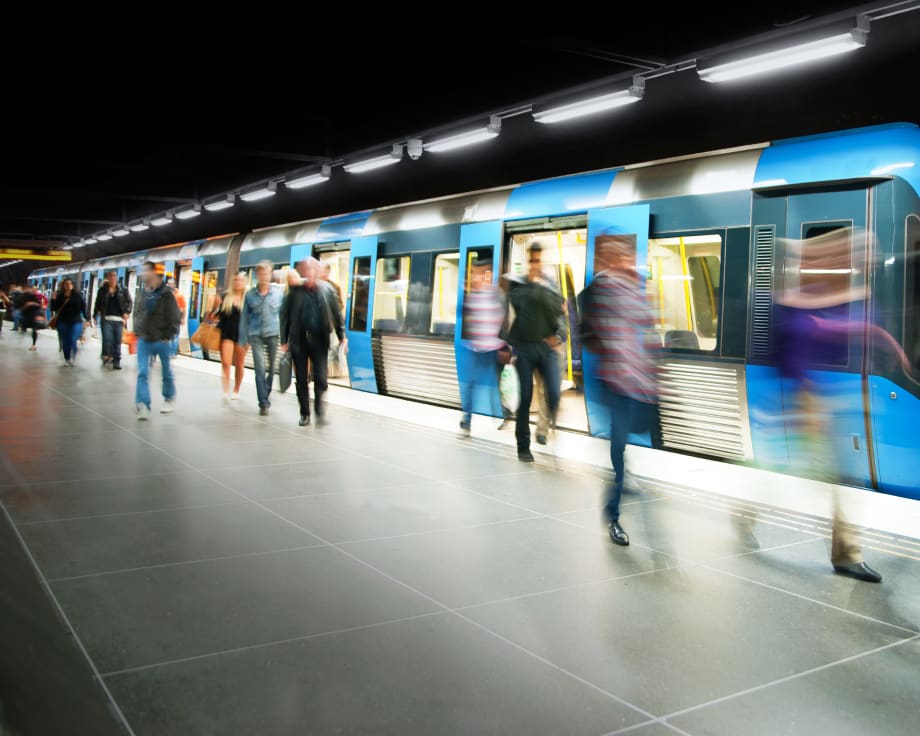

When it comes to fare systems, large public transit agencies continue to push the envelope by using technologies ranging from mobile ticketing to accounted-based applications using enhanced smart card systems to even futuristic NFC-enabled payment systems, says Kim Green, executive director for Genfare. The Chicago Transit Authority is one such early adopter of an open payment operation, with its Ventra fare payment system. The agency, along with Pace Suburban Bus, transitioned to an open contactless fare payment system — implemented by Cubic Transportation Systems — in 2014. Late last year, the Chicago-area agencies, including Metra, launched the Ventra app — the first of its kind to allow customers to use mobile ticketing to pay for rides on all three transit systems from their mobile devices.
Industry overview
While the larger transit agencies tend to be the proving grounds for these newer fare technologies, the mid- to small-sized agencies are generally the “beneficiaries” in this kind of business. “This is because smaller systems don’t have the staff and sometimes the budget of the larger agencies that tend to push the boundaries,” Green explains. As the newer technologies are developed and proven at larger systems, the technology filters down to the mid- and smaller-sized agencies for an affordable price.
Despite efforts to move away from cash in the system by turning to new fare media, there is still a large amount of cash being collected across the spectrum of agency sizes, including the large ones, says Green. “No matter what they do to incentivize their riders to use electronic media, there is always going to be a certain segment that is going to want to or have to pay cash fares,” he says.
Mid-sized agencies are a mixture, as they generally still have a pretty high cash fare payment, Green explains. “Exceptions include some university towns where a large portion of the transit riders are university students, so many of those are card-based systems.”
Challenges
Some of the biggest challenges that U.S. customers are faced with these days are adapting to a fare collection system that is more akin to the everyday retail environment, one that provides the end-customer with functionalities common in their day-to-day lives, plus delivering on the promise of making transit accessible for all parts of their riding populations, says Eric Reese, director, strategic development, for Scheidt & Bachmann (S&B).

Chicago-area agencies (CTA, Metra and Pace) launched the Ventra app — the first of its kind to allow customers to pay for rides on all three systems from their mobile devices.
Additionally, finding funding for the projects is a constant challenge. Some companies, like S&B, partner with the agency to “look at strategic possibilities to offset these funding shortfalls through creative financing options or missing in operational supportive solutions,” Reese adds.
Adopting new technologies and payments are also a challenge when dealing with the internal change management — regardless of the agency size. “Cash is going to stick around, but is in general declining,” Reese explains. “But now, with a greater transition to bank card payments at the point of purchase, online or via mobile payments, organizations are adapting new processes while gaining the benefits of lower cost maintenance.”
Open, account-based solutions
The two biggest trends in the current market is the shift to open payments and account-based solutions and there is a strong interest from agencies to incorporate mobile user experiences as part of their customer service offerings, according to Boris Karsch, VP, strategy, Cubic Transportation Systems.
“What we are seeing are highly complementary attributes between card-based, account-based and mobile technologies,” Karsch says. “The question we are helping our customers with is not ‘What technology is best?’ but ‘What is the right mix of technologies for their specific needs and travelers?’”
Card-based systems, for example, excel at providing highly reliable and predictable travel experiences, Karsch explains. Account-based technology, which is linked to a user’s bank account, offers significant advantages for those agencies looking to implement more flexible fare schemes and makes it relatively straightforward to extend the fare collection backoffice into a broader mobility revenue management platform by incorporating bikeshare, parking and other modes of transportation, he adds.
“The ability to accept contactless bankcards, be it a physical card or a virtual card on the phone, on the bus and gates, as we do in London [Oyster] and Chicago [Ventra], is well-suited to certain rider classes such as tourists or more casual users,” Karsch explains. “But by itself, doesn’t offer all the required options to service the whole ridership.”
Mobile payments
Likewise, implementing mobile payment technology is a natural and very effective way for agencies to enrich the customer experience and offer new ticketing options as part of the overall ticketing system.
As smartphone use increases, mobile payment adoption will become the main medium of payment, Karsch explains. Mobile payment is proven to cost much less for transit authorities than managing cash or a paper-based fare collection system, he adds. “Mobile apps can also include real-time passenger information for next-bus arrival updates or urgent notifications to improve overall rider satisfaction,” he says.
Mobile is a good example of new fare collection technologies that smaller- to mid-sized agencies can take advantage of. “From a user perspective, it offers an attractive way to purchase tickets and appeals to the younger generation of riders,” Karsch says.
Most small transit agencies use cash payment or paper tickets. This can be challenging when passengers need to bring the exact change or have to buy the tickets in offices with limited hours or that are far from where they live or commute. It is also a very expensive operation to collect cash, count it and account for it.
“Electronic payment is the next move — with mobile offering an opportunity to introduce electronic payments without requiring extensive investment in equipment,” Karsch says. Small agencies can take advantage of the mobile phone processing capability and connectivity to collect fares. Riders can show their ticket on their mobile phone to the bus driver or train conductor for verification.
Integration
Integration of technologies is another trend in the marketplace. “What we are seeing with a lot of the smaller agencies is they want to have an integrated fare system,” Genfare’s Green says. “Whether they’ve got coins and bills, magnetic stripe or smart card, they want to be able to have a single device in one place so that is convenient and simple for their riders to use. They want a device on the bus that allows their riders to pay fares with all types of fare media.”
Some larger transit systems are looking to upgrade their ability to accept electronic media, Green explains, which has led to some of these agencies to “issue RFPs for a stand-alone validator that would accept electronic media, such as magnetic stripe cards, smart cards and even contain a bar code reader to accept mobile ticketing applications.” Under this scenario, the validator can be connected to the farebox for greater efficiency and data collection.
“This would be an option if the agency has a fare collection system that’s only halfway through its useful life,” Green says. “They can upgrade their electronic media capability by buying the stand-alone validator and keeping the farebox they have in place to deal with cash. Genfare has a variety of upgrade packages available to our existing customers that allow the expansion of their fare media programs while preserving their present capital investment in their current fare system.”
In addition to integrating hardware on the vehicle, there is also opportunity for backend integration. With the added complexity of wanting “Big Data” in transit and doing better ridership and revenue analysis as well as better integration with other devices, such as passenger counters and AVL systems, tools that assist with this function are key, Green says.
More Management

METRO Opens Submissions for 2026 Motorcoach Awards
Nominations are now being accepted for METRO Magazine’s Operator of the Year and Innovative Operator of the Year awards.
Read More →
New York MTA Advances Final Contract for Second Avenue Subway Expansion
Contract Four is the largest in the Second Avenue Subway Phase 2 project and includes construction of station infrastructure, tracks, and signals for the subway expansion, MTA officials said. Work on Contract Four will begin in 2027.
Read More →
Transit Agencies Highlight Safety Gains at National Summit
Leaders from 15 major transit systems shared crime-reduction results and safety initiatives while discussing the role of continued federal support.
Read More →

NITA Names New Leadership, Expands Reduced-Fare Program at First Board Meeting
The new regional transit authority appointed its first board chair and interim executive director while extending reduced fares across CTA, Metra, and Pace for eligible riders.
Read More →
Beyond the Checklist: A Structured Approach to Transit Maintenance
Reliability-Centered Maintenance helps transit agencies move beyond routine checklists to focus limited resources on the assets and failures that have the greatest impact on safety, reliability, and service.
Read More →
APTA 2026 Nominating Committee Selects Leadership Slate, Names Chair and Vice Chair Nominees
Leadership changes will help shape the association’s priorities and its representation of the transportation industry during the 2026–2027 term.
Read More →
DART Launches Major Security, Fare Enforcement Initiative
The 90-day demonstration will deploy coordinated security teams at five light rail stations while testing controlled access and gathering data to guide future investments.
Read More →
Advancing Fare Collection Through Technology and Innovation
Learn about delivering 1300 gates at 91 stations while managing fare evasion. Explore the large scale deployment, solution customization and real-world results that affect the region. Prepare for deployment in your region now.
Read More →
Game Day in Motion: Moving Millions During the 2026 World Cup
Between packed transit stations and team motorcoaches, see how agencies and operators across North America tackled the transportation demands of the 2026 FIFA World Cup.
Read More →
Surface Transportation Extension Averts Shutdown, Leaves Transit Funding Gap
The stopgap keeps federal transportation programs moving, but missing advance funding could complicate the transit and rail projects agencies are planning next.
Read More →