



Flint MTA Switches to Propane for Savings, Eco-Benefits
In 2011, Livonia, Mich.-based manufacturer of propane autogas fuel systems ROUSH CleanTech and its in-state neighbor the Flint Mass Transportation Authority (MTA) unveiled the agency's first propane autogas paratransit vehicle at the BusCon Expo in Chicago.
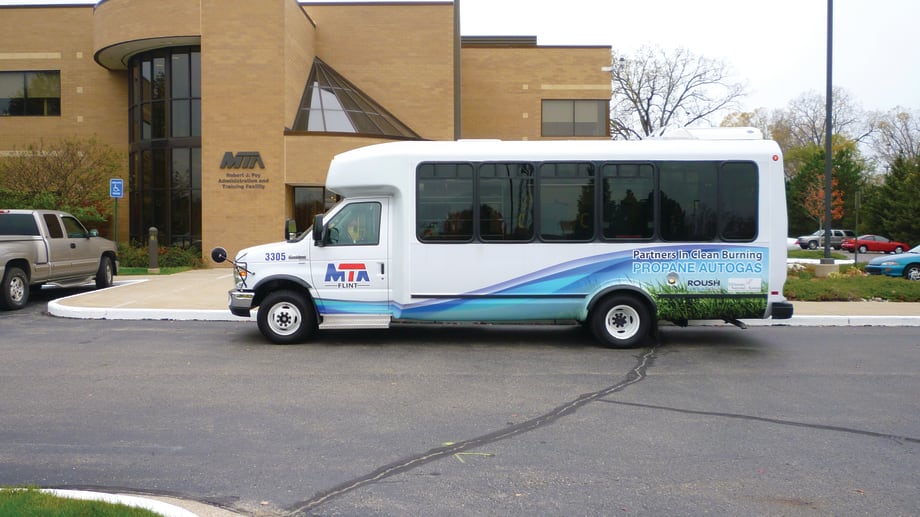
In 2011, Livonia, Mich.-based manufacturer of propane autogas fuel systems ROUSH CleanTech and its in-state neighbor the Flint Mass Transportation Authority (MTA) unveiled the agency's first propane autogas paratransit vehicle at the BusCon Expo in Chicago.
The MTA's new vehicle, built on a Ford E-450 chassis, with a 6.8-liter, V10 engine and 41-gallon propane fuel tank, was converted by ROUSH and is just part of the agency's commitment to an alternatively-propelled fleet.
"This movement to alternative fuels is one that we feel will give the MTA long-term sustainability and also allows to help provide a cleaner sustainable community here in Genesee County," says the MTA's GM Edgar Benning.
MTA plans on replacing its entire paratransit fleet with propane vehicles and is also seeking a grant to replace diesel engine vehicles that are used for peak service — primarily rush hour student activity — with propane vehicles as well. For its large bus fleet, MTA will be testing two to three hydrogen fuel-cell vehicles this year and will also use a mix of diesel-electric and compressed natural gas, according to Benning.
Sustainable commitment
As part of its commitment to sustainability within the communities it serves, the MTA's decision to switch to propane for its paratransit fleet was driven in part by its ability to reduce maintenance costs as well potentially extend the engine life. Propane fueled vehicles emit less carbon dioxide, about 20% less nitrogen oxide, 60% less carbon monoxide and up to 24% less greenhouse gas, when compared with gasoline-fueled vehicles. They also release fewer smog-producing particulates, reducing short-term and long-term health effects in passengers, according to ROUSH CleanTech's VP, sales and marketing, Todd Mouw.
"Propane burns much cleaner than gasoline or diesel, so you don't have the same carbon content of the fuel," he explains. "In the very worst case, the lifetime of the vehicle would be the same as a gasoline-fueled vehicle, but in theory, it should last longer."
With the agency planning to replace 150 vehicles within three to four years, including the purchase of at least 48 more 16-passenger propane autogas shuttles by early 2012, Benning says cost was another major reason for the switch to propane.
"We anticipate that we will be able to purchase propane in volume, up to a year in advance or possibly over a two-year period, for under $2-per-equivalent gallon," says Benning. "If the national incentive continues for alternative fuels, we will be eligible for a 50-cent incentive off each gallon from the federal government, which could bring the cost down, per gallon equivalent, to about $1.50."[PAGEBREAK]
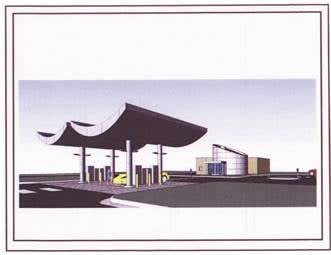
Last fall, MTA broke ground on its first alternative-fueling station in Grand Blanc Township that will include propane autogas.
Cost savings
The cost savings is significant for MTA, since its diesel costs soared from $3.5 million, annually, to $5.2 million, annually, over a period of three years, without adding either vehicles or mileage, according to Benning. Installing propane fueling stations can be done relatively inexpensively, he adds.
"Setting up a propane fueling station will run around $20,000 per location, which is much cheaper than some of the other fueling sources we explored," Benning says.
There are also other options available for agencies looking to add propane fueling stations, Mouw says.
"In many cases, the propane industry will provide the fueling station at little to no cost, just because it's so cheap to put in," he says. "Many times, it can be done in exchange for a fueling contract that would last somewhere between three and five years."
Last fall, MTA broke ground on its first alternative-fueling station in Grand Blanc Township that will include propane autogas. The station is set to open in April or May of 2012, which is earlier than expected due to the mild winter the area experienced. The station's second phase is set to launch in spring 2013.
"In the second phase, we are going to put in an education research building, which will allow us to work with local colleges to further develop that alternative-fuel facility," says Benning. "We are currently in discussions with many partners in the community, both primary and secondary stakeholders, and there is a great deal of interest in alternative fuels, so the research and educational center will be very helpful to us."
Conversion process
The process to convert a vehicle begins with ordering one that is built specifically to support propane or natural gas, which in the MTA's case is a Ford E-450. The rest, from there, is quite simple, says Mouw.
"In this case, Ford builds the base vehicle. It then comes to us and we take off the gasoline fuel system, injectors, fuel lines and fuel tank and put in specific propane components: a different fuel rail, different injectors, stainless steel fuel lines and a new fuel tank," he explains. "We then recalibrate Ford's powertrain control module, so the vehicle runs efficiently and effectively on propane. That whole conversion process takes about a day."
Mouw says the questions ROUSH receives from prospective agencies typically focus on cost and vehicle performance.
"It has to make fiscal sense for them," he explains. "These are taxpayer dollars being used, and with the rising cost of traditional fuels, agencies are looking for a way to reduce operating costs. So, that is usually the first question they ask."
The second concern most have is if the vehicle will run the same as a gasoline- fueled vehicle.
"The answer is yes," exclaims Mouw. "The vehicle will operate with the same torque and horsepower as a gasoline engine, so the driver won't notice any difference."
To prove his point, Mouw adds that ROUSH will typically loan an agency a vehicle to test before making their decision. He also says since ROUSH is a powertrain partner with Ford, the agencies can plug in their existing diagnostic modules to determine the vehicles' issues, should one arise.
As a last piece of advice when heading down the alternative-fuel road, Mouw says no matter which way an agency chooses to go, finding a reliable, credible partner is the most important factor.
"There are many companies trying to get involved in the alternative fuel space that don't necessarily have the pedigree or the resources to design, develop and support a product five or 10 years down the road after it's sold," he says. "For that reason, picking the right partner that has developed a product that works as advertised and will be around to support it will really shorten the putt, in regards to having a successful project."
More Paratransit
Indian River Transit’s Community-Focused Approach Earns National Recognition
Named APTA’s 2026 Outstanding Public Transportation System in its size category, Florida’s Indian River County transit system continues to grow ridership through fare-free service and a focus on evolving community needs.
Read More →
Everett Transit, Community Transit Outline Consolidation Agreement
The proposed agreement calls for a 50% increase in bus service in Everett, a new microtransit zone, continued paratransit service, and the transfer of Everett Transit operations to Community Transit.
Read More →
Driving Smarter Paratransit
John Hanlon shares how AlphaRoute is leveraging AI-powered technology to help paratransit providers optimize operations, support frontline staff, and enhance the rider experience.
Read More →
People Movement: Dan Dipert Coaches Adds Third-Generation Leader, Keolis Names New Valley Metro VP/GM, and More
In this edition, we also cover recent appointments and announcements at the Wabtec, SilverRide, HNTB, and more, showcasing the individuals helping to shape the future of transportation.
Read More →
Biz Briefs: RIPTA Unveils New Frontrunners, Clevland RTA Adds New Siemens, and More
In METRO's latest installment, we take a look at recent news from Siemens, Prevost, Dodge, and more partnerships making headlines across the transportation sector.
Read More →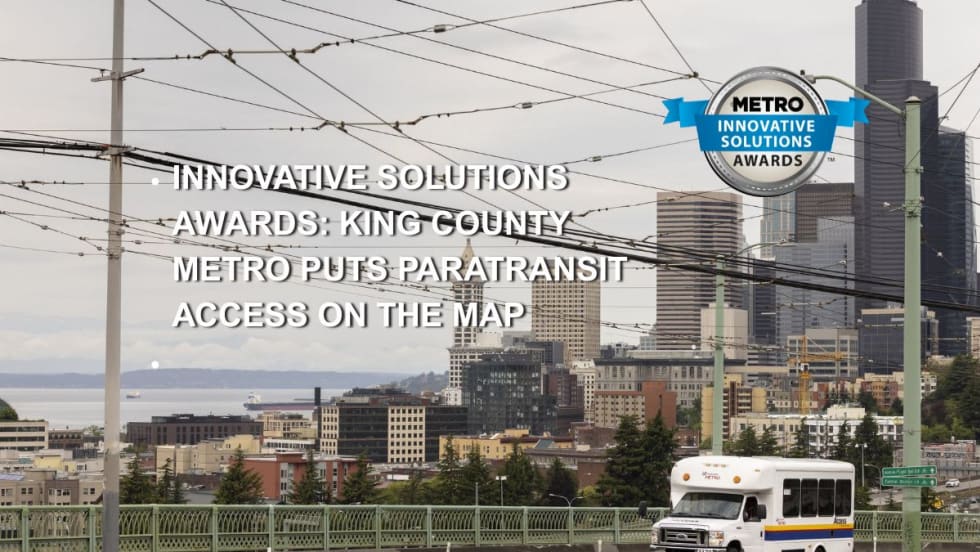
King County Metro Makes ADA Paratransit Easier to Navigate
METRO's Innovative Solutions Award winner replaces complex service-area descriptions with an accessible, interactive map that puts paratransit information directly in customers’ hands.
Read More →
Jacksonville’s NAVI Project Charts a New Course for Autonomous Public Transportation
Through its NAVI program, JTA is showing how autonomous vehicles, intelligent infrastructure, and coordinated operations can work together to deliver everyday public transportation.
Read More →
Driving Smarter Paratransit
John Hanlon shares how AlphaRoute is leveraging AI-powered technology to help paratransit providers optimize operations, support frontline staff, and enhance the rider experience.
Read More →
METRO Magazine Announces 2026 Innovative Solutions Awards Winners
Projects Recognized for Advancing Mobility Through Technology, Accessibility, Workforce Innovation, and Operational Excellence
Read More →
Biz Briefs: STV teams with Amtrak, Motorcoach Operators Boost Fleet and Land Contracts, and More
From manufacturers and suppliers to transit agencies and motorcoach operators, these updates offer a snapshot of the projects, partnerships and business moves driving the industry forward.
Read More →