



Houston silences nay-sayers with opening of long-awaited light rail line.
After a 20-year debate, 2004 marks the beginning of a new mass transit service in one of America's largest cities.

Revenue service began Jan. 5 on the first light rail public transit system in Houston’s history. Built after a 20-year transportation debate, the trains began paid service after a grand opening and four days of free rides. Opening ceremonies began on New Year’s Day when a silver train broke through a banner and rode through a cloud of confetti and the cheers of government and community leaders. Houston, one of America’s most polluted cities, was the last major metropolitan area in the United States without a public transit rail line. A series of elections, funding questions and political controversies kept the city without rail and contributed to a severe smog problem. Still, the need for a light rail line has been debated since 1973. “We’ve made believers out of those who thought it would never get done,” said Shirley DeLibero, president and CEO of the Metropolitan Transit Authority of Harris County (Metro), prompting an ovation from city officials and Houston citizens. When the first train made its run through the city, thousands gathered along the route to wave and take pictures. During the first few days of free service, trains were reportedly packed to capacity all around the city. Not all news was immediately uplifting, however. On the first paid service day, traffic was light, and there were a few reports of a stalled train, according to the Houston Chronicle. But by late morning, several lines became very crowded. Metro spent $324 million in the past three years constructing a 7.5-mile line that is the focal point in a planned 80-mile-long system. More trains will be phased in over the next few months.
More Management

Indian River Transit’s Community-Focused Approach Earns National Recognition
Named APTA’s 2026 Outstanding Public Transportation System in its size category, Florida’s Indian River County transit system continues to grow ridership through fare-free service and a focus on evolving community needs.
Read More →
ENC Lands MATA Contract and More in Biz Briefs
In this edition of Biz Briefs, we spotlight the latest developments shaping the future of mobility.
Read More →
From Surviving to Thriving: Building Stronger Transportation Organizations
Bus Business Consultants founder Brian Dickson shares lessons on leadership, organizational health, and creating options for long-term success in a changing transportation industry.
Read More →

Everett Transit, Community Transit Outline Consolidation Agreement
The proposed agreement calls for a 50% increase in bus service in Everett, a new microtransit zone, continued paratransit service, and the transfer of Everett Transit operations to Community Transit.
Read More →
Strada360’s Steve Lassey on Turning Transit Data Into Better Decisions
From breaking down data silos to preparing for AI, Strada360 CEO Steve Lassey discusses how transit agencies can use technology to improve operations, customer information, and long-term decision-making.
Read More →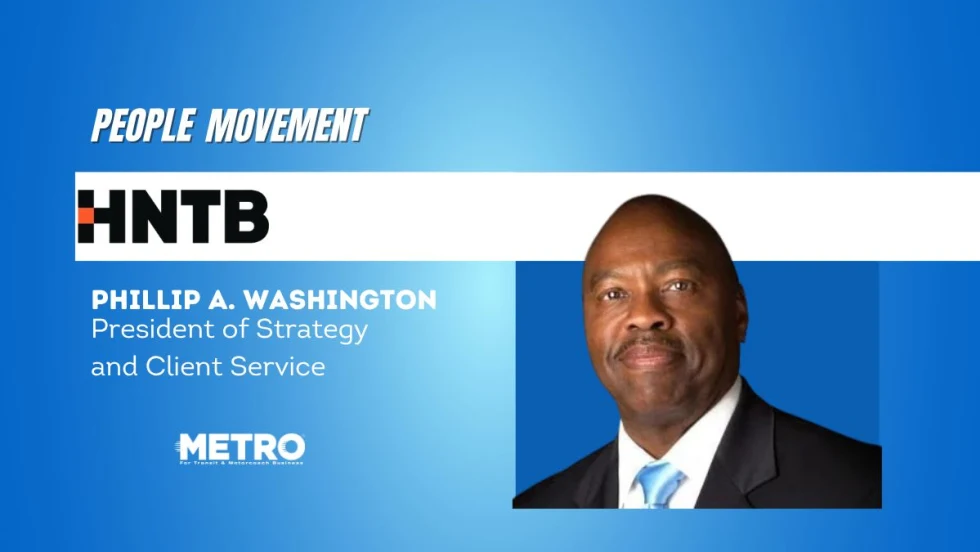
People Movement: Phil Washington Joins HNTB, Denver RTD Launches CEO Search, and More
In this edition, we also spotlight recent personnel moves at STV, the Eno Center for Transportation, and more, highlighting the people taking on new roles across the transportation industry.
Read More →
SEPTA Details Accelerate Vision for Transit System
The plan outlines investments in trolley modernization, new Metro and Regional Rail vehicles, accessible stations, and more frequent bus and rail service.
Read More →
FTA Ends Direct Oversight of MBTA Safety Actions
The federal agency closed its remaining special directive to the Massachusetts Department of Public Utilities following a safety review that began in 2022.
Read More →
Report: Transit Bus Manufacturing Supports 34,100 Jobs, $5.1B in GDP
The “Buses Mean Business” report examines the transit bus manufacturing industry’s economic footprint, supply chain, and rising demand for vehicle replacements.
Read More →
LIT Marks 10-Year Milestone at Annual Summit
Hosted by the COTA from September 10 to 13, the Summit carried the theme “Celebrating 10 Years of Excellence, Leadership, and Impact,” with every part of the program honoring the people, agencies, and partners who built LIT over its first decade.
Read More →