



How the Motorcoach Industry Can Meet the Challenge of 2002
Keys to survival will be the ability to target new customers, creating a solid contingency plan and the courage to try something new, like Dale Bunce’s five marketing strategies.
All signs point to a formidable challenge in 2002 for motorcoach operators across the country. The events of Sept. 11 have combined with the already slumping global economy to create a do-or-die scenario for many tour and charter companies. The question is: Who will survive? According to many economic forecasts, a recovery is expected later this year. But that may be too late for many motorcoach operators who are struggling with cash-flow problems created by cancellations. Moreover, those companies that manage to meet their debts could still be undone by another terrorist attack on U.S. soil. Meanwhile, the distress of motorcoach operators is being passed through to the manufacturing sector. “This will be a challenging year for operators and suppliers,” predicts Patrick Scully, president and CEO of Setra of North America in Greensboro, N.C. “But we are seeing some levels of stabilization, especially after the dire predictions following Sept. 11.” Tom Sorrells, president and COO of MCI in Schaumburg, Ill., agrees that the impact of Sept. 11 has been lighter than expected. “The stronger operators seem to be humming along OK,” he says. “I don’t think the world is nearly as bad as portrayed.” However, the weaker operators, those who were “running on a shoestring,” could be in trouble, Sorrells adds. The industry slump is forcing some operators to postpone new vehicle procurements and others to dump some of their rolling stock into the open market in search of cash. Repossessed coaches are also flowing into the market. “You’ve got a glut of inventory at a lot of the manufacturer locations and a glut of inventory that’s been repossessed,” says Buddy Cox, sales manager for commercial bus and coach at Blue Bird Corp. in Fort Valley, Ga. “Before coach sales pick up, some of that inventory has to move on. This creates very attractive pricing for the end user. Trouble is, few end users have new business that requires new inventory.” “We’ve been through this before, only not under the same circumstances,” says Michael Rochette, vice president of marketing at Prevost Car Inc. in St. Claire, Quebec. “This is a cyclical business. The good operators — those who are well organized and diversified — will survive.” Ron Cornell, president of ABC Co. (formerly ABC Bus Co.), in Faribault, Minn., says his company is optimistic about the industry. “We’re seeing good signs of recovery,” he says. “I think business will be real good once people calm down, and I think land travel will be stronger than it was.” Not all is rosy, however. “The next big hurdle will be the insurance issue,” Cornell says. Operators have been hit with 20% to 80% increases in premiums. Cornell says he viewed insurance hikes as a hot topic before Sept. 11. Of course, the topic is even hotter now. Despite the overall uncertainty of the economy and the fragile psyche of would-be travelers, motorcoach operators need to embrace the notion that growth — not just survival — is possible, even as the debtors come knocking at the door. Think ‘outside the bus’ Because industry suppliers are limited in how they can directly help motorcoach operators, many of the major players recently pooled their resources to sponsor a cross-country marketing seminar by Dale Bunce, president of International Market Development. Bunce reported on his “road show” in the November/December 2001 issue of METRO (pgs. 40 to 42), but didn’t provide details of his presentation. What follows is a summary of his five strategies. 1. Reverse convention Convention managers are experiencing a significant reduction in attendance because of the problems related to air travel and safety concerns. Motorcoach operators located within 400 miles of a convention can provide assistance by collecting attendees and delivering them to the convention site. The initial sales call should be placed to the convention management team, which can coordinate pick-up locations and provide hotel contacts and other sources of assistance. Operators should be prepared to serve breakfast during the trip as well as provide videotapes (supplied by show management) about the show, exhibits and vendors. Customers should have full use of their laptop computers, cell phones and the restroom facilities during the trip. Providing the show badge before arrival at the convention center is a nice touch. Once the attendees have been delivered to the convention site, they should be provided with their hotel keys, shuttle information and their bags should be delivered to the hotel room. The procedure would be reversed on the departure day. Once a convention attendee experiences this level of service, he or she should be convinced that this is a superior method of traveling to a convention. 2. Key business partner Identifying the specific travel needs of key businesses in your area can provide opportunities. Businesses that are not located near a major hub airport face a loss of productivity while their employees are on the road to airports or final destinations. In the wake of the Sept. 11 terrorist attacks, airlines have cut back their schedules. Motorcoach operators who offer customized service to the hub airports or to final destinations can fill corporate needs. For example, management teams can hold staff meetings while en route to their destinations and use their phones and laptop computers. Plus, the scheduling of the trips can be more flexible than with air travel. This type of program should be offered with a six-month minimum contract. Ideally, the corporation would “brand” the coach with a logo wrap and message. 3. Partnership program As part of the hospitality industry, motorcoach operators should be taking advantage of opportunities to partner with hotels and resorts offering special travel packages. Because the traveling public still is cautious about flying, there’s a window of opportunity to demonstrate the overall ability of the motorcoach operator to be a part of the hospitality team. The key is to provide transportation for hotels and resorts offering special local vacations. The resort should advertise “first class” or “premium service” travel accommodations in their newspaper ads and in direct mail pieces. The motorcoach operator not only can provide pick-up and drop-off for customers but also onboard video systems with first-run movies (available from the hotels), meals and beverages. The product will not only contribute to the success of this promotion but will build a bridge with hotels for other promotions and partnering scenarios. 4. Major player This strategy is similar to “key business partner” mentioned earlier. It involves developing a transportation relationship with a large company that might have several buildings in your area. The scenario is that you can provide transportation between the buildings and to the airport. Coaches branded with the company’s logo and marketing theme could move employees on a scheduled basis between buildings and to the airport. The key is to get the customer to understand how much money is saved on transportation in the local area and how much employee productivity is enhanced. Because employees are delivered to the front door of each building, they do not waste time looking for parking spaces. In addition, employees can conduct business safely while traveling between buildings. There is a monetary savings as well because employees do not have to pay for airport parking, which can cost as much as $100 for a five-day trip. 5. Executive class service In Europe and South America there is a transportation segment that is rare in the United States. It’s executive motorcoach service, generally conducted between large cities up to 300 miles apart. The buses are standard motorcoaches converted to transport 20 to 22 passengers. These premier or executive-type buses are equipped with a galley, electrical hook-ups and video systems. The idea is to create a service that replicates first-class air travel. The program targets large businesses in destination cities. The customer you’re looking for is the business traveler who travels frequently between large cities and who values extra onboard services and appreciates the “office time” available in this atmosphere. The benefit to the traveler is the flexibility in scheduling “commutes” between cities and the reduced cost of traveling by coach. Direct mail campaigns and demonstration rides can be used to promote this service. For more information about these five strategies, including specific procedures on how to implement them and how to price them, contact Dale Bunce. He can be reached at (803) 642-5544 or at imd2@bellsouth.net. And another thing. . . The basic premise of Bunce’s strategies is that motorcoach operators need to aggressively pursue new business in areas that they’ve probably never considered. “They’re going to have to diversify or it will be very tough to survive,” says Cox of Blue Bird. “Tour and charter is a one-legged stool.” “You have to look at other ways of doing things, but you can’t diversify overnight,” adds Rochette of Prevost. Operators should have contingency plans to help weather hard times and maintain a positive cash flow. “You also have to be patient. It’s not all gloom and doom. I see the situation reversing itself naturally.” Sorrells of MCI agrees. “I think we’ve bottomed and are on the way back up,” he says. Operators should take this opportunity to retrench, he adds. Operator perspectives Mike Waters, president of Pacific Coast Charters in South San Francisco, says he’s helping to compensate for lost business by marketing his garage services. He recently obtained contracts to service coaches and 21-passenger cutaway buses for two local operators. That’s helped to fill in some of the $100,000 in cancellations he’s experienced. Some of those cancellations occurred before Sept. 11, as families feeling the crunch of the collapsing stock market decided not to send their children to summer camp. Waters is optimistic that the business will return to normal, especially if the U.S. war on terrorism can help to quiet people’s fears about traveling. “I think we could see pent-up desire to travel,” he says.
More Management

Bus Tech Talk: Keeping Transit Technicians Ahead of the Technology Curve
In this episode of Bus Tech Talk, Complete Coach Works’ Business Development Manager Mark Hollenbeck and METRO’s Executive Editor Alex Roman sit down with Obed Mejia, Senior Technical Trainer for Bus Maintenance, at LA Metro to discuss how rapidly evolving bus technology is changing the maintenance shop — and the skills technicians need to keep pace.
Read More →
Michael Schneider Joins Paslay Group to Expand Transportation Practice
The longtime transportation executive will help Paslay Group grow its advisory and program management work across transit, highway, and other infrastructure sectors.
Read More →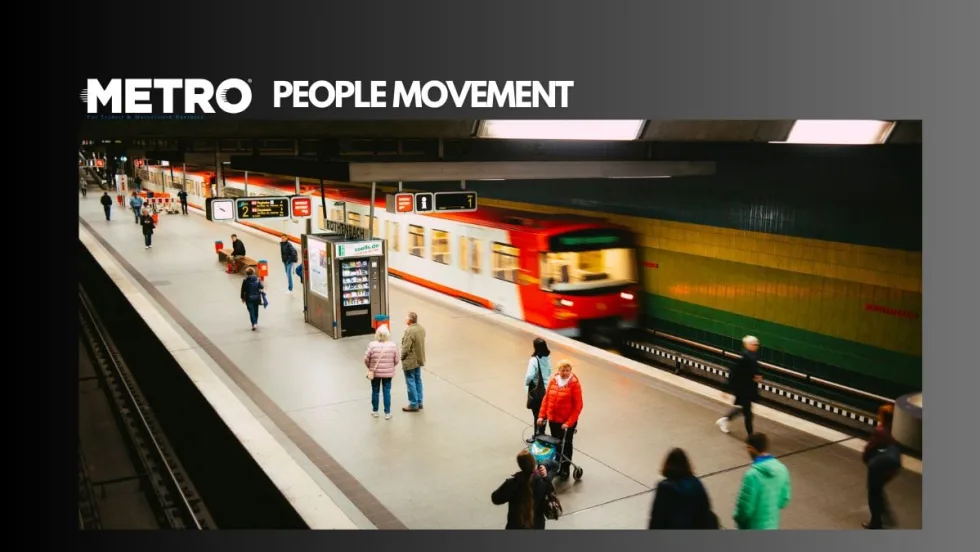
People Movement: Connectpoint Expands Leadership Team, Stadler Names New Group CEO, and More
In this edition, we also spotlight recent personnel moves at Burns, UZURV, and more, highlighting the people taking on new roles across the transportation industry.
Read More →
More Than a Summer Job: Building the Next Generation of Transit Talent
The Delaware River Port Authority and PATCO have transformed their internship program into a hands-on professional development experience that introduces students to the breadth of transportation careers — and creates a pipeline for future employees.
Read More →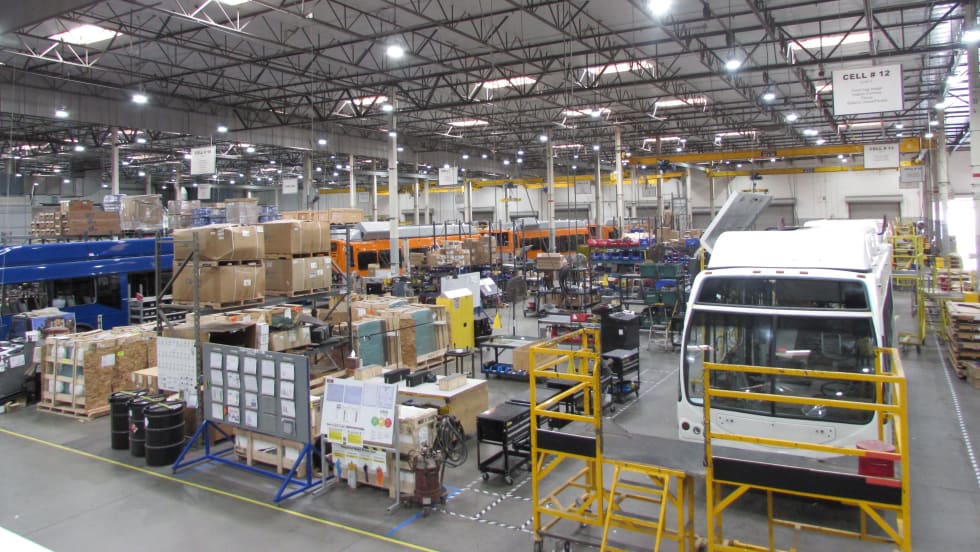
LA Metro Board Awards 220 Battery-Electric Bus Contract to ENC
The contract, which is the largest base award of battery-electric buses by a U.S. transit agency, will be built in Southern California, sustaining good jobs as LA prepares to welcome the world in 2028
Read More →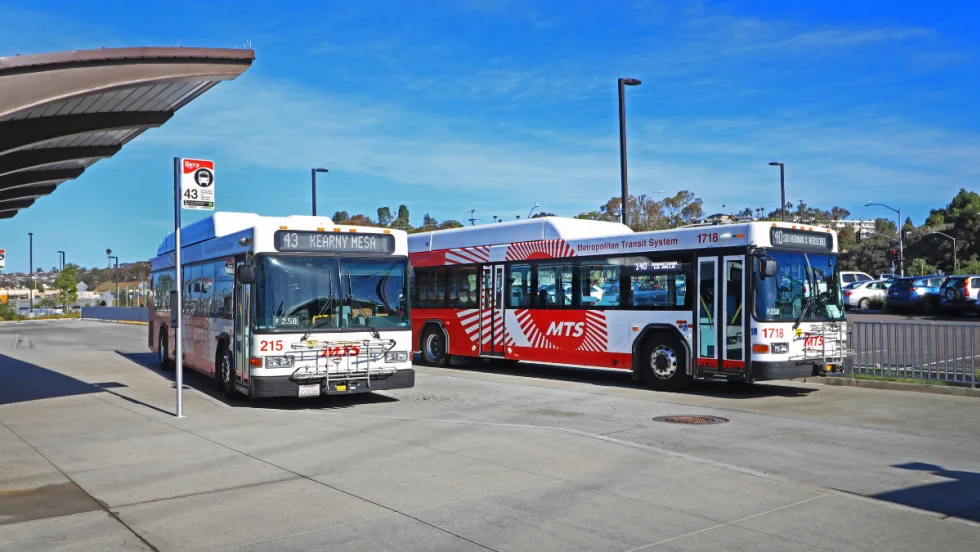
What’s Behind San Diego MTS’s Award-Winning Transit Strategy
Named one of APTA’s 2026 Outstanding Public Transportation Systems with 50 million or more annual passenger trips, California’s San Diego Metropolitan Transit System points to gains in ridership, safety, technology, and reliability as foundations of its success.
Read More →
Public Transit Conference Returning to GFX in 2027, Call for Papers Now Open
The Call for Papers is now open, allowing transit agency professionals and industry experts to help shape the PTC educational program by submitting session ideas for consideration.
Read More →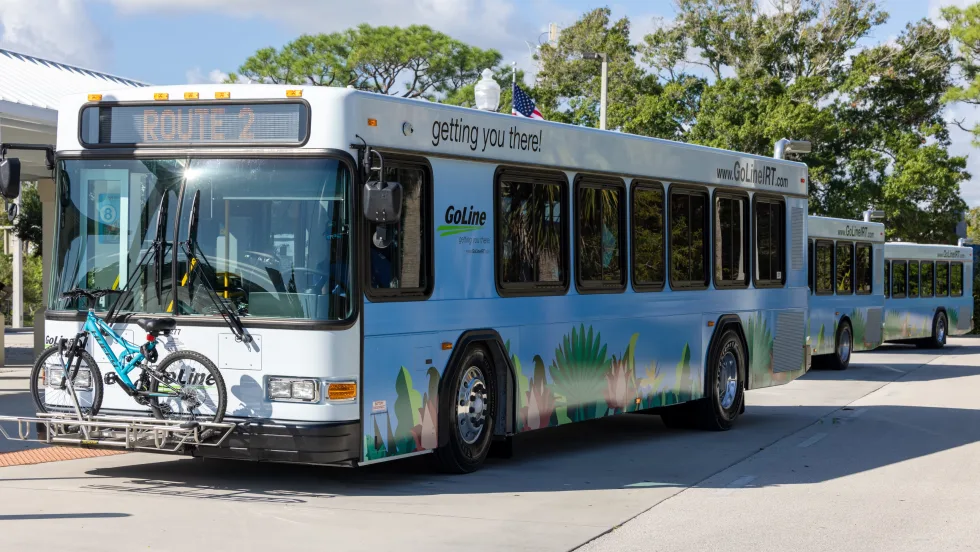
Indian River Transit’s Community-Focused Approach Earns National Recognition
Named APTA’s 2026 Outstanding Public Transportation System in its size category, Florida’s Indian River County transit system continues to grow ridership through fare-free service and a focus on evolving community needs.
Read More →
ENC Lands MATA Contract and More in Biz Briefs
In this edition of Biz Briefs, we spotlight the latest developments shaping the future of mobility.
Read More →From Surviving to Thriving: Building Stronger Transportation Organizations
Bus Business Consultants founder Brian Dickson shares lessons on leadership, organizational health, and creating options for long-term success in a changing transportation industry.
Read More →