



Read: How the Motorcoach Industry Supports Disaster Response and National Preparedness
Moving People at Scale: The Fleet Logistics Behind Evacuation and Disaster Transport
Real-time data, cross-agency partnerships and coordinated operations make it possible to deploy hundreds of vehicles when communities need them most.
by Nick Parsa, CharterUP
July 8, 2026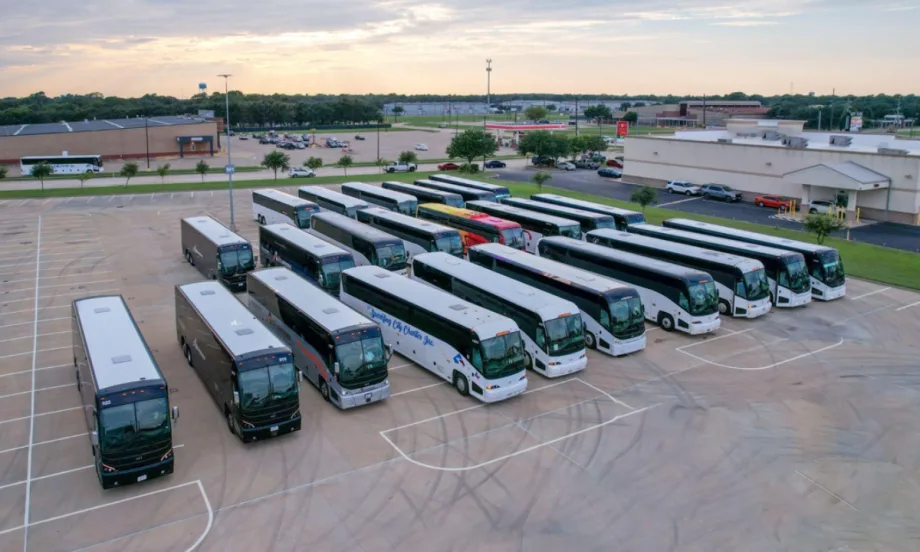
Over the last many years, CharterUP has worked with countless emergency management groups, state agencies, and other stakeholder organizations to manage emergency response logistics for hundreds of events, including Hurricane Beryl in 2024.
Credit:
CharterUp
6 min to read
- Effective evacuation and disaster transport relies on the integration of real-time data to coordinate logistics.
- Cross-agency partnerships play a crucial role in deploying large-scale vehicle operations during emergencies.
- Coordinated operations enable communities to leverage hundreds of vehicles rapidly when needed.
*Summarized by AI
When a hurricane makes landfall or a wildfire jumps a containment line, transportation quickly becomes critical infrastructure. The decisions made in the hours leading up to an event, and in its immediate aftermath, directly impact how safely people can evacuate, how quickly first responders can access affected areas, and whether relief efforts can keep pace with rapidly changing conditions on the ground.
At CharterUP, coordinating large-scale emergency transportation is a key operational capability. Running the nation’s largest B2B charter bus marketplace — with more than 10,000-plus vehicles across 700-plus operators — gives us a unique look into what works, what breaks down, and what a large-scale emergency response effort entails.
Over the last many years, CharterUP has worked with countless emergency management groups, state agencies, and other stakeholder organizations to manage emergency response logistics for hundreds of events.
From hurricane response, wildfires, and flooding to COVID relocations, distressed flights, and more, CharterUP has the experience, infrastructure, and scale needed to manage high-capacity emergency response efforts.
A Different Operating Environment
Evacuation and disaster transport operate in a completely different category than day-to-day fleet management.
In normal circumstances, demand is mostly predictable, routes are established, and operators have time to plan. In emergency response, demand emerges quickly, and decisions must be made before full information is available. Transportation doesn't operate in isolation; it becomes part of the broader emergency response system, working alongside public agencies, utility crews, healthcare workers, and emergency response agencies.
In this mission-critical context, efficient transportation isn’t just a goal; it’s essential to ensure the full response system functions as a whole.
The Staging Before The Storm
Effective emergency transportation begins well before the first evacuation order. Staging decisions, such as where to pre-position vehicles, how many to pre-position, and at what distance from the projected impacted area(s), are driven by a combination of weather forecasting, historical demand patterns, and real-time network data.
For CharterUP, this means analyzing current bookings and regional operator availability across our platform as an emergency event develops.
The goal is to position vehicles outside the affected zones but close enough to deploy them quickly when the time is right. We need to protect our assets while ensuring they can be deployed in the field as soon as conditions allow. This advanced positioning — otherwise known as a staging area — also creates the logistical hub that supports first responders, medical aid distribution, and food supply movement in the hours ahead of a response.
Coordination Across Groups
One of the most common challenges in emergency response is communication. During a major event, dozens of stakeholder groups come into play: Municipal emergency management, state agencies, public safety, healthcare groups, utility crews, NGOs, and more. Each has unique transportation needs, timelines, and protocols.
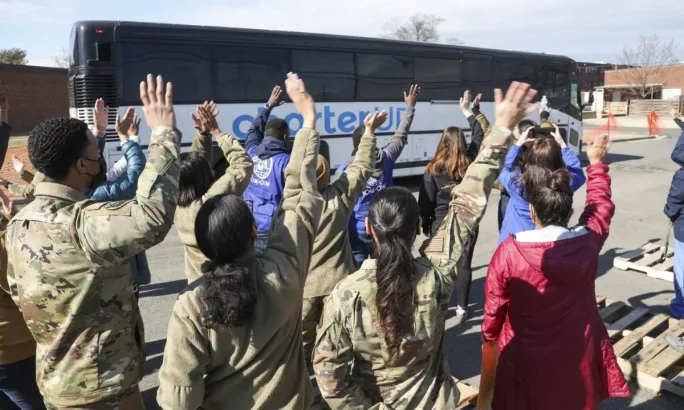
During an emergency or disaster, dozens of stakeholder groups come into play, including the military. Pictured here is an emergency deployment using CharterUp's vehicles.
Credit:
CharterUp
Fragmented communication between these groups is where transportation efforts most often break down. Without clear alignment on roles, timelines, and real-time visibility into resources, large fleets become more of a burden than an aid. Established coordination and pre-existing relationships are often what separate a functional response from a chaotic one.
At CharterUP, those relationships are built into how we operate. We maintain a network of preferred, regionally designated operators with proven experience in emergency and disaster response. These partners bring qualified drivers, established agency relationships, and a strong understanding of local protocols. They are our first call ahead of major events, ensuring early-stage coordination is led by groups who know the landscape and can integrate seamlessly with public and private stakeholders on the ground.
Network Scale and Operational Visibility
Evacuations and disaster response efforts routinely demand hundreds of vehicles on short notice. That kind of surge capacity doesn’t all come from a single operator, or even from the same region. Pulling together the necessary resources to manage relief efforts requires a networked approach, with real-time visibility into asset location, driver availability, and vehicle readiness across geographies.
CharterUP’s AI-enabled platform provides operational visibility across a nationwide network of more than 10,000 vehicles. By analyzing live availability, location data, and weather patterns, we can quickly identify and mobilize assets from surrounding areas as needs evolve.
What was once a fragmented, days-long coordination effort is now managed through a centralized system that allows teams to source and deploy vehicles in minutes. This level of visibility and speed enables transportation to scale with rapidly changing conditions on the ground.
The Role of Technology
Real-time fleet visibility, centralized dispatch, and integrated communication among operators, drivers, and agencies prevent bottlenecks during mass transport events. Without technology managing these functions, even the most experienced logistics teams struggle to maintain efficiency at scale. Clear staging plans, defined roles, and live monitoring work in harmony to keep resources moving across large response efforts.
This infrastructure can't be built during an emergency; it has to exist and be pressure-tested before one develops. That's where CharterUP's experience becomes an asset. Our years of experience coordinating large-scale emergency responses, combined with a platform purpose-built for real-time visibility and rapid mobilization, mean our partners aren't onboarding a new vendor when a crisis hits; they're leveraging a system that's already battle-tested.
Lessons from the Field
The biggest takeaway from large-scale emergency response is that preparation and organization ultimately determine how effective a response will be. When transportation breaks down, it’s almost always due to planning that started too late or limited visibility into available resources. The most successful operations are already in motion before the event fully escalates.
Another key lesson is the importance of scalable, networked fleets. Response vehicles rarely come from the immediate impact zone, which makes real-time access to available vehicles across regions critical to rapid mobilization.
That dynamic played out during Hurricane Beryl in 2024. CharterUP deployed more than 100 buses within the first 24 hours, followed by an additional 50 the next day, to support utility crews restoring power.
In total, more than 14,000 frontline workers were transported to affected areas, helping restore service to over one million customers. With coordinated transportation in place, restoration efforts moved at approximately 75% the speed of comparable past events.
As disasters become more frequent and complex, the operational demands on emergency transportation will continue to grow. Organizations that invest in network-scale and real-time visibility tools will be best positioned to serve their communities when it matters most.
That's the infrastructure CharterUP has spent years building: a nationwide network, an AI-enabled platform, and the operational experience to activate both at a moment's notice.
About the Author: Nick Parsa is CharterUp's vice president of enterprise operations. CharterUP provides emergency transportation services for government agencies, municipalities, hospitals, and emergency management organizations nationwide. Learn more here.
This article was authored and edited according to METRO editorial standards and style. Opinions expressed do not necessarily reflect that of METRO or Bobit Business Media.
Subscribe to Our Newsletter
More Disaster Response
How the Motorcoach Industry Supports Disaster Response and National Preparedness
Fred Ferguson, president and CEO of the American Bus Association (ABA), discussed how the industry prepares for emergencies, the growing recognition of motorcoaches as critical infrastructure, and steps operators can take to strengthen disaster readiness.
Read More →