




RELATED: CATS to add 19 ARBOC buses
NAU’s Shuttle Connects Students to Campus, Public Transit
the university provides campus shuttle service to help students, faculty, and staff get around campus, while also looking to minimize the amount of driving and traffic that often occurs around a university campus.
September 11, 2017
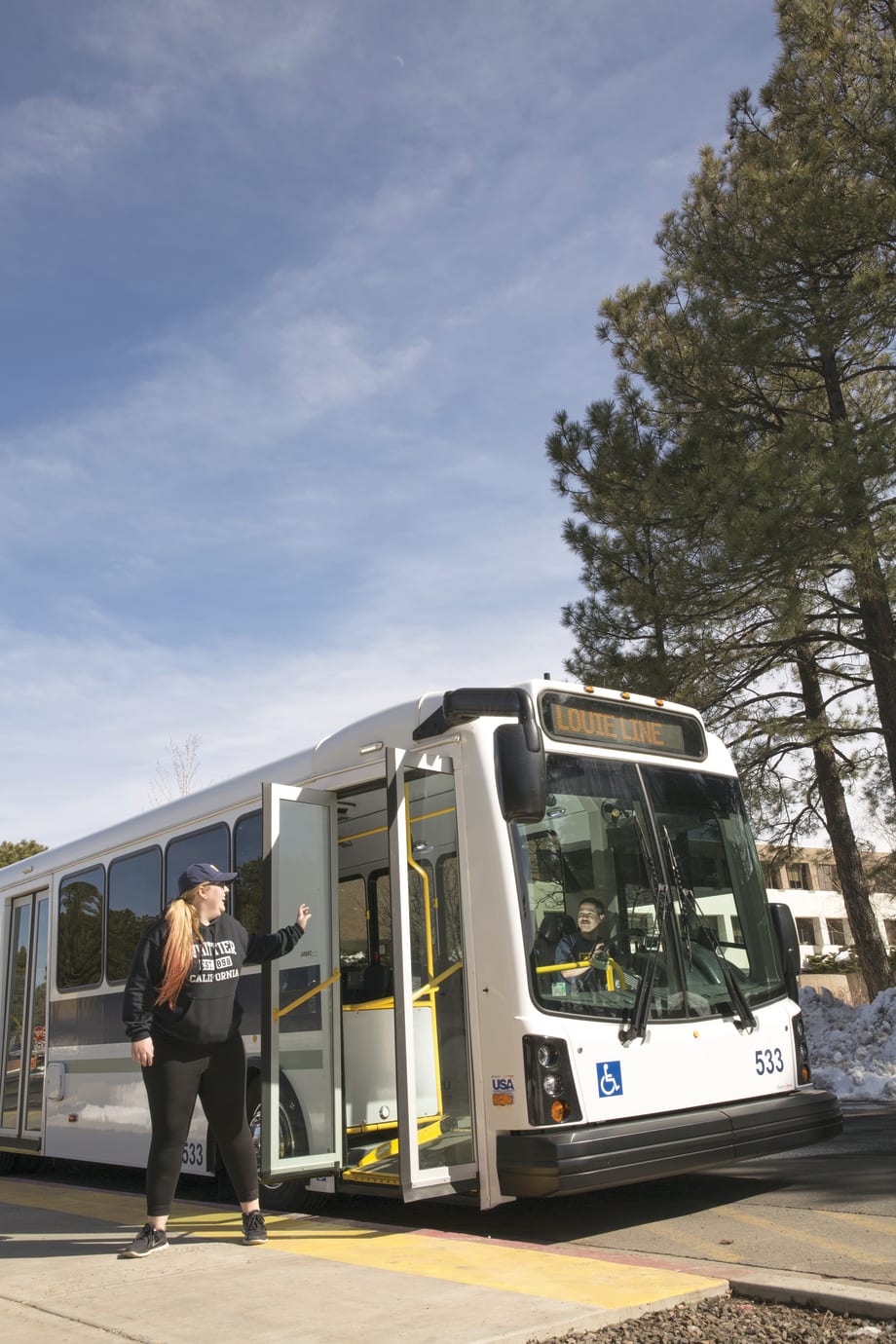
With a fleet of 23 buses, NAU provides shuttle services on two campus routes to approximately 12,000 passengers per day.
2 min to read
With a fleet of 23 buses, NAU provides shuttle services on two campus routes to approximately 12,000 passengers per day.
Tucked away in beautiful Flagstaff, Ariz., Northern Arizona University (NAU) prides itself as being built on a student-first foundation. As part of that, the university provides campus shuttle service to help students, faculty, and staff get around campus, while also looking to minimize the amount of driving and traffic that often occurs around a university campus.
“We have a fleet of 23 buses,” explains Judy Manor, sr. program coordinator, NAU parking and shuttle services. “During the weekday peak hours, we have seven buses on two campus routes and average approximately 12,000 passengers per day.”
The shuttle system also works closely with the local transit agency, Northern Arizona Intergovernmental Public Transportation Authority (NAIPTA), which serves the university on campus with its Mountain Line.
“NAIPTA traverses our campus from north to south along the transit spine and we share bus stops along the route,” explains Manor. “Their service allows transit from off campus locations and averages 4,500 [riders] per weekday.”
Employees are able to use both services by acquiring an ecoPASS.
“Parking and Shuttle Services partners with NAIPTA to purchase a bus pass for every campus employee,” Manor says. “The bus pass is valid for the entire city of Flagstaff bus system and is issued at no cost to the employee.”
The ecoPASS also gives employees free access to the Guaranteed Ride Home program, which allows those who commute to work using their ecoPASS to use a taxi for emergencies at no charge. The ride is paid for by NAIPTA.
In addition to recently installing automatic passenger counters on its vehicles, which interface with the shuttle system’s GPS service and provides information to riders if a bus is full, NAU also recently took delivery of its second Spirit of Liberty bus from ARBOC Specialty Vehicles.
“NAU was our first retail customer to buy this model, as well as our first repeat customer,” explains Kim Yoder, regional manager at ARBOC. “What they are using the Spirit of Liberty for, which is basically campus shuttle, is exactly what this bus was intended for.”
Manor says the university tapped the ARBOC’s vehicle because they were looking for a transit-style, low-floor bus that would be easier to board from curb height. She adds that NAU’s experience with the bus has been positive.
“Drivers say that it is very comfortable to drive and it has great visibility, the disc brakes are quiet and responsive, and the low floor makes it very easy to load passengers who are elderly or disabled,” says Manor. “It also has a great turning radius, and passengers comment on having more room.”
Subscribe to Our Newsletter
More Bus

More Than a Summer Job: Building the Next Generation of Transit Talent
The Delaware River Port Authority and PATCO have transformed their internship program into a hands-on professional development experience that introduces students to the breadth of transportation careers — and creates a pipeline for future employees.
Read More →
LA Metro Board Awards 220 Battery-Electric Bus Contract to ENC
The contract, which is the largest base award of battery-electric buses by a U.S. transit agency, will be built in Southern California, sustaining good jobs as LA prepares to welcome the world in 2028
Read More →
Public Transit Conference Returning to GFX in 2027, Call for Papers Now Open
The Call for Papers is now open, allowing transit agency professionals and industry experts to help shape the PTC educational program by submitting session ideas for consideration.
Read More →
Indian River Transit’s Community-Focused Approach Earns National Recognition
Named APTA’s 2026 Outstanding Public Transportation System in its size category, Florida’s Indian River County transit system continues to grow ridership through fare-free service and a focus on evolving community needs.
Read More →
ENC Lands MATA Contract and More in Biz Briefs
In this edition of Biz Briefs, we spotlight the latest developments shaping the future of mobility.
Read More →
From Surviving to Thriving: Building Stronger Transportation Organizations
Bus Business Consultants founder Brian Dickson shares lessons on leadership, organizational health, and creating options for long-term success in a changing transportation industry.
Read More →
Everett Transit, Community Transit Outline Consolidation Agreement
The proposed agreement calls for a 50% increase in bus service in Everett, a new microtransit zone, continued paratransit service, and the transfer of Everett Transit operations to Community Transit.
Read More →
SEPTA Details Accelerate Vision for Transit System
The plan outlines investments in trolley modernization, new Metro and Regional Rail vehicles, accessible stations, and more frequent bus and rail service.
Read More →
Report: Transit Bus Manufacturing Supports 34,100 Jobs, $5.1B in GDP
The “Buses Mean Business” report examines the transit bus manufacturing industry’s economic footprint, supply chain, and rising demand for vehicle replacements.
Read More →
Biz Briefs: New Flyer Delivers in Columbus, Houston, Beep and Freebee Merge, and More
In this edition of Biz Briefs, we spotlight the latest developments shaping the future of mobility.
Read More →