



NY MTA subway cars become underwater reef off Delaware
With an entire fleet of cars to retire, MTA New York City Transit came up with a creative method of disposing of 1,400 obsolete subway cars.

With an entire fleet of cars to retire, MTA New York City Transit (NYCT) came up with a creative method of disposing of 1,400 obsolete subway cars. After months of negotiations with several eastern seaboard states, NYCT’s Division of Materiel entered into an agreement with Delaware to place 400 cars off its shores in ocean depths of 80 to 90 feet. The cars, which are expected to last at least 20 years before deteriorating, will serve as an artificial reef system that will attract fish and invertebrates to the sea floor. Reef systems have been created with old army tanks, ships and even a few Philadelphia subway cars, but this is the first time New York City subway cars have been involved in such a program. “MTA NYCT is delighted that these old subway cars can continue to serve the environment in a safe and beneficial way,“ said NYCT President Lawrence G. Reuter. “We hope and believe that the Delaware reefs constructed of our 40-year-old Redbirds will become one of the most visited fishing and diving sites on the eastern seaboard.” Bill Muir, regional oceanographer for the U.S. Environmental Protection Agency, mid-Atlantic region, said the addition of the subway cars will have a positive effect, attracting marine life to the area. “In a few months you’ll see a significant amount of sea life in and around these cars.” Jeff Tinsman, reef project manager for the Department of Natural Resources and Environmental Control, said, “This is an exciting acquisition because it is such a large volume of stable, durable and non-toxic material. Reefs have so many benefits, including physical protection for reef fish and an enhanced invertebrate community. This helps to maintain and increase bio-diversity. Before these cars could be placed, the idea had to be approved by the National Marine Fisheries Service and the Army Corps of Engineers.” Prepping the old redbirds for placement required the removal of trucks, underbody components, doors, windows, metal standee straps, lights, signage, paper and plastic. Also, all oil and grease were evacuated from the cars and the shells were then steam-cleaned. The cars were cleaned according to the protocols established by the U.S. Coast Guard and the Environmental Protection Agency. “Essentially, the only thing going into the water is a shell,” said Joseph Hofmann, senior vice president of subways at NYCT, who oversaw the loading and placement of the cars. “These cars are being prepared in such a way that they will be as beneficial and benign as possible to the environment. They’ll also be a boon to fishermen and divers.” The oldest of the cars was in service since 1959 and the newest was delivered in time for the 1964 to 1965 World’s Fair. Manufactured by St. Louis Car Co. and American Car and Foundry, the cars have seen service on every line in the IRT. It was that red paint, however, that gave them a uniform appearance. Now called redbirds because of the color they’ve all sported since 1989, these long-lived IRT cars are nearing the end of the line, but their last stop won’t be oblivion. — Charles Seaton
More Rail
CSA Group Releases Climate Resilience Standard for Transit, Passenger Rail
Developed with support from the Standards Council of Canada, CSA D700 guides assessing climate-related risks and planning adaptation measures for transit and passenger rail systems.
Read More →
LA Metro September Ridership Climbs 3.9%, Led by Rail Growth
The agency recorded more than 27.2 million boardings, with rail ridership increasing 12.4% year over year and the D Line posting the largest gains.
Read More →
First Full MetroLink Rail Expansion Completed in 20 Years with $192M Airport Project
The project links two St. Louis-area airports by light rail while adding roadway and bike trail connections to improve regional access and mobility.
Read More →
Utilimarc Launches SmartReplace to Optimize Fleet Replacement Decisions
AI-powered SmartReplace helps fleets prioritize vehicle replacements, model budget scenarios, and build more defensible long-term strategies.
Read More →
Scenes from APTA TRANSform & EXPO 2026
Transit leaders, manufacturers, and industry professionals gathered in Chicago to explore new technologies, share ideas, and discuss the future of public transportation.
Read More →
USDOT Awards $416 Million for Florida Rail Crossing Safety Upgrades, New Brightline Station
The projects aim to reduce risks for motorists and pedestrians at rail crossings while expanding passenger rail access along Florida’s Space Coast.
Read More →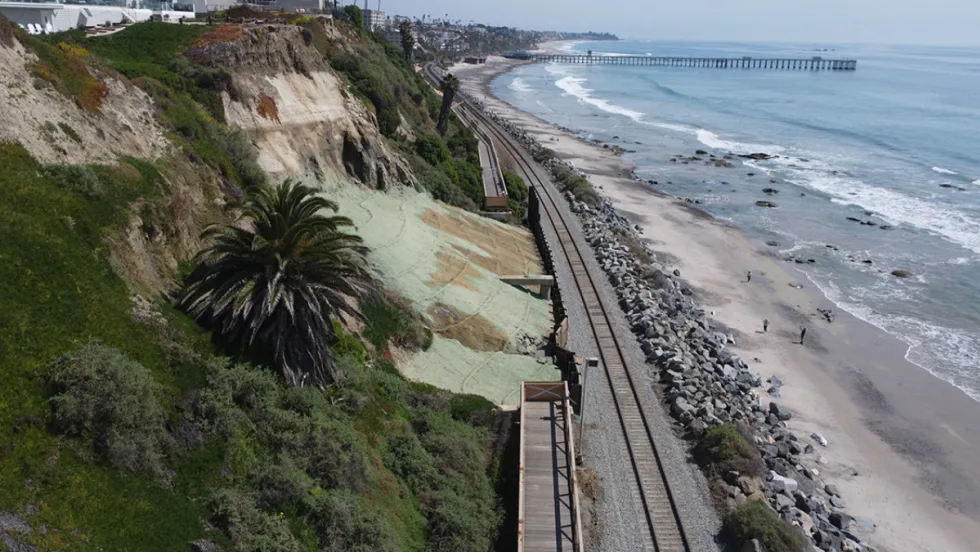
OCTA Declares Emergency to Protect Rail Corridor From Coastal Erosion
The California agency is accelerating shoreline protection and plans to place approximately 690,000 cubic yards of sand along the San Clemente coast to protect a key passenger and freight rail link.
Read More →
More Than a Summer Job: Building the Next Generation of Transit Talent
The Delaware River Port Authority and PATCO have transformed their internship program into a hands-on professional development experience that introduces students to the breadth of transportation careers — and creates a pipeline for future employees.
Read More →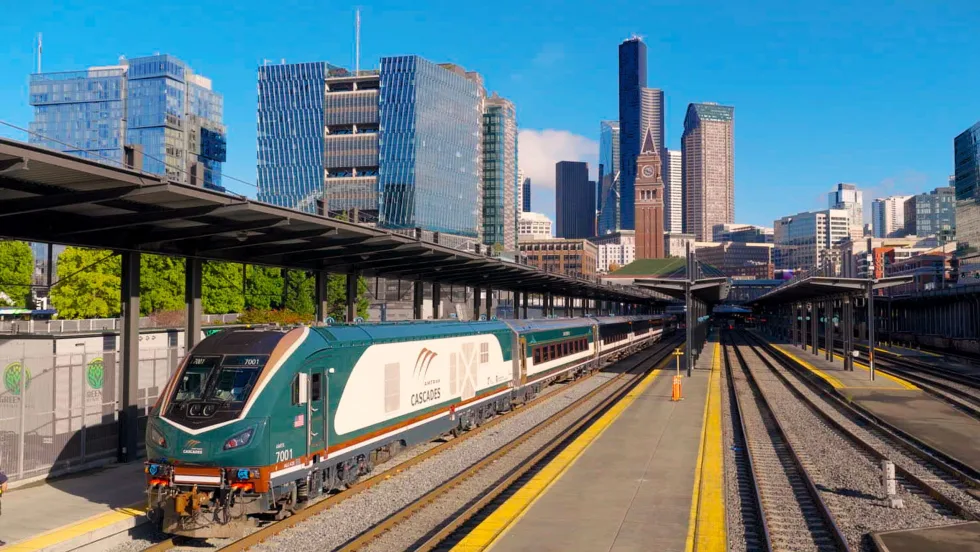
Airo Trains Make Their Amtrak Cascades Debut in the Pacific Northwest
Effective immediately, two cutting-edge Airo trainsets will join the Amtrak Cascades route, operating four daily trips between Vancouver, B.C., Seattle, Portland, and Eugene, Oregon, marking the first introduction of Airo trains into passenger service anywhere in the country.
Read More →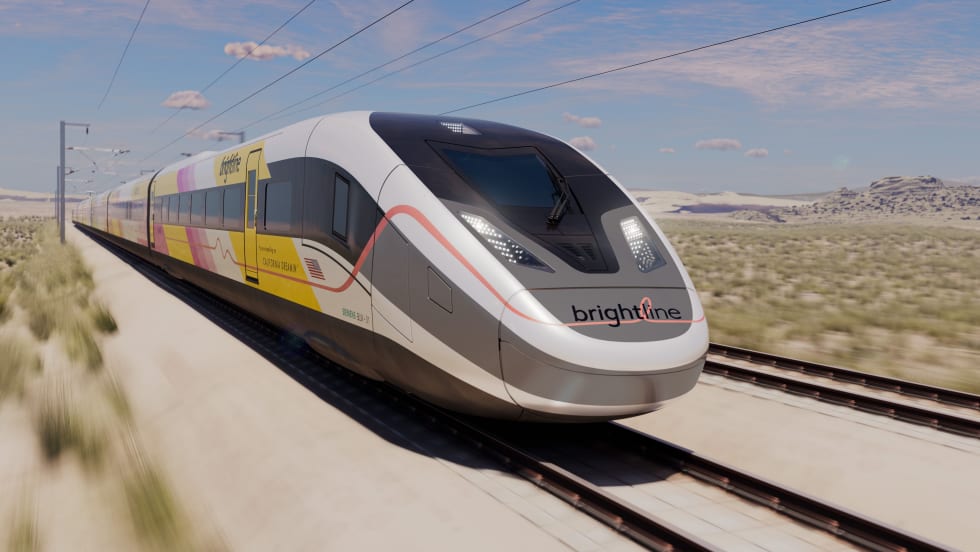
Florida's Brightline Announces Financial Restructuring
Brightline Florida says train operations will continue as normal as certain parent entities enter Chapter 11 and financial stakeholders provide $490 million in new long-term capital.
Read More →