



Q'Straint debuts Quantum self-securement system
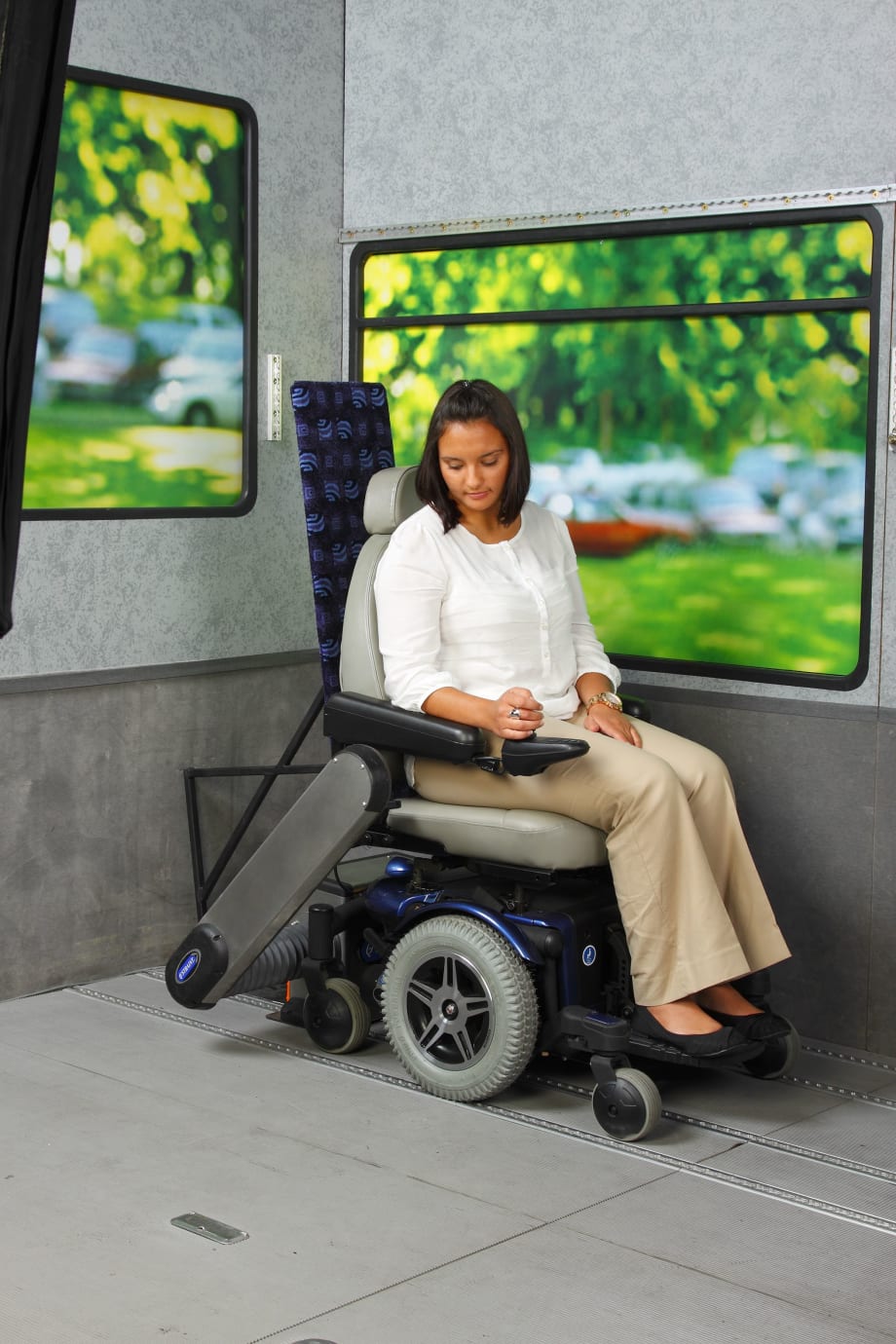
Fresh off the release of the Q'POD at 2008's APTA EXPO, Q'Straint unveiled the Quantum system at this year's EXPO.
Fresh off the release of the Q'POD at 2008's APTA EXPO, Q'Straint unveiled the Quantum system at this year's EXPO.
Both the Q'POD and the upcoming Quantum have the same goals in mind: Ease of use, reduced securement time, and increased safety and confidence for passengers using wheelchairs," said Q'Straint/Sure-Lok Marketing Manager Patrick Girardin.
The Quantum is the first and only securement system that secures a wheelchair, without need for driver assistance. Quantum's arms deploy at the press of a button, securing all mobility devices at the wheels. It meets and exceeds all proposed ISO regulations for transit, including the latest ADA revisions and upcoming ISO standards. As rear-facing systems are being widely adopted, the Quantum effectively secures all wheeled mobility devices quickly and promotes complete independence for a transit agency's wheelchair passengers, according to Girardin.
"Its compact design accommodates the smallest and widest wheelchairs and scooters while the rubberized arms gently secure devices at their wheels," he said. "With advanced power sensing logic, laser guidance and emergency release, the Quantum sets a new direction in wheelchair passenger safety - it's turning the industry around 180 degrees."
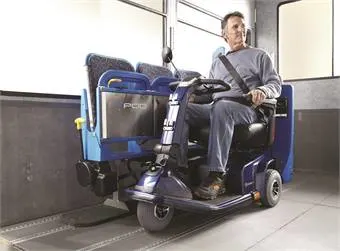
Both the Q'POD and the Quantum are for transit properties that run larger transit buses, 35-feet or longer, and will help those properties see an increase in wheelchair passenger ridership.
Additionally, the Q'POD is the first fully integrated wheelchair station featuring an ADA approved three-point system. Its unique bumper design and front tensioning mechanism help eliminate aisle-side obstructions, and the scooter securement ring virtually eliminates common tip-overs. The Xpress delay system, magnetic stowage and integrated shoulder belt gives drivers the necessary tools to quickly and effectively secure mobility passengers.
"Transit agencies throughout the world face a common set of issues in wheelchair passenger transportation. Among the top are difficulty in securing wheeled mobility devices, potential liability arising from wheelchair tip-overs, increased idle times, countless variations within wheelchair securement applications and driver training, to name a few," said Girardin. "There is no area within the component makeup of a transit bus that results in more lawsuits — or litigation — than that related to the wheelchair securement area."
The development of the Q'POD and the Quantum come about with the rise in transit demand for easy-to-use wheelchair passenger safety solutions that their drivers can use effectively, added Girardin.
"As wheelchair related litigation continues to rise, agencies everywhere are seeing that they can no longer afford to maintain the status quo and must invest in newer technology," he said. "Our promise to deliver the most effective safety solutions and provide new leading technology has helped us to invest into these R&D efforts."
Both the Q'POD and the Quantum are for transit properties that run larger transit buses, 35-feet or longer, and will help those properties see an increase in wheelchair passenger ridership, according to Q'Straint.
More Paratransit

Biz Briefs: RIPTA Unveils New Frontrunners, Clevland RTA Adds New Siemens, and More
In METRO's latest installment, we take a look at recent news from Siemens, Prevost, Dodge, and more partnerships making headlines across the transportation sector.
Read More →
King County Metro Makes ADA Paratransit Easier to Navigate
METRO's Innovative Solutions Award winner replaces complex service-area descriptions with an accessible, interactive map that puts paratransit information directly in customers’ hands.
Read More →
Jacksonville’s NAVI Project Charts a New Course for Autonomous Public Transportation
Through its NAVI program, JTA is showing how autonomous vehicles, intelligent infrastructure, and coordinated operations can work together to deliver everyday public transportation.
Read More →
Driving Smarter Paratransit
John Hanlon shares how AlphaRoute is leveraging AI-powered technology to help paratransit providers optimize operations, support frontline staff, and enhance the rider experience.
Read More →
METRO Magazine Announces 2026 Innovative Solutions Awards Winners
Projects Recognized for Advancing Mobility Through Technology, Accessibility, Workforce Innovation, and Operational Excellence
Read More →
Biz Briefs: STV teams with Amtrak, Motorcoach Operators Boost Fleet and Land Contracts, and More
From manufacturers and suppliers to transit agencies and motorcoach operators, these updates offer a snapshot of the projects, partnerships and business moves driving the industry forward.
Read More →
Biz Briefs: Masabi Teams with St. Louis Metro and More
In METRO's latest installment, we take a look at recent news from Transdev, Hitachi, and more partnerships making headlines across the transportation sector.
Read More →
New York MTA Leverages Zoning Program to Advance Station Accessibility
Accessibility enhancements at Nevins St Station will be financed through a development agreement tied to the MTA's Zoning for Accessibility initiative.
Read More →
Reinventing Fleet Maintenance with Real-time Visibility and AI
Transit leaders need to know what needs fixing, where to look, who is responsible, when work is completed, and what it costs without having to chase information across disconnected systems.
Read More →
SamTrans Sets Priorities for Potential Connect Bay Area Revenue
The board-approved framework allocates future funding to maintaining service, rider improvements, equity initiatives, and infrastructure repairs.
Read More →