



Sportworks Velolink Builds Mobility through Data
The company earned a 2025 Innovative Solutions Award for Mobility.

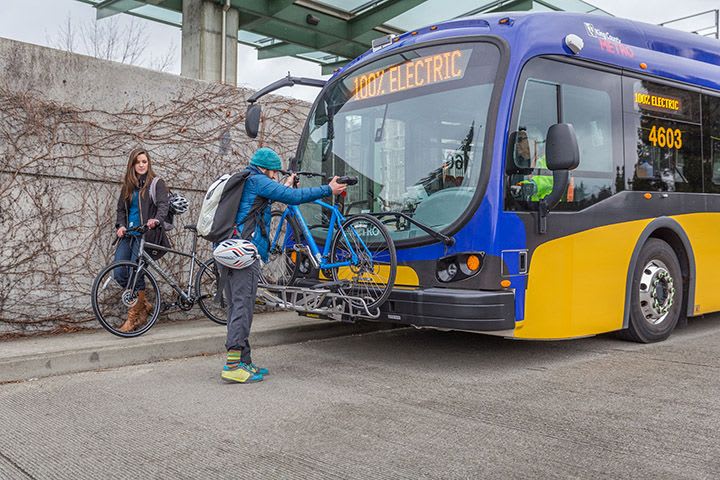
Velolink provides in-depth insights into usage patterns, enabling agencies to optimize operations, enhance the rider experience, and increase multimodal adoption.
Photo: Sportworks
- Sportworks Velolink received a 2025 Innovative Solutions Award.
- The award was given in recognition of the company's achievements in mobility solutions.
- Sportworks Velolink uses data to enhance mobility services.
*Summarized by AI
Sportworks Velolink, a digitally enabled bike rack system, fills the gap for cities looking to reduce single-occupancy vehicle trips while promoting active transportation.
Velolink provides in-depth insights into usage patterns, enabling agencies to optimize operations, enhance the rider experience, and increase multimodal adoption.
The system was built in direct response to customer feedback.
“For years, transit agencies have asked for reliable bike rack usage data,” explained April Johnson, VP, sales and marketing, at Sportworks.
She adds that the company’s initial solution — a simple onboard switch — provided basic counting capability. However, while some agencies were able to integrate this data into their existing systems, many encountered challenges, including:
- High costs and complexity of integration.
- Limited access to necessary GPS and connectivity data from onboard equipment.
- Poor visualization and reporting of bike usage trends.
As a result, many agencies were left without any data or had to rely on manual counts, requiring operators to record bike boardings and off-loadings using the MDT — an unreliable and inefficient process.
“After listening closely to these challenges, we designed Velolink as a stand-alone system that delivers accurate, automated bike usage data — with integration as an option to correlate and enhance the data, not a requirement,” said Johnson. “This approach eliminates barriers and empowers agencies of all sizes to understand better and support multimodal travel.”
This unique technology has earned Sportworks a 2025 Innovative Solutions Award for Mobility.
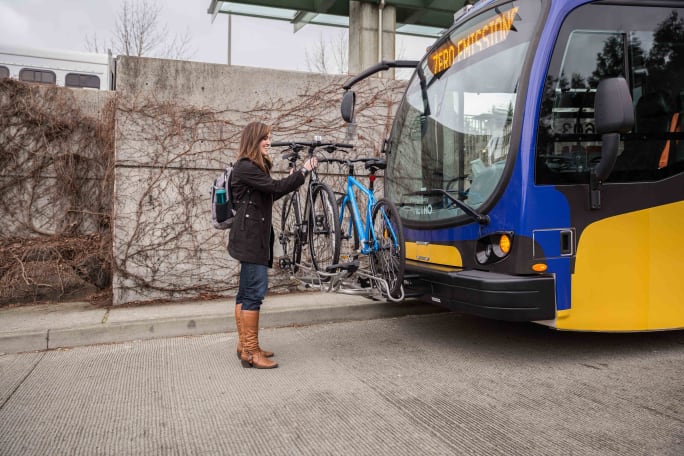
Velolink captures real-time and historical bike boarding activity — showing when, where, and how often racks are used.
Photo: Sportworks
How Velolink Works
Velolink captures real-time and historical bike boarding activity — showing when, where, and how often racks are used. This gives transit agencies valuable insights into rider behavior, peak usage times, and route-level demand, Johnson explained.
Agencies, like California’s Santa Clara VTA, are using this information in several impactful ways, including:
- Route-level planning: Identifying high-demand corridors where additional capacity or enhanced infrastructure is needed.
- First and last mile strategy: Understanding how and where riders are using bikes to connect with transit helps inform better planning for active transportation connections.
- Bike parking deployment: Data can guide decisions on where to place secure bike parking at stations, stops, and key transfer points.
- Funding and performance reporting: Providing measurable outcomes to support grant applications and multimodal program evaluation.
- Operational efficiency: Reducing reliance on manual counts and increasing data accuracy for better service planning.
- Equity and access: Uncovering geographic and demographic trends to help ensure inclusive transportation solutions.
“By bridging the data gap, Velolink helps agencies make smarter, data-driven decisions to support active and multimodal transportation better,” said Johnson.
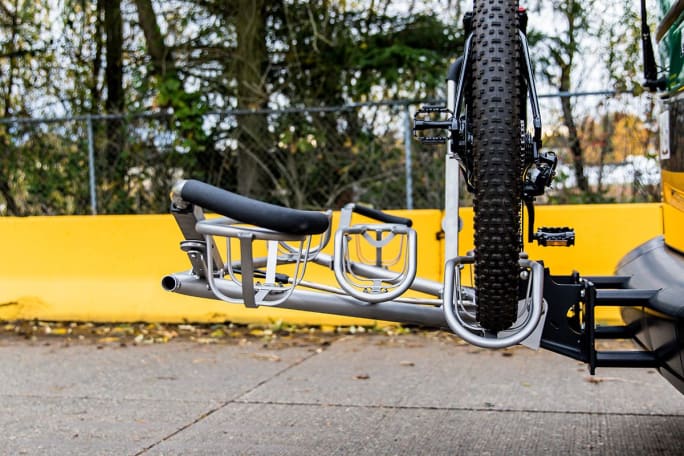
From both a sustainability and ROI perspective, Velolink equips agencies with the data they need to justify and optimize investments in active and multimodal transportation.
Photo: Sportworks
Making an Impact with Data
Velolink is enhancing the cycling experience by providing visibility to riders' trips — and making them count, said Johnson.
“By helping transit agencies understand real-world usage patterns, Velolink has led to better-informed decisions like increasing rack capacity on busy routes, improving service coverage, and prioritizing infrastructure where it’s needed most,” she said. “This results in fewer missed boardings and a smoother experience for riders bringing bikes on transit.”
Looking ahead, the potential for real-time availability in transit apps is fascinating, Johnson added.
“Features like knowing in advance whether a rack has space before the bus arrives help cyclists plan more confidently, reducing uncertainty and avoiding frustration at the curb,” she said. “This data — in real time, and/or using predictive modeling — can provide transparency, similar to real-time bus or train tracking, to unlock new levels of convenience and trust in multimodal travel.”
Ultimately, Johnson said Velolink is helping lay the groundwork for a more seamless and rider-friendly bike-transit ecosystem.
“Throughout the development process, we worked closely with customers to make installation and operation as simple as possible, and to understand their data needs, ensuring that insights are presented in a way that delivers maximum impact for their multimodal transportation programs,” she said.
From both a sustainability and ROI perspective, Velolink equips agencies with the data they need to justify and optimize investments in active and multimodal transportation.
Traditionally, agencies have had to rely on anecdotal evidence or unreliable manual counts to assess bike rack usage. Velolink fills this gap by delivering accurate, automated data on when and where bikes are being used in transit — a critical data need.
According to Johnson, this data enables agencies to:
- Quantify environmental impact by estimating the number of single-occupancy vehicle trips replaced by bike-and-transit trips, supporting climate and emissions reduction goals.
- Demonstrate demand and effectiveness of active transportation programs, strengthening the case for grants and long-term capital investment.
- Optimize resource allocation by deploying bike infrastructure where it’s most needed, improving utilization and minimizing waste.
- Track return on investment over time, using real ridership metrics.
- Support mode shift by improving the rider experience, encouraging more people to use bikes in combination with transit.
“By bringing visibility and accountability to bike transport, Velolink helps agencies align their sustainability goals with measurable performance, and make smarter, more defensible investments in a multimodal future,” said Johnson.
Quick Answers
Sportworks Velolink is recognized for building mobility solutions through data.
*Summarized by AI
More New Mobility

From Hardware to Digital Partner: Luminator Charts Its Next Chapter
CEO Magnus Friberg discusses Luminator’s shift toward becoming a digital partner, the growing importance of software and interoperability, and how AI can help agencies improve operations and passenger experience.
Read More →
Biz Briefs: Alstom Lands Canadian Contract, LYT to Supply California TSP, and More
In METRO's latest installment, we take a look at recent news from Complete Coach Works, Beep, FlixBus, and more partnerships making headlines across the transportation sector.
Read More →
CharterUP’s Armir Harris on Technology, AI, and the Future of Group Mobility
In a recent episode of METROspectives, CharterUP Founder/CEO Armir Harris discussed the company’s evolution from an online charter bus marketplace into a technology platform supporting public- and private-sector mobility and much more.
Read More →
Jacksonville’s NAVI Project Charts a New Course for Autonomous Public Transportation
Through its NAVI program, JTA is showing how autonomous vehicles, intelligent infrastructure, and coordinated operations can work together to deliver everyday public transportation.
Read More →
Biz Briefs: Luminator Marks Milestone and More
From manufacturers and suppliers to transit agencies and motorcoach operators, these updates offer a snapshot of the projects, partnerships and business moves driving the industry forward.
Read More →
New Tricks for Old Bureaucracies: Joshua Schank on Making Transit Innovation Stick
Former LA Metro Chief Innovation Officer Joshua Schank discusses why good ideas aren't enough, how transit agencies can overcome resistance to change, and why today's challenges demand more innovation.
Read More →
How DART's GoPass Is Redefining Regional Mobility
Serving 14 transit agencies, GoPass simplifies multimodal travel by allowing riders to plan, pay for, and manage an entire trip through one app.
Read More →
Biz Briefs: OCTA Taps Clean Energy for Hydrogen Station, Stadler to Supply Via Rail Vehicles, and More
From manufacturers and suppliers to transit agencies and motorcoach operators, these updates offer a snapshot of the projects, partnerships and business moves driving the industry forward.
Read More →CharterUP Expands Into New Mobility and Autonomous Transportation
Vice President of New Mobility Stephen Joos discusses how CharterUP is leveraging its nationwide transportation network, technology platform, and autonomous vehicle partnerships to expand into workforce mobility, campus shuttles, and transit solutions.
Read More →
METRO Magazine Announces 2026 Innovative Solutions Awards Winners
Projects Recognized for Advancing Mobility Through Technology, Accessibility, Workforce Innovation, and Operational Excellence
Read More →