



Technology's impact has multiple dimensions and challenges
As we look to expand the industry and procure new equipment to meet the growing demand for public transportation, governments and agencies must fund the talent side of our growing need.
Anyone who has observed this industry even half as long as I must be struck by the radical changes that have taken place in public transportation. Thanks to advances both inside and outside this industry, people with a simple Blackberry or other handheld device now can look up when their bus or train will arrive at their station or stop. Those who work on this equipment can also run a diagnostic program and check the status of systems on these buses or trains. The result is a much more reliable fleet and savings of thousands of staff hours annually.
Series of challenges
But, technology presents a series of challenges as well. Perhaps the most important of these is agency staff keeping up with the training necessary to understand how to get the most out of these innovations, and what to do if something goes wrong. Of course, this training can often be provided by the equipment supplier as part of the procurement contracts, but the time to take the training is a cost that must be borne by the agencies, which is considered to be an operating expense. Funds to cover these expenses compete with other operating needs such as rising fuel prices and healthcare costs.
Technology has challenges to the private sector side of the industry as well. Expertise to provide the above-mentioned training or even to design and manufacture sophisticated technology is becoming harder to hire, as there is a growing shortage of engineers and other technical talent. Much of this talent is competed for by other industries with deeper pockets.
Meet growing demand
As we look to expand the industry and procure new equipment to meet the growing demand for public transportation, governments and agencies must fund the talent side of our growing need. Both the stimulus bills and authorization legislation that Congress is considering this year must fund the staff recruitment, retention and training needed by our industry to keep up with the technology.
This must begin with funding training as a legitimate capital expense, eligible for federal funding. Ideally, provisions of this legislation should include funding for training and workforce development, not just allowing existing funds to be spent on these needs.
The promise of technology allows public transportation to do things unimaginable even a few years ago. But that’s just the point: because they were not imagined, our programs have not kept pace with such rapid change. It’s time to correct this, because the challenges will only get greater.
More Paratransit

Everett Transit, Community Transit Outline Consolidation Agreement
The proposed agreement calls for a 50% increase in bus service in Everett, a new microtransit zone, continued paratransit service, and the transfer of Everett Transit operations to Community Transit.
Read More →
Driving Smarter Paratransit
John Hanlon shares how AlphaRoute is leveraging AI-powered technology to help paratransit providers optimize operations, support frontline staff, and enhance the rider experience.
Read More →
People Movement: Dan Dipert Coaches Adds Third-Generation Leader, Keolis Names New Valley Metro VP/GM, and More
In this edition, we also cover recent appointments and announcements at the Wabtec, SilverRide, HNTB, and more, showcasing the individuals helping to shape the future of transportation.
Read More →
Biz Briefs: RIPTA Unveils New Frontrunners, Clevland RTA Adds New Siemens, and More
In METRO's latest installment, we take a look at recent news from Siemens, Prevost, Dodge, and more partnerships making headlines across the transportation sector.
Read More →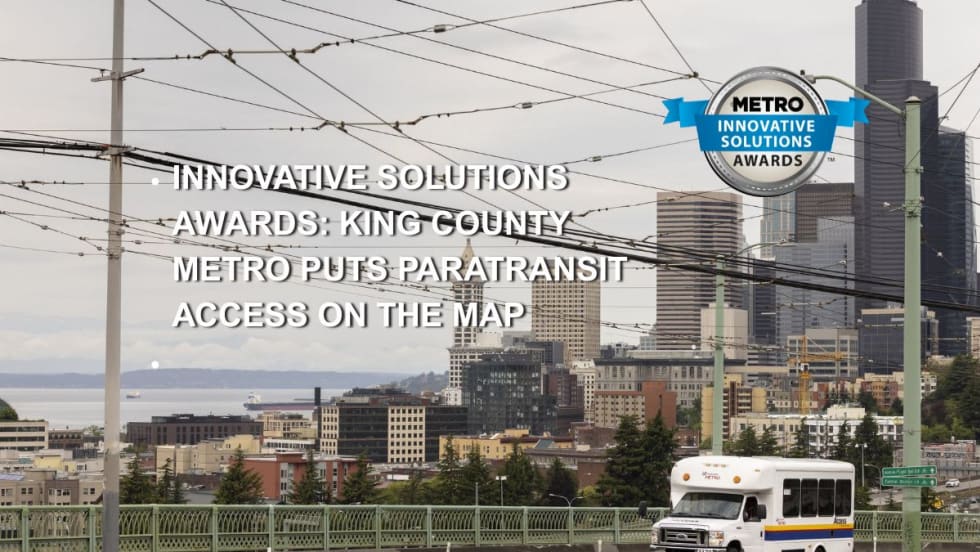
King County Metro Makes ADA Paratransit Easier to Navigate
METRO's Innovative Solutions Award winner replaces complex service-area descriptions with an accessible, interactive map that puts paratransit information directly in customers’ hands.
Read More →
Jacksonville’s NAVI Project Charts a New Course for Autonomous Public Transportation
Through its NAVI program, JTA is showing how autonomous vehicles, intelligent infrastructure, and coordinated operations can work together to deliver everyday public transportation.
Read More →
Driving Smarter Paratransit
John Hanlon shares how AlphaRoute is leveraging AI-powered technology to help paratransit providers optimize operations, support frontline staff, and enhance the rider experience.
Read More →
METRO Magazine Announces 2026 Innovative Solutions Awards Winners
Projects Recognized for Advancing Mobility Through Technology, Accessibility, Workforce Innovation, and Operational Excellence
Read More →
Biz Briefs: STV teams with Amtrak, Motorcoach Operators Boost Fleet and Land Contracts, and More
From manufacturers and suppliers to transit agencies and motorcoach operators, these updates offer a snapshot of the projects, partnerships and business moves driving the industry forward.
Read More →
Biz Briefs: Masabi Teams with St. Louis Metro and More
In METRO's latest installment, we take a look at recent news from Transdev, Hitachi, and more partnerships making headlines across the transportation sector.
Read More →