



The Benefits of Rethinking Resilient Infrastructure for Transit
In the face of climate change, using the Envision framework can help improve the planning and design of sustainable and resilient infrastructure.
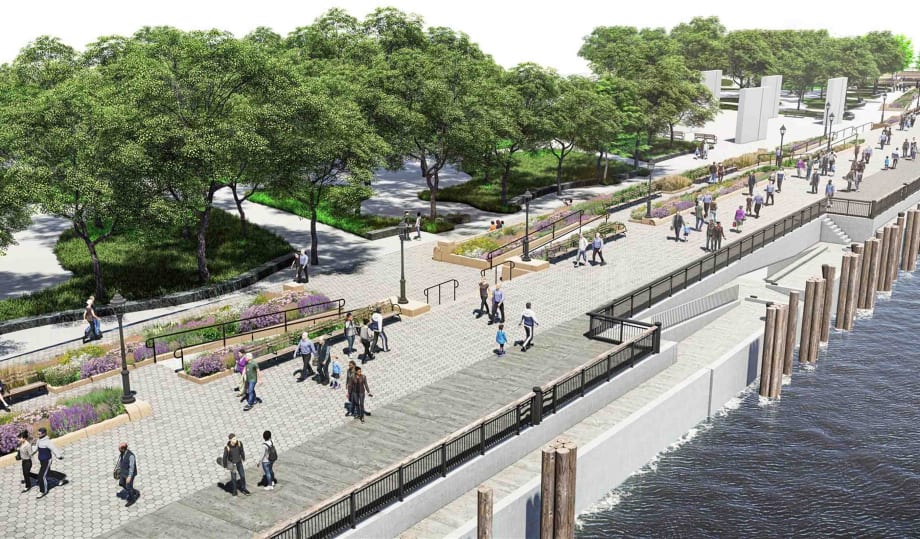
New York City is looking to reduce flood risk from coastal storms and sea level rise. The Lower Manhattan Coastal Resiliency project at the Battery is addressing the wharf’s declining infrastructure.
Photo: Stantec
- Rethinking resilient infrastructure is crucial in the context of climate change.
- The Envision framework offers guidelines for planning and designing sustainable infrastructure.
- Utilizing such frameworks can enhance the resilience and efficacy of transit systems.
*Summarized by AI
The climate crisis is altering our world in profound ways. More frequent and intense extreme weather events. Rising sea levels threaten coastal communities. These pose serious challenges for critical infrastructure such as public transit systems.
According to the United Nations, more than three billion people live in areas vulnerable to climate change. Heat waves, heavy rain, wildfires, and flooding occur more often. And transit agencies need to think about resilient infrastructure.
But how do you measure resilient infrastructure and sustainability? While analyzing these metrics can be challenging, some tools can help.
One of those tools is the Envision framework from the Institute for Sustainable Infrastructure (ISI). Using Envision to ask key questions early helps agencies and project teams build a better 360-degree view of how to combat climate risk as they plan resilient infrastructure.
Envisioning Future Infrastructure to Improve Sustainability
The Envision framework looks at project sustainability across a wide range of metrics. When project teams apply the framework, they can push a project beyond the industry standard.
Envision helps make infrastructure more sustainable and equitable. How so? By guiding how to improve the resilience of a project. Here are a few questions from Envision that project teams can ask themselves when starting their project:
- Have you identified short- and long-term hazards?
- How will those hazards change in the future due to climate change?
- Have you developed strategies that are more robust, adaptable, and redundant?
- How are you monitoring the effectiveness of these strategies?
- Are you adapting them to changing conditions?
Project teams should seek to answer these questions as early as possible in the planning and design process. The earlier you explore these questions, the more opportunity teams will have to find strategies that increase the potential for infrastructure resilience.
For instance, identifying early that sea level rise may affect your project area can allow design teams to set the project's elevation higher to account for future sea level rise. The earlier these strategies are identified, the easier and more cost-efficient they can be to integrate into the project.
Rising Temperatures, Rising Risks
Transit systems — and their riders — are particularly at risk during extreme heat events.
On the transit side, prolonged exposure to extreme heat can damage equipment. It affects rail tracks, overhead wires, and electronic parts.
According to the American Public Transportation Association, one-third of transit disruptions in the U.S. over the past decade were caused by extreme heat.
Extreme heat is also a danger to people. Users waiting at transit stops face higher exposure. This is especially true at unsheltered stops in urban areas.
During an intense heat wave, agencies may need to reduce or suspend transit services to avoid system failures and protect their passengers.
Project teams should seek to answer these questions as early as possible in the planning and design process. The earlier you explore these questions, the more opportunity teams will have to find strategies that increase the potential for infrastructure resilience.
For instance, identifying early that sea level rise may affect your project area can allow design teams to set the project's elevation higher to account for future sea level rise. The earlier these strategies are identified, the easier and more cost-efficient they can be to integrate into the project.
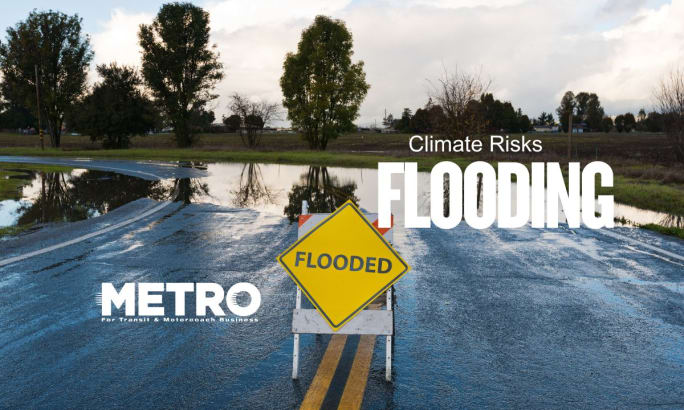
Flooded roadways, bridges, subway tunnels, and underground stations cause delays, cancellations, and hazards for users.
Photo: METRO
Floods Threat to Transit Agencies
Heavy rainfall and flooding can disrupt transit systems.
Flooded roadways, bridges, subway tunnels, and underground stations cause delays, cancellations, and hazards for users. There’s no way around it; sea level rise is threatening coastal transportation infrastructure.
Even in non-coastal areas, rising water tables can contribute to flooding. This can weaken stable soils. It causes shifts in foundations and utilities, sinkholes, or water infiltration into equipment pits.
Major transit hubs in cities like New York and Shanghai, China, already face increasingly severe flooding during major storm surges today.
Climate Risk Mitigation
One of the first steps in promoting climate readiness is assessing infrastructure for resilience.
As a result, agencies often need to redesign their infrastructure. This can include efforts like elevating train tracks or improving drainage systems. They may also install new equipment better suited to harsher temperatures, or relocate vulnerable infrastructure away from flood zones.
As an example, let’s look at the Lower Manhattan Coastal Resiliency project at the Battery in New York City.
The project addresses the wharf’s deteriorating infrastructure. Rebuilding the wharf at a higher elevation will help protect the iconic waterfront park at the southern tip of Manhattan from sea level rise through 2100. The project was recently awarded an Envision Platinum Award; it will help safeguard ferry connections to Liberty and Ellis islands.
Risk assessments are important. They help us expand our knowledge of both existing and future vulnerabilities. Understanding a weakness allows us to focus on projects that address the greatest risks to the system.
Balancing Mitigation Costs Based on Risks and More
Transit agencies undertaking new capital projects shouldability and risk assessments early on.
It puts them in the best place to understand the potential trade-offs between more resilient infrastructure and the available budget.
For example, sites farther from floodplains may cost more but require fewer onsite mitigations.
On the other hand, a site that sits on or near an existing floodplain may be less expensive. But it may also require additional elements, such as berms or floodwalls, or be elevated to reduce the risk of loss in a 100-year event. Planning for the unseen costs of these events allows agencies to manage expectations and better align project budgets with resiliency goals.

Climate risk will continue to increase. Having proper tools and steps in place to help us improve resilient infrastructure will go a long way.
Photo: METRO
Transit Adapting to a New Climate Future
By designing transit systems with future climates in mind and using Envision to quantify project sustainability, we can keep critical infrastructure up and running. This is vital to better serve our communities.
Agencies must take changing climates into account early in a project’s lifecycle. That means making sure systems are in place to assess vulnerabilities and prevent future failures. These efforts need to take place prior to setting a scope and budget.
Climate risk will continue to increase. Working to have proper tools and steps in place to help us improve resilient infrastructure will go a long way.
About the Author:Ryan White is Sr. Associate, Design Services Growth Leader, Southeast Transportation; Brad Moore is Associate, Sustainable Infrastructure Team Lead; Molly Weismantel is Sr. Associate, Project Manager; and Rebecca Leitschuh is Sr. Associate, Infrastructure Resilience Leader at Stantec.
Quick Answers
The Envision framework is a comprehensive tool used for assessing the sustainability and resilience of infrastructure projects, focusing on improving planning and design to address challenges like climate change.
*Summarized by AI
More Management

METRO Opens Submissions for 2026 Motorcoach Awards
Nominations are now being accepted for METRO Magazine’s Operator of the Year and Innovative Operator of the Year awards.
Read More →
New York MTA Advances Final Contract for Second Avenue Subway Expansion
Contract Four is the largest in the Second Avenue Subway Phase 2 project and includes construction of station infrastructure, tracks, and signals for the subway expansion, MTA officials said. Work on Contract Four will begin in 2027.
Read More →
Transit Agencies Highlight Safety Gains at National Summit
Leaders from 15 major transit systems shared crime-reduction results and safety initiatives while discussing the role of continued federal support.
Read More →

NITA Names New Leadership, Expands Reduced-Fare Program at First Board Meeting
The new regional transit authority appointed its first board chair and interim executive director while extending reduced fares across CTA, Metra, and Pace for eligible riders.
Read More →
Beyond the Checklist: A Structured Approach to Transit Maintenance
Reliability-Centered Maintenance helps transit agencies move beyond routine checklists to focus limited resources on the assets and failures that have the greatest impact on safety, reliability, and service.
Read More →
APTA 2026 Nominating Committee Selects Leadership Slate, Names Chair and Vice Chair Nominees
Leadership changes will help shape the association’s priorities and its representation of the transportation industry during the 2026–2027 term.
Read More →
DART Launches Major Security, Fare Enforcement Initiative
The 90-day demonstration will deploy coordinated security teams at five light rail stations while testing controlled access and gathering data to guide future investments.
Read More →
Advancing Fare Collection Through Technology and Innovation
Learn about delivering 1300 gates at 91 stations while managing fare evasion. Explore the large scale deployment, solution customization and real-world results that affect the region. Prepare for deployment in your region now.
Read More →
Game Day in Motion: Moving Millions During the 2026 World Cup
Between packed transit stations and team motorcoaches, see how agencies and operators across North America tackled the transportation demands of the 2026 FIFA World Cup.
Read More →
Surface Transportation Extension Averts Shutdown, Leaves Transit Funding Gap
The stopgap keeps federal transportation programs moving, but missing advance funding could complicate the transit and rail projects agencies are planning next.
Read More →