



The Latest in Fare Collection Technology
The latest offerings from some of the biggest names in the industry.

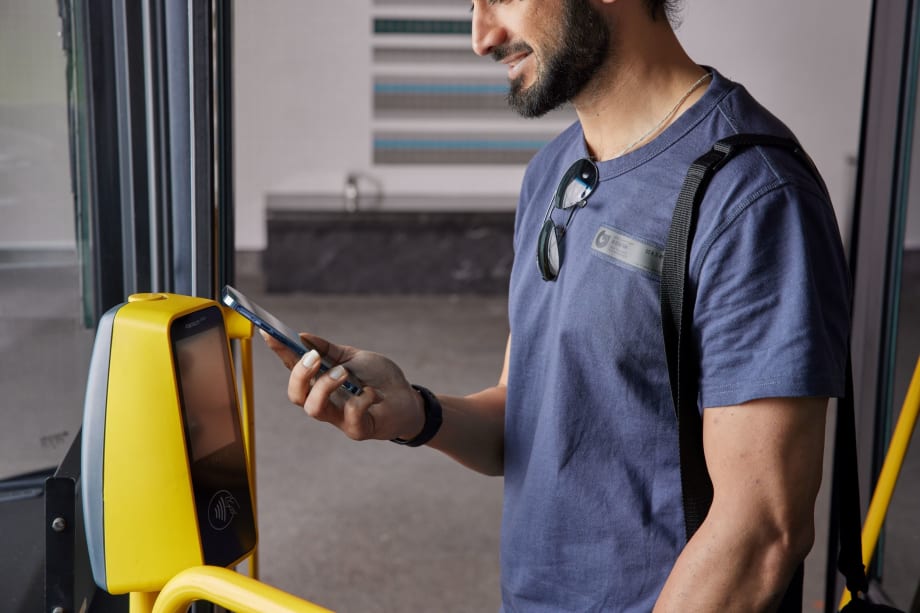
It’s as simple as tap and pay. Contactless fare collection from U.S. Bank offers an open-loop, contactless payment solution that allows transit riders to pay via tap-to-pay and digital wallets, removing ticket purchases or loading funds onto fare cards.
Photo: Elavon
What are the latest offerings in fare payment? Check out the latest from Cubic/Umo, Elavon, Genfare, INIT, Kuba, Masabi, and VIX Technology.
Cubic Transportation Systems

The Umo Handheld Reader by Cubic Transportation Systems is an advancement in electronic fare collection.
Photo: Cubic/Umo
The Umo Handheld Reader by Cubic Transportation Systems is an advancement in electronic fare collection. The innovative device seamlessly pairs Cubic's software with Samsung's off-the-shelf technology, revolutionizing transit payments on buses, trains, and more. Designed to enhance rider experiences, it offers convenient tap-to-pay functionality right at your fingertips. With its affordability and ease of use, transit agencies can effortlessly expand services without costly hardware installations. From paratransit to on-demand transport, the Umo Handheld Reader adapts swiftly, ensuring a smooth journey for all.
Elavon
It’s as simple as tap and pay. Contactless fare collection from U.S. Bank offers an open-loop, contactless payment solution that allows transit riders to pay via tap-to-pay and digital wallets, removing ticket purchases or loading funds onto fare cards. With mass transit contactless payments, you can:
Improve rider experience by making it faster, easier, and more convenient to pay.
Increase revenue on fare collection expenses.
Speed up service during peak periods by collecting fares more quickly.
Reduce idling time and carbon emissions due to faster boarding times.
Create a safer environment by reducing touchpoints and face-to-face interactions.
Genfare
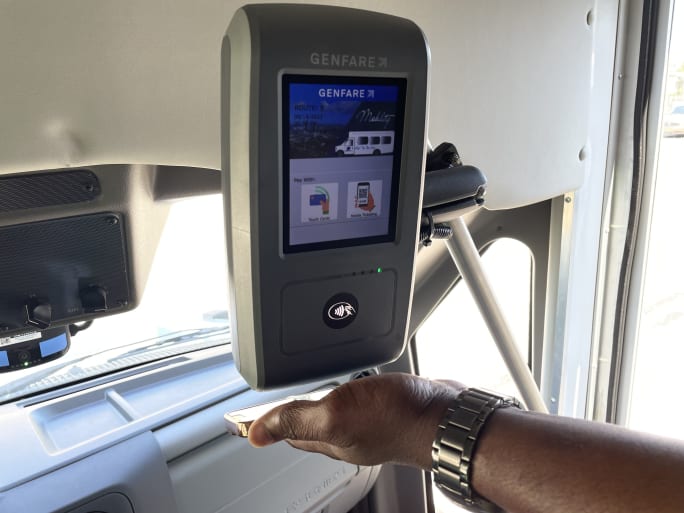
Genfare collaborates with more than 450 transit agencies to design fare collection solutions that simplify the rider experience, empower equitable mobility through innovation that leaves no rider behind, and connect communities based on their needs for a smoother journey.
Photo: Genfare
For more than 40 years, Genfare has been the premier supplier of American-made fareboxes, and today we’re driving the industry forward with innovative and equitable mobility solutions that let the rider pay with whatever is in their pocket. We collaborate with more than 450 transit agencies to design fare collection solutions that simplify the rider experience, empower equitable mobility through innovation that leaves no rider behind, and connect communities based on their needs for a smoother journey.
INIT

For agencies, TaaS offers fast, cloud-based fare management and real-time insights into sales and passenger behavior, promoting operational efficiency and profitability.
Photo: INIT
Ticketing-as-a-Service (TaaS) is redefining efficiency, security, and accessibility in public transit. For agencies, TaaS offers fast, cloud-based fare management and real-time insights into sales and passenger behavior, promoting operational efficiency and profitability. Its compatibility with existing systems and support for multi-channel strategies enhance service flexibility, driving ridership and sustainability. For passengers, TaaS brings convenience and affordability with contactless EMV payment technology and intelligent fare capping, ensuring the lowest fares without the need for physical tickets. This innovation not only streamlines the ticketing process but also makes public transportation more appealing and cost-effective. As a systems integrator, INIT delivers the future of ticketing through TaaS to make public transit more accessible, efficient, and attractive.
Kuba
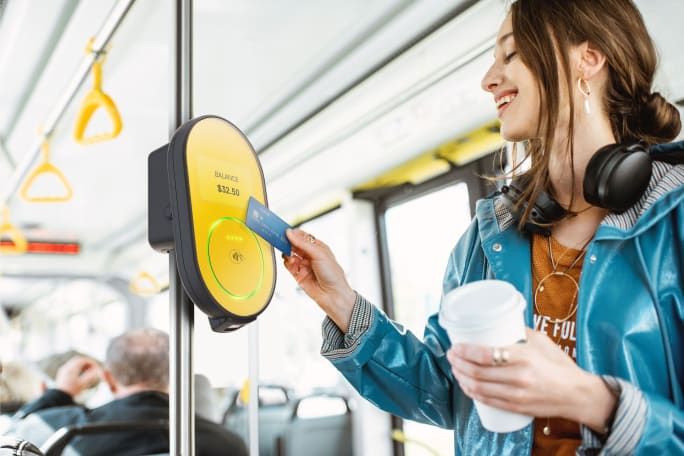
In the U.S., Kuba is involved in programs with government and transit agencies that make it easier to buy and implement contactless and mobile fare collection systems.
Photo: Kuba North America
The people and technology behind Kuba have been at the forefront of fare collection for decades. Launching as Kuba in 2019, they are now a leading provider of mobility planning and payment solutions. Fast, simple, and cost-effective to deploy, Kuba’s mobility platform allows agencies to switch on capabilities at a pace that’s right for them. They can start with account-based ticketing and add modules later for open-loop fare collection and Mobility-as-a-Service. In the U.S., Kuba is involved in programs with government and transit agencies that make it easier to buy and implement contactless and mobile fare collection systems.
Masabi

Masabi is the company delivering Fare Payments-as-a-Service through its open platform Justride, which is integrated into the technology of leading players from across the transit ecosyste and used by more than 200 transit agencies worldwide
Photo: Masabi
Masabi is the company delivering Fare Payments-as-a-Service through its open platform Justride, which is integrated into the technology of leading players from across the transit ecosyste and used by more than 200 transit agencies worldwide. Emphasizing convenience and fairness, Justride employs Account-Based Ticketing (ABT) and Open Payments, ensuring riders never overpay. With fare capping, costs are automatically capped at the daily or monthly pass rate, promoting fare equity. Justride supports diverse payment methods, including mobile ticketing, and integration into popular Mobility-as-a-Service apps, making it accessible to all passengers, even those paying with cash.
Vix Technology

Vix Technology is the global leader in intelligent transportation systems, automated fare collection, and transit analytics.
Photo: VIX Technology
Vix Beacon ITS is a cloud-native, modular platform designed to manage and monitor your fleet, support drivers, and keep riders up-to-date on their journey. Implement our Intelligent Transportation Systems technology–like Data Services, CAD/AVL, On-Vehicle Devices, Real-Time Passenger Information, and Transit Analytics–or integrate with your own hardware as required. Vix Technology is the global leader in intelligent transportation systems, automated fare collection, and transit analytics. Vix is passionate about connecting people and communities, combining an open, collaborative mindset with cutting-edge technology to make public transport more accessible and more cost effective for all.
More Technology

Public Transit Conference Returning to GFX in 2027, Call for Papers Now Open
The Call for Papers is now open, allowing transit agency professionals and industry experts to help shape the PTC educational program by submitting session ideas for consideration.
Read More →
ENC Lands MATA Contract and More in Biz Briefs
In this edition of Biz Briefs, we spotlight the latest developments shaping the future of mobility.
Read More →
Strada360’s Steve Lassey on Turning Transit Data Into Better Decisions
From breaking down data silos to preparing for AI, Strada360 CEO Steve Lassey discusses how transit agencies can use technology to improve operations, customer information, and long-term decision-making.
Read More →
Almaviva Looks to Open Architecture to Advance Transit Technology
Eric Reese discusses how interoperability, open architecture, and modular design can help transit agencies control costs, reduce vendor lock-in, and upgrade technology without starting over.
Read More →
Driving Smarter Paratransit
John Hanlon shares how AlphaRoute is leveraging AI-powered technology to help paratransit providers optimize operations, support frontline staff, and enhance the rider experience.
Read More →
From Hardware to Digital Partner: Luminator Charts Its Next Chapter
CEO Magnus Friberg discusses Luminator’s shift toward becoming a digital partner, the growing importance of software and interoperability, and how AI can help agencies improve operations and passenger experience.
Read More →
Beyond the Checklist: A Structured Approach to Transit Maintenance
Reliability-Centered Maintenance helps transit agencies move beyond routine checklists to focus limited resources on the assets and failures that have the greatest impact on safety, reliability, and service.
Read More →
NJ TRANSIT Advances Bus Technology Upgrades Across Statewide Fleet
More than 1,500 buses now feature upgraded technology designed to improve arrival predictions and provide free Wi-Fi, with deployment expected to reach nearly 2,000 buses by the end of 2026.
Read More →
Building a Flexible Path to Transit Electrification
John Hroncich discusses BAE Systems’ modular and scalable approach, lessons learned from decades of real-world operations, and how agencies can identify electrification strategies that fit their fleets.
Read More →
Biz Briefs: Alstom Lands Canadian Contract, LYT to Supply California TSP, and More
In METRO's latest installment, we take a look at recent news from Complete Coach Works, Beep, FlixBus, and more partnerships making headlines across the transportation sector.
Read More →