



Top Rail Projects Exceed $80 Billion
With $14 billion in projects in the works, Toronto Transit Commission jumps from No. 15 last year to take 2010's No. 1 slot. ARRA funds are still having a big impact in the U.S.; however, ongoing budget issues and lack of federal transportation authorization still threaten many agencies and their ongoing projects.
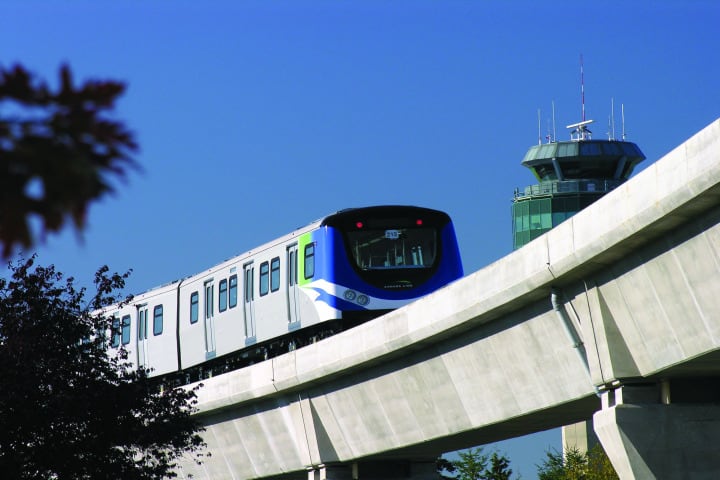
[IMAGE]Rail.jpg[/IMAGE]METRO's annual Top Rail Projects has a new No. 1 for the second straight year, with the Toronto Transit Commission (TTC) jumping all the way up from the No. 15 position in 2009 to take the top slot with $14 billion in projects. Last year's top dog, New Jersey Transit, drops to the No. 2 position, with $11.8 billion in projects.
Three familiar agencies to METRO's annual list — the Metropolitan Transportation Authority's New York City Transit ($8.3 billion), Seattle's Sound Transit ($7.8 billion) and Denver's Regional Transportation District (RTD), with $6.5 billion in projects — round out the top five.
Overall, this year's approximately $88 billion project purse represents a $15 billion jump compared to 2009's $73 billion total.
Portland's TriMet makes a significant jump from the No. 22 slot in 2009 to the No. 6 slot in 2010, with $5 billion in projects, including its 7.3-mile Milwaukie light rail line, which runs south from Portland and includes a transit bridge over the Willamette River.
Meanwhile, TTC's surge to the top spot is bolstered by several projects in the works, including the approximately 19-mile Eglinton Crosstown LRT project, which will connect the Kennedy Subway Station along Eglinton Avenue west to Pearson Airport/Mississauga Transitway, and approximately 8.6 miles of new track for the Sheppard East LRT project.
Rounding out the top 10 are the Utah Transit Authority (No. 9) — which has $2.85 billion in projects that will add approximately 69.5 miles of track, with some construction being performed by Alameda, Calif.'s Stacy and Witbeck Inc. — and Houston Metro (No. 10).
New additions
Systems rejoining 2010's rankings include Boston's Massachusetts Bay Transportation Authority (No. 8), San Diego's Metropolitan Transit System (No. 13), D.C.'s Washington Metropolitan Area Transit Authority (No. 35) and Chicago's Metra (No. 36). Combined, these four major metropolitan agencies add more than $5.3 billion to the total project purse.
Metro-St. Louis (No. 40) returns to 2010's list after dropping off in 2009 because of major financial issues that were rectified in April when St. Louis County voters passed Proposition A, which set a sales tax of one-half of 1 percent to fund public transit for the region.
Ongoing funding issues
Monies from the American Recovery and Reinvestment Act (ARRA), signed into law in 2008, are still having a significant impact on many projects throughout the nation, with more than two-thirds of respondents saying they are using ARRA funds to partially or fully pay for projects.
The success of ARRA, however, is being offset by budget shortfalls being felt around the nation. Many respondents to METRO's survey say they are working to contain costs wherever possible and deliberately moving forward only with certain projects, while in many cases also dealing with service cuts and having to downsize workforces.
The passage of a new federal transportation authorization bill is also critical to many transit agencies and their projects, with respondents from large to small saying they would be forced to either slow down or completely stop projects without continued federal support.
In Los Angeles, spokespeople for the Southern California Regional Rail Authority (SCRRA/Metrolink) report that without continued federal financial support it may be difficult to comply with the federal government's mandate of installing positive train control on its system by 2015.
Meanwhile in Denver, RTD officials say, "depending on funding levels for continuing authorizations, it could negatively impact near-term capital programs and, indirectly, operations." For its FasTracks program, for example, RTD is recommended in the Federal Transit Administration's New Starts report for a Full Funding Grant Agreement (FFGA) for the Eagle P3 project in the amount of $1.03 billion and is working to get the FFGA signed in the first half of 2011. If authorization is not passed, however, Phase 2 of the project could be endangered, "resulting in the potential for schedule delays and/or detrimental cost impacts."
[PAGEBREAK]
At a Glance
A further analysis of this year's numbers shows that respondents have 2,267 new railcars on order, with TTC (436 on order) and Chicago Transit Authority (406 on order) accounting for 37 percent of that total.
It is expected that this survey's numbers will escalate greatly in the short-term future once high-speed rail projects, such as those along the Northeast Corridor and in California and Florida, qualify for inclusion.
If you know an agency with plans for the future that was omitted from this year's survey, please let us know so that we can include it next year. METRO would also like to send a special thanks to all the agencies for taking the time to fill out our surveys and continuing to participate in this annual feature.
To View the chart, click here.
More Rail
Amtrak, CN Reach Agreements to Strengthen Passenger Rail Service, Safety
The agreement resolves a more than decade-long proceeding before the Surface Transportation Board concerning the terms and conditions for Amtrak services, such as the City of New Orleans, Illini/Saluki, and Wolverine.
Read More →
New York MTA Advances Final Contract for Second Avenue Subway Expansion
Contract Four is the largest in the Second Avenue Subway Phase 2 project and includes construction of station infrastructure, tracks, and signals for the subway expansion, MTA officials said. Work on Contract Four will begin in 2027.
Read More →
San Diego MTS Breaks Monthly Trolley Ridership Record
Agency officials said July’s ridership indicates MTS’s continued recovery from the pandemic.
Read More →
Report Examines NJ TRANSIT Reliability, Funding Challenges
The Garden State Initiative analysis examines the roles of Amtrak infrastructure, fleet management, and agency operations while recommending a more performance-based approach to improving reliability.
Read More →
Stadler, CapMetro Sign Long-Term Rail Fleet Support Agreement
Beginning in 2027, Stadler will provide on-site technical expertise, spare parts support, training, and obsolescence management to help extend the reliability and longevity of CapMetro’s GTW fleet.
Read More →
Biz Briefs: Alstom Lands Canadian Contract, LYT to Supply California TSP, and More
In METRO's latest installment, we take a look at recent news from Complete Coach Works, Beep, FlixBus, and more partnerships making headlines across the transportation sector.
Read More →
CATS Gold Line Marks 5 Years of Service, 2.8M Passenger Trips
With a six-mile expansion planned, the Charlotte streetcar is positioned to connect more neighborhoods and major transit hubs across the region.
Read More →
Why Simulating Pedestrian Movement Has Become Essential for Modern Rail Stations
Pedestrian microsimulation is helping rail planners identify bottlenecks, test station designs, and prepare complex transit hubs for growing passenger volumes.
Read More →
Amtrak Begins Major Construction at New York’s Sunnyside Yard
The new maintenance facility will support Amtrak’s Airo trainsets while improving maintenance efficiency and turnaround times in New York.
Read More →
Chicago Leaders Unveil Plans for O’Hare Airport Express Train
The privately developed project would offer a 15-minute trip between downtown and O’Hare’s Terminal 2, with trains operating every 15 minutes on a dedicated track. The service would use battery-electric trains and three existing freight rail rights-of-way.
Read More →