



ZeroEyes Launches ZeroLink to Expand AI Gun Detection Beyond Traditional Networks
New edge-based solution enables real-time threat detection and situational awareness in remote, mobile, and infrastructure-limited environments.

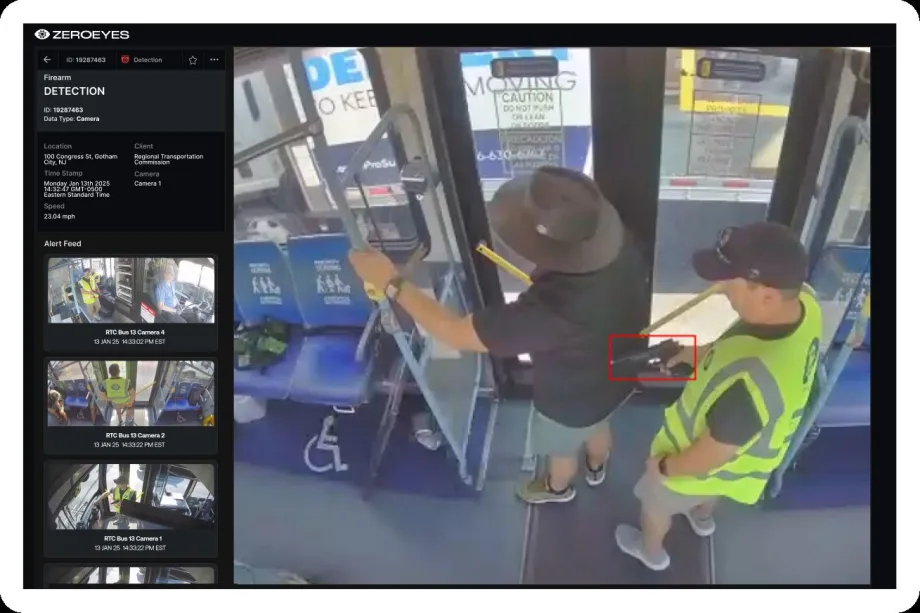
ZeroEyes' AI gun detection and intelligent situational awareness software layers onto new or existing digital security cameras.
ZeroEyes
- ZeroEyes introduces ZeroLink, an edge-based solution for AI gun detection that operates beyond traditional network constraints.
- The new system is designed to provide real-time threat detection in challenging environments such as remote, mobile, and infrastructure-limited areas.
- ZeroLink enhances situational awareness, enabling more effective response to potential threats in diverse settings.
*Summarized by AI
ZeroEyes announced the limited availability of ZeroLink — a solution that delivers its AI gun detection and intelligent situational awareness off-network, enabling the software’s deployment in virtually any environment.
ZeroEyes' AI gun detection and intelligent situational awareness software layers onto new or existing digital security cameras.
If a gun is identified, images are instantly shared with the ZeroEyes Operations Center (ZOC). If these experts determine the threat is valid, they dispatch alerts and actionable intelligence — including visual description, gun type, and last known location — to law enforcement and local security teams as quickly as three to five seconds from detection.
Edge Deployment Unlocks New Use Cases
Powered in partnership with Lanner’s high-performance Edge AI Inference Computers, ZeroLink enables deployment in environments where network isolation, deployment speed, mobility, or infrastructure limitations would otherwise prevent adoption. This includes light poles, vehicles, buildings, and mobile trailers placed in parking lots, remote perimeters, event venues, and other outdoor areas where permanent infrastructure may be limited.
By filtering, analyzing, and storing data locally, ZeroLink reduces latency, conserves bandwidth, and supports faster real-time decision-making.
“ZeroLink represents an important step forward in how organizations can extend security to locations that were previously difficult or cost-prohibitive to monitor,” said Mike Lahiff, CEO/co-founder of ZeroEyes. “By removing the traditional barriers of infrastructure and connectivity, ZeroEyes is making it easier for businesses to deploy reliable, AI-based gun detection and situational awareness virtually anywhere.”
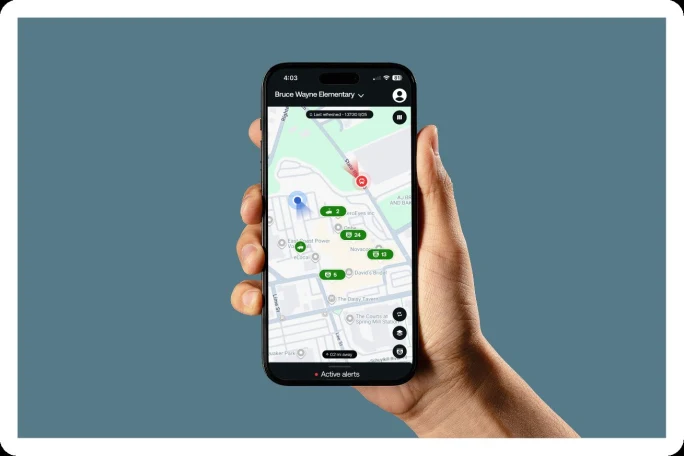
ZeroEyes’ CPO/Co-Founder Tim Sulzer said ZeroLink is designed to integrate seamlessly with existing systems, particularly in transit and public safety environments.
ZeroEyes
Built for Seamless Integration with Public Safety Systems
ZeroEyes’ CPO/Co-Founder Tim Sulzer told METRO that ZeroLink is designed to integrate seamlessly with existing systems, particularly in transit and public safety environments.
“ZeroLink is meant to be non-intrusive for existing networks. We can tie into existing cameras if desired, just like we do with our regular solution. Still, it gives us flexibility not to impact or touch the customer's existing network,” Sulzer said. “We combine our edge AI device with new or existing cameras, using wireless technologies like Starlink, cellular 5G/LTE, and mesh networks to send alerts to our ZOC for human-in-the-loop verification — the same as our core offering.”
He added that the platform connects directly to established emergency response ecosystems.
“We then dispatch critical alerts to first responders in a variety of systems, including RapidSOS and RapidDeploy,” Sulzer said. “For mobile use cases like transit and movable towers, we also offer GPS tracking capability so we know exactly where the vehicle is and where it was when it triggered the alert.”
Addressing data security and privacy, Sulzer emphasized that ZeroLink follows the same strict standards as the company’s core platform.
“All the same safeguards that apply to our core solution also apply to our edge device,” he said. “The device is locked down both physically and digitally, and all data is encrypted both in transit and at rest using state-of-the-art encryption techniques.”
Quick Answers
ZeroLink is a new edge-based solution from ZeroEyes designed to enable real-time threat detection and situational awareness in remote, mobile, and infrastructure-limited environments.
*Summarized by AI
More Technology

ENC Lands MATA Contract and More in Biz Briefs
In this edition of Biz Briefs, we spotlight the latest developments shaping the future of mobility.
Read More →
Strada360’s Steve Lassey on Turning Transit Data Into Better Decisions
From breaking down data silos to preparing for AI, Strada360 CEO Steve Lassey discusses how transit agencies can use technology to improve operations, customer information, and long-term decision-making.
Read More →
Almaviva Looks to Open Architecture to Advance Transit Technology
Eric Reese discusses how interoperability, open architecture, and modular design can help transit agencies control costs, reduce vendor lock-in, and upgrade technology without starting over.
Read More →

Driving Smarter Paratransit
John Hanlon shares how AlphaRoute is leveraging AI-powered technology to help paratransit providers optimize operations, support frontline staff, and enhance the rider experience.
Read More →
From Hardware to Digital Partner: Luminator Charts Its Next Chapter
CEO Magnus Friberg discusses Luminator’s shift toward becoming a digital partner, the growing importance of software and interoperability, and how AI can help agencies improve operations and passenger experience.
Read More →
Beyond the Checklist: A Structured Approach to Transit Maintenance
Reliability-Centered Maintenance helps transit agencies move beyond routine checklists to focus limited resources on the assets and failures that have the greatest impact on safety, reliability, and service.
Read More →
NJ TRANSIT Advances Bus Technology Upgrades Across Statewide Fleet
More than 1,500 buses now feature upgraded technology designed to improve arrival predictions and provide free Wi-Fi, with deployment expected to reach nearly 2,000 buses by the end of 2026.
Read More →
Building a Flexible Path to Transit Electrification
John Hroncich discusses BAE Systems’ modular and scalable approach, lessons learned from decades of real-world operations, and how agencies can identify electrification strategies that fit their fleets.
Read More →
Biz Briefs: Alstom Lands Canadian Contract, LYT to Supply California TSP, and More
In METRO's latest installment, we take a look at recent news from Complete Coach Works, Beep, FlixBus, and more partnerships making headlines across the transportation sector.
Read More →
From Legacy Silos to Conversational Intelligence
What if transit leaders could ask any operational question and get a trusted answer in seconds? Conversational AI is transforming how agencies use their data.
Read More →