



Transit moves to open fare payment
While the technology is still evolving, transit systems are hoping to outsource collection activities, reduce risk, and refocus time and effort on meeting their core goal: transporting people.

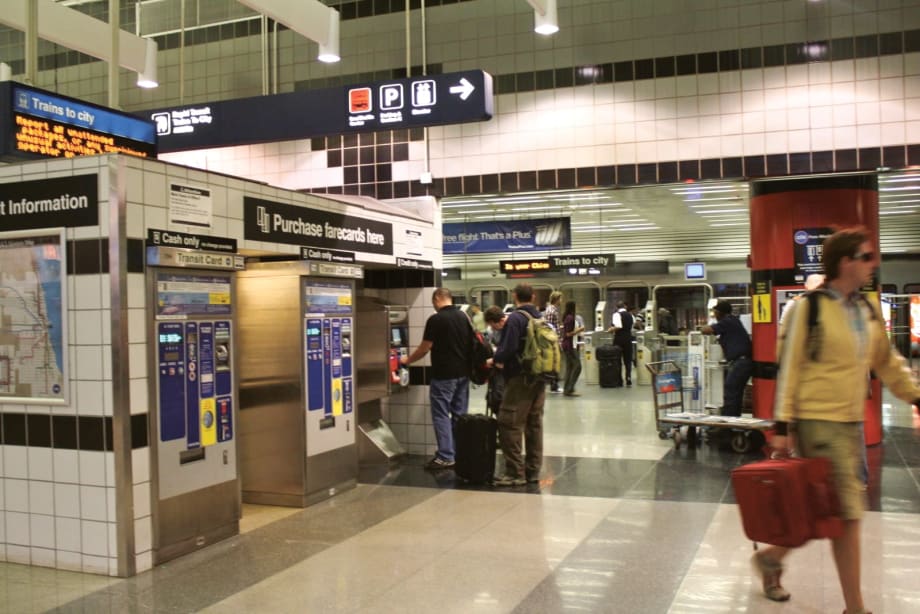
Last year, METRO reported in its Feb./March issue on transit agencies laying the groundwork for open fare payment systems. These systems use technology that enables credit cards or mobile devices to communicate by touching them to or bringing them into close contact with fare boxes.
This year, METRO checked in on the progress the Southeastern Pennsylvania Transportation Authority (SEPTA) is making as it moves toward implementing its own open payment system in 2015. Meanwhile, the Chicago Transit Authority (CTA) has plans to open a system in 2014. Both agencies anticipate gains in time and data that will help them better plan schedules and routes.
Evolving process
Because many transit properties are looking to outsource fare collection activities, freeing them from manufacturing, encoding, branding, distributing and selling fare cards, so they can focus on their core goal of transporting people, they are turning to open fare systems, which can collect fares more cost-effectively.
That's part of what's driving the open fare payment movement, but it's still evolving.
"We are in the final stages of an evolution from cash, to magnetic stripe cards, to closed system smart cards, and now, toward an open standards solution making use of payment media and methods standardized by financial institutions," Kim Green, president, GFI Genfare, says.
To date, he adds, major projects are using a phased approach allowing the legacy fare system components to coexist while new fare technology is introduced.
"It is important that this transition is well planned so there is enough time for passenger familiarization and fine tuning of operational details," says Green.
He also notes that it will take some time to prove that open fare payment will work cost-effectively in the largest 10 transit agencies in North America, including those in New York, Chicago and Philadelphia, which have economies of scale working in their favor as they move to open payment systems. It will take even more time to adapt the model to mid-size and smaller agencies with a smaller passenger base.
Upgrades
In 2011, as SEPTA, like many other transit systems, struggled with lower ridership and funding, it decided that instead of purchasing a new fare collection system, it would upgrade its existing equipment as phase one in moving toward an eventual open fare payment system. The agency recently took the next steps, creating a program to help manage the project and awarding a contract to ACS Transport Solutions Group (ACS) last November.
SEPTA created the "New Payment Technologies" (NPT) program to usher in its open payment system. It will replace tokens, paper tickets and magnetic strip passes with contactless payment devices installed in vehicles and stations.
In early 2011, SEPTA upgraded 1,850 fare boxes to make them ready for the contactless payment technology, John McGee, chief officer, new payment technologies, SEPTA, says. Riders will be able to use a variety of contactless credit or debit cards and smart phones to pay for their fares.
"The fare box [upgrade] was a complimentary project to this," McGee says. "We knew we were going to do a larger open payment project, and we readied the fare boxes to be able to continue to collect cash into the future."
Under the $129.5 million contract, the agency will receive equipment and services for the installation of an open fare payment system under its NPT program. ACS will design, install, integrate and operate the system.
For customers who prefer using cash, SEPTA will offer for purchase pre-paid cards equipped with contactless payment technology.
The system will calculate all fares in the back end, as opposed to on board the vehicle or the card itself, operating similar to Visa and Mastercard, McGee explains. The agency will choose a processor for debit and credit transactions.
McGee agrees with Green that open fare payment can provide an efficient and cost-effective option for transit operations.
"From our point of view, this next-generation payment system offered extraordinary levels of convenience, speed and accuracy for our customers," McGee says. "It's designed to allow people to use what they have in their pocket or on their person as opposed to buying a special form of transit currency."
Another benefit is that the new payment technology will provide significantly more real-time business intelligence, including more precise information on daily trips, special events and unexpected crowding, allowing SEPTA to better manage its resources to modify services.
"We'll be able to see that occurring and react as quickly as we can," McGee says.
The three-year transition period will consist of design and testing work in the first year; component installation in the second year, including new vending machines and turnstiles on the subway elevated system; and turning on the system in the third year, first on buses and trolleys, followed by the Market-Frankford and Broad Street rail lines, and then, the regional rail system.
One of the challenges that SEPTA foresees is getting the public to transition smoothly to the new system. The agency decided to keep some existing transit fare elements during the transition. To help mitigate any confusion for riders, the agency is conducting a customer and community education and awareness program, which includes a website, www.septa.org/npt, to distribute the latest information on the NPT program.
"We've also done a lot of research and outreach already on what customers feel [are] the strengths and weaknesses of our existing [system and] changes they would like to see," McGee says.
Additionally, SEPTA assembled a stakeholder advisory group to provide guidance on fare collection policy issues made up of all of the funding agencies involved, including representatives from counties served by the agency, the city of Philadelphia, Pennsylvania Department of Transportation and citizens groups. [PAGEBREAK]
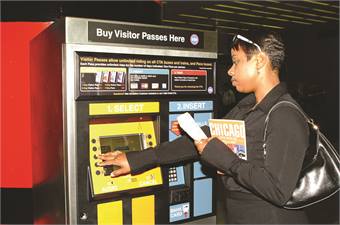
The CTA will shift responsibility to Cubic Transportation Systems for all card processing fees and increases, cost increases for labor and other operating expenses, and security breaches.
Savings, convenience
In an effort to provide more customer convenience, improve operations and save the agency money, the CTA recently made plans to implement a new, open fare payment collection system.
In November, CTA awarded a 12-year design-build-operate-finance and maintenance contract to Cubic Transportation Systems for $454 million. Cubic will supply fare-collection equipment, maintenance and support.
The contract includes a two-year implementation phase and a 10-year maintenance agreement, Eric Reese, GM, business development, CTA, says. The technology is expected to be implemented in early 2014.
The agency will maintain full control of fare policy, according to agency officials.
CTA will pay for the system through a base fee and a per-tap transaction fee from revenue on a monthly basis.
Riders will be able to tap their contactless credit, debit and bank cards, smart phones or CTA-branded prepaid cards on a card reader to board trains and buses.
The new system will eliminate the magnetic-stripe cards and proprietary Chicago Card/Chicago Card Plus currently used for fare payments. Riders who don't have credit or debit cards will be able to buy prepaid contactless cards. Cash fares will still be accepted on buses.
The agency will also more than double the number of its retail locations for purchasing prepaid cards, from around 700 to 1,000 retail locations when the system launches and to more than 2,000 when the system is fully implemented. The contract contains a requirement that customers must be able to purchase a fare within one-third of a mile of almost every CTA bus stop, Reese says.
CTA also moved forward with the agreement so it could shift a significant amount of risk to Cubic, in terms of maintaining and operating the system. Reese says that the contractor is responsible for all card processing fees and increases, cost increases for labor and other operating expenses, and security breaches. He adds that CTA anticipates an annual savings of $5 million or more with the new system.
"By moving forward with a system that's based on the financial industry as well as information technology security standards, that allows us immensely more flexibility," Reese says.
As the new system is implemented, CTA will allow for a transition period in which all current fare media will be accepted.
Like SEPTA, the biggest challenge at this point in the process for the agency is gaining customer acceptance of the new system. "Customer confidence in moving forward will be a challenge, but we think that we'll be able to build that confidence before we go live, with a community outreach program that will take place on a very grassroots level," Reese says.
Reese adds that the outreach program will include meeting with local constituencies and providing plenty of advance notice of the transition to the public. CTA is also considering a fare media exchange: the agency will take riders' old cards and exchange them for new cards.
Additionally, the new system standards could serve as a basis for a universal fare system among CTA, Metra and Pace, Chicago's suburban transit properties, according to a press release. Illinois legislation passed in 2011 mandates a universal fare system by 2015.
"This system meets with Mayor [Rahm] Emmanuel's and [CTA] President Forrest Claypool's vision for moving the Chicago Transit Authority into becoming a world-class system that is leading with innovative projects," Reese says.[PAGEBREAK]
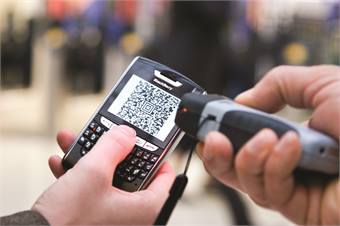
Using Masabi's mTicketing smart phone app, passengers can buy and display the secure mTickets on almost any mobile phone.
Mobile ticketing speeds up UK rail travel
London-based Masabi, a developer of mobile ticketing technology, is making it possible for U.K. train riders to buy and receive fare tickets on their phones and skip any delays caused by standing in line.
Using its mTicketing app, riders are presented on their device screen with pricing options for their journey. Then, they can make a purchase using a credit or debit card, and Masabi delivers to the phone a mobile ticket for the routes which support them, Ben Whitaker, CEO, explains, such as those on Manchester, U.K.'s First Transit Pennine Express. If a rider is buying a ticket for a route that isn't mobile-enabled yet, they receive a collection code that allows them to pick up a paper ticket at the station.
Similar to open fare payment, Masabi's mobile ticketing integrates with the back end of credit and debit card systems for pricing.
Because mobile ticketing offers many different ways to check tickets, it is suitable for many different transit types, Whitaker says.
"[It's] much easier to roll out on big railways, compared...with smart cards. It's better for city centers like London, where you [would] need to have lots of smart card readers," he explains. "Bigger rail operators can't always have smart card readers [at] every station, but it's quite straightforward to train the guards to check the tickets the old-fashioned manual way.
Meanwhile, there's an interest in the extra speed and lower cost of deployment for cellular-based ticketing in the U.S., Whitaker says. Masabi is currently working on a few projects in the U.S. but nothing that can be announced formally yet, he adds.
"The cell phone is going to become one of the default ways the public manage their travel," Whitaker says.
The developer has launched eight apps in the U.K. and will soon release more.
More Management

METRO Opens Submissions for 2026 Motorcoach Awards
Nominations are now being accepted for METRO Magazine’s Operator of the Year and Innovative Operator of the Year awards.
Read More →
New York MTA Advances Final Contract for Second Avenue Subway Expansion
Contract Four is the largest in the Second Avenue Subway Phase 2 project and includes construction of station infrastructure, tracks, and signals for the subway expansion, MTA officials said. Work on Contract Four will begin in 2027.
Read More →
Transit Agencies Highlight Safety Gains at National Summit
Leaders from 15 major transit systems shared crime-reduction results and safety initiatives while discussing the role of continued federal support.
Read More →

NITA Names New Leadership, Expands Reduced-Fare Program at First Board Meeting
The new regional transit authority appointed its first board chair and interim executive director while extending reduced fares across CTA, Metra, and Pace for eligible riders.
Read More →
Beyond the Checklist: A Structured Approach to Transit Maintenance
Reliability-Centered Maintenance helps transit agencies move beyond routine checklists to focus limited resources on the assets and failures that have the greatest impact on safety, reliability, and service.
Read More →
APTA 2026 Nominating Committee Selects Leadership Slate, Names Chair and Vice Chair Nominees
Leadership changes will help shape the association’s priorities and its representation of the transportation industry during the 2026–2027 term.
Read More →
DART Launches Major Security, Fare Enforcement Initiative
The 90-day demonstration will deploy coordinated security teams at five light rail stations while testing controlled access and gathering data to guide future investments.
Read More →
Advancing Fare Collection Through Technology and Innovation
Learn about delivering 1300 gates at 91 stations while managing fare evasion. Explore the large scale deployment, solution customization and real-world results that affect the region. Prepare for deployment in your region now.
Read More →
Game Day in Motion: Moving Millions During the 2026 World Cup
Between packed transit stations and team motorcoaches, see how agencies and operators across North America tackled the transportation demands of the 2026 FIFA World Cup.
Read More →
Surface Transportation Extension Averts Shutdown, Leaves Transit Funding Gap
The stopgap keeps federal transportation programs moving, but missing advance funding could complicate the transit and rail projects agencies are planning next.
Read More →