



Washington State enhances transit driver safety monitoring
If all 132 drivers become involved — including the 25 Dial-a-Ride, 60 vanpool and 47 bus drivers — the cost would be anywhere from $132 per month for the basic plan to $462 per month for the more detailed plan.

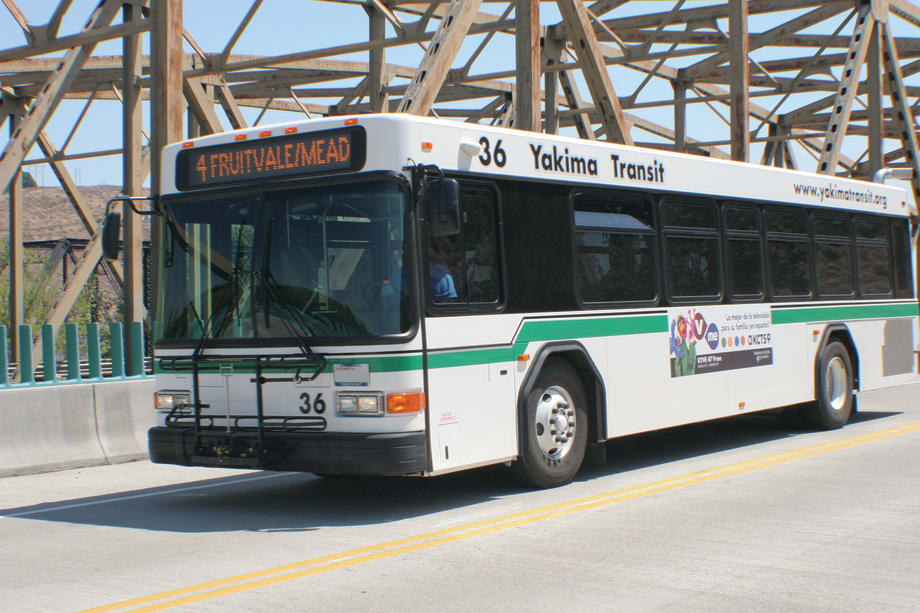
Yakima Transit is one of the agencies in Washington State that may soon opt in to an insurance service that sends reports every time there is activity one of their drivers’ licenses.
Yakima Transit is one of the agencies in Washington State that may soon opt in to an insurance service that sends reports every time there is activity one of their drivers’ licenses.
Transit agencies in the state of Washington will soon be able to obtain more frequent updates on the performance of their drivers both on- and off-duty.
Many of the state’s transit agencies belong to the Washington State Transit Insurance Pool, which is contracting with Charlotte, N.C.-based Data Driven Safety for driver monitoring. The company’s software, Envision, checks drivers’ licenses for public transit agencies and other businesses that use commercial vehicles, such as trucking companies. Data Driven Safety runs a daily check on the licenses of all the agency’s drivers. If there is any activity on a driver’s license, such as a DUI, the insurance company notifies the agency.
Washington-based Yakima Transit is looking into using this service, beginning with its volunteer vanpool drivers.
If all 132 drivers become involved — including the 25 Dial-a-Ride, 60 vanpool and 47 bus drivers — the cost would be anywhere from $132 per month for the basic plan to $462 per month for the more detailed plan.
“We haven’t started doing any of it yet,” Ken Mehin, GM, said. He added that the agency currently checks driver’s licenses every month, requiring a staff member to check every driver’s license. However, the new option runs the check automatically and sends a monthly report with all the activity.
The agency also will need to negotiate with the transit union.
“We need to get our vanpool drivers started, maybe in the next two to three months,” Mehin said. “With the operators, it could be another year or so. It depends on when we can negotiate.”
The new option is seen simply as a safety enhancement and has not been spurred by any particular incident, according to Mehin. “We have outstanding drivers here,” he said.
Yakima Transit provides two weeks of classroom training and three weeks of on-the-road training to its drivers. The classroom training includes company policies, passenger sensitivity and equipment training. The on-the-road training provides route, transfer and other on-road information, according to Mehin.
Yakima Transit operates its fixed-route division and its contractor, Tri-Cities Transportation, operates its Dial-A-Ride division.
More Bus
Biz Briefs: New Flyer Delivers in Columbus, Houston, Beep and Freebee Merge, and More
In this edition of Biz Briefs, we spotlight the latest developments shaping the future of mobility.
Read More →
People Movement: Dan Dipert Coaches Adds Third-Generation Leader, Keolis Names New Valley Metro VP/GM, and More
In this edition, we also cover recent appointments and announcements at the Wabtec, SilverRide, HNTB, and more, showcasing the individuals helping to shape the future of transportation.
Read More →
New York MTA Plans Largest Bus Fleet Upgrade in More Than a Decade
The agency is seeking manufacturers for 650 new CNG buses to replace aging vehicles, improve reliability, and advance its broader fleet modernization strategy.
Read More →
Building a Flexible Path to Transit Electrification
John Hroncich discusses BAE Systems’ modular and scalable approach, lessons learned from decades of real-world operations, and how agencies can identify electrification strategies that fit their fleets.
Read More →
Bus Tech Talk: Keeping Transit Technicians Ahead of the Technology Curve
LA Metro’s Obed Mejia discusses technician training, evolving maintenance technology, fleet replacement, and strategies for getting the most out of today’s transit fleets.
Read More →
Biz Briefs: RIPTA Unveils New Frontrunners, Clevland RTA Adds New Siemens, and More
In METRO's latest installment, we take a look at recent news from Siemens, Prevost, Dodge, and more partnerships making headlines across the transportation sector.
Read More →
People Movement: Holly Arnold Joins Transdev and More
In this edition, we also cover recent appointments and announcements at Pace, CamTran, MCI, and more, showcasing the individuals helping to shape the future of transportation.
Read More →
The High Cost of Transit Buses: Industry Leaders Look to Procurement Reform
Transit leaders and policymakers examine how standardized bus designs, streamlined procurement, and predictable funding could help agencies stretch budgets and deliver better service.
Read More →
The Business Voice Behind Public Transportation
As chair of APTA’s Business Members Board of Governors, Ray Melleady explains how more than 850 business members are partnering with transit agencies to advance funding, innovation, and industry-wide collaboration.
Read More →
From Surviving to Thriving: Building Stronger Transportation Organizations
Bus Business Consultants founder Brian Dickson shares lessons on leadership, organizational health, and creating options for long-term success in a changing transportation industry.
Read More →