



Awash Systems
www.awashsystems.com
The Tower Wash from Awash Systems is a mobile machine with wheels and a spinning brush. Operators walk the machine around the vehicle twice, once to scrub with soap and once to rinse off.
The portable machine doesn’t require any building modifications and has no problem fitting in an existing area; all it requires is an electrical outlet and a water line. Because it relies on manpower, agencies also have more control over the cleaning process.
Awash uses foam brushes instead of the more commonly used polyethylene to clean and polish at the same time. The Tower Wash also features a mirror cutout to prevent any damage to the bus mirrors.
What to Look for When Choosing a Vehicle Wash System
To keep both fleet and image squeaky clean, some key factors to consider are combining brushes with high-pressure water systems; knowing how many vehicles will need to be washed both today and tomorrow, and finding a system that is easy to use and maintain.
by Roselynne Reyes, Assistant Editor
August 15, 2016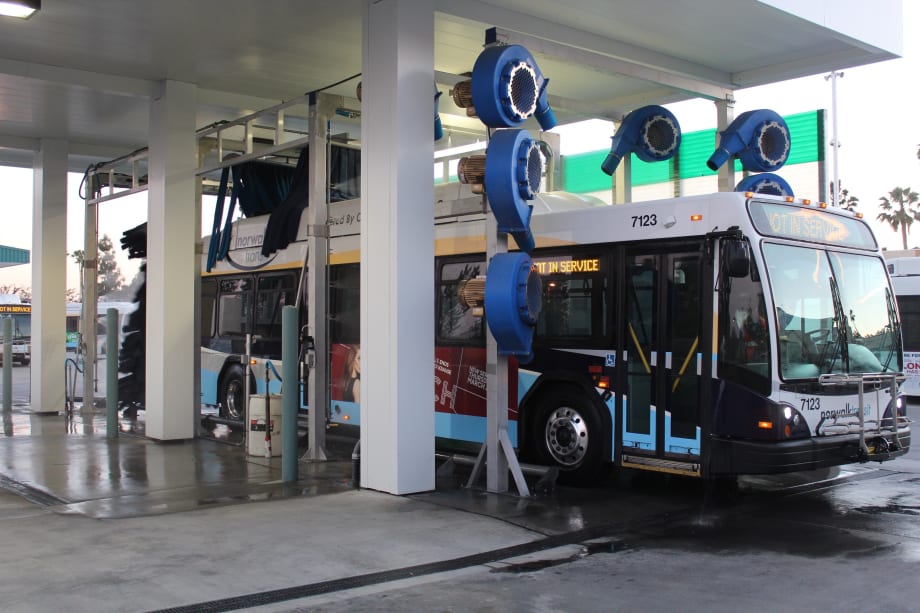
4 min to read
Keeping vehicles clean and presentable is an important part of a transit agency’s image. There are many vehicle wash systems on the market with a variety of different features or methods, making it difficult to determine which is best. METRO spoke to a few vehicle wash companies about what to look for when choosing the best system for your transit agency.
Brushes vs. High pressure
When it comes to getting a bus clean, all of the companies agree that brushes are more effective than using only high-pressure water. Jack Jackson, president of Awash Systems, says that a popular misconception about vehicle wash systems is that brushes can damage and scratch vehicles.
“The dirt that collects on the brushes actually does the scratching, no brush would actually scratch unless it gets embedded with dirt,” he says. “If you use proper amount of soap and proper cleaning methods, your brushes will always stay clean and you never have to worry about scratches. If you use a touchless car wash, you always get that film left over.”
However, most brushes aren’t equipped to deal with bike racks and other attachments that block the brushes. NS Wash has been manufacturing vehicle wash systems since 1961. The company’s newest model is designed specially to deal with bike racks by using a combination of brushes and high-pressure water.
“The bike rack on the front always created a problem to be washed because the brushes cannot really get in there,” Marketing Manager Ivan Salazar says. “We just introduced a new system that tracks the front of the vehicle. The system sprays the front of the bus with high pressure and, as the vehicle moves through the tunnel, will continue to spray the front until it is completely clean.”
Ross and White Co. has been manufacturing large, drive-thru bus wash systems since the 1940s. President Jeff Ross says that most agencies are looking for hybrid machines that combine high-pressure water with brushes.
“Brushes are still the most cost-effective way to get that done and also the least amount of water,” he says. “When you have high-pressure you burn a lot of water, you burn a lot of chemical and you still don’t really get the vehicle as clean as brushes do. That’s why hybrid machinery that combines both brushes and high pressure, really, in my opinion, is the way to go.”
Fleet size matters
When choosing a vehicle wash system, the companies say that fleet size is a big consideration as well. While mobile wash units are convenient and save money, they may not be the best option for an agency with hundreds of vehicles to wash every night.
Christian Murillo, office manager for Bitimec, says that many agencies, especially on the West Coast, continue to rely on hand-washing and may not realize the affordable options for smaller fleets. A number of companies, including Bitimec, offer machines targeted at washing small fleets.
“Of course, for the bigger fleets they’re going to need something more automated,” Murillo says.
Awash Systems manufactures mobile-washing systems that are pulled around the vehicle. Jackson says that some agencies are tempted by higher-priced automated systems, thinking it will work best, but all fleets should consider how much they’re spending per vehicle when choosing the right system.
“Some are buying a million dollar bus wash thinking it’s the most efficient because they can drive the bus through like an automatic car wash,” Jackson says. “Even if it looks like a great machine, if you’re only washing 10 buses a night, do you really need to spend a million dollars?”
Ross adds that agencies should look past their current numbers and think about the future of their fleet, especially when purchasing something with such long-term use.
Easy to Use and Maintain
Salazar says that agencies should take a practical approach and think about which wash system will be the easiest to operate once the system is installed.
“Sometimes the systems can get so complicated with cylinders and electronic controls, they miss the fact that it’s just a bus wash system; it’s not a rocket,” he says. “Look at the system that specifies how much chemical, water and power are required, as well as ease of operation and maintenance.”
NS Wash has spent the past few years updating their machines to conserve water, time and energy. Salazar says that the company’s machines use half the power that they did a decade ago. Bitimec has also made efforts to keep their machines user-friendly.
All of the companies that we spoke to have service technicians available around the country, but Salazar adds that agencies should look for systems that are simple enough to fix without waiting for a technician.
“All the machines work beautifully when they’re first installed, but [agencies] have to make a point that it should be easy to maintain by their own technicians,” he says. “Most transit agencies have mechanics and they are more than capable to service most of our machines. When an issue arises, they can take care of it right away instead of waiting for a technician to show up and save the day.”
Subscribe to Our Newsletter
More Bus
People Movement: Dan Dipert Coaches Adds Third-Generation Leader, Keolis Names New Valley Metro VP/GM, and More
In this edition, we also cover recent appointments and announcements at the Wabtec, SilverRide, HNTB, and more, showcasing the individuals helping to shape the future of transportation.
Read More →
New York MTA Plans Largest Bus Fleet Upgrade in More Than a Decade
The agency is seeking manufacturers for 650 new CNG buses to replace aging vehicles, improve reliability, and advance its broader fleet modernization strategy.
Read More →
Building a Flexible Path to Transit Electrification
John Hroncich discusses BAE Systems’ modular and scalable approach, lessons learned from decades of real-world operations, and how agencies can identify electrification strategies that fit their fleets.
Read More →
Bus Tech Talk: Keeping Transit Technicians Ahead of the Technology Curve
LA Metro’s Obed Mejia discusses technician training, evolving maintenance technology, fleet replacement, and strategies for getting the most out of today’s transit fleets.
Read More →
Biz Briefs: RIPTA Unveils New Frontrunners, Clevland RTA Adds New Siemens, and More
In METRO's latest installment, we take a look at recent news from Siemens, Prevost, Dodge, and more partnerships making headlines across the transportation sector.
Read More →
People Movement: Holly Arnold Joins Transdev and More
In this edition, we also cover recent appointments and announcements at Pace, CamTran, MCI, and more, showcasing the individuals helping to shape the future of transportation.
Read More →
The High Cost of Transit Buses: Industry Leaders Look to Procurement Reform
Transit leaders and policymakers examine how standardized bus designs, streamlined procurement, and predictable funding could help agencies stretch budgets and deliver better service.
Read More →
The Business Voice Behind Public Transportation
As chair of APTA’s Business Members Board of Governors, Ray Melleady explains how more than 850 business members are partnering with transit agencies to advance funding, innovation, and industry-wide collaboration.
Read More →
From Surviving to Thriving: Building Stronger Transportation Organizations
Bus Business Consultants founder Brian Dickson shares lessons on leadership, organizational health, and creating options for long-term success in a changing transportation industry.
Read More →
Finding the ‘Happy Medium’: Optimizing Maintenance Without Sacrificing Reliability
The key to maintenance optimization isn’t doing less work—it’s doing the right work at the right time on the right assets.
Read More →