



How to Maximize Peak Performance from New Transit Maintenance Facilities
Building new maintenance facilities for transit agencies are rarities, but when agencies do build them, it’s critical to design and build to the highest performance possible — these facilities and their efficiencies will live on for decades. As part of preserving limited revenue, agencies are focusing on how efficiently design facilities can help the bottom line.

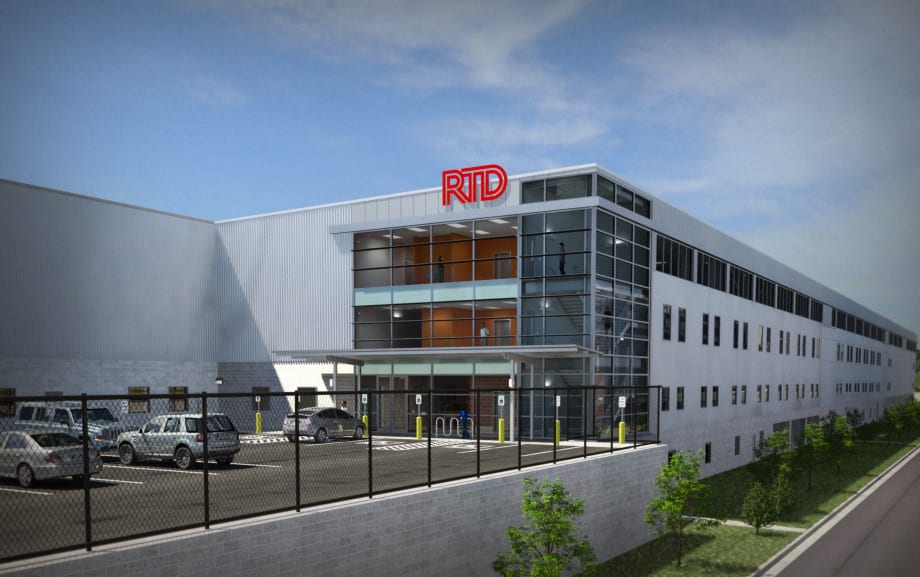
RTD Denver's new commuter rail maintenance facility will feature maintenance areas top-lit by skylights. (Rendering courtesy RTD Denver)
RTD Denver's new commuter rail maintenance facility will feature maintenance areas top-lit by skylights. (Rendering courtesy RTD Denver)
Building new maintenance facilities for transit agencies are rarities, but when agencies do build them, it’s critical to design and build to the highest performance possible — these facilities and their efficiencies will live on for decades.
RELATED:8 Ways to Make Your Transit Maintenance Facility More Efficient
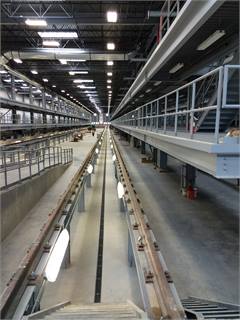
Interior of Denver's rail maintenance bay.
As part of preserving limited revenue, agencies are focusing on how efficiently design facilities can help the bottom line.
1. Start with well-defined requirements. Successfully hitting the target involves defining it. Setting specific energy and water conservation targets — and using established metrics rating systems such as ASHRAE’s 90.1-2007 Standard or LEED’s Rating System for new construction — can help define what’s good, better and best performance versus minimally compliant. For example, the new commuter rail maintenance facility for RTD Denver targeted energy efficiency that is more than 32% more efficient than the reference baseline.
2. All together now. If the project delivery method allows — such as Design-Build or GC/CM — involve the entire owner, design and contractor team in concept design from day one. This will help test the constructability and budget feasibility of various building systems and design strategies.
3. Reducing lighting load. These are 24x7x365 facilities. Daylighting, and in particular skylights, can significantly reduce the building’s lighting load and energy costs over the building’s lifetime. At the new commuter rail maintenance facility in Denver, maintenance areas are top-lit by scores of skylights that provide much of the ambient lighting. To supplement natural daylight, high-efficiently lighting such as LEDs or compact fluorescent should be used to reduce operational costs and the emissions associated with power generation.
4. Heat and cool occupants, not the outdoors. Radiant heating and cooling work best for large volumes such as shop areas and maintenance bays. Radiant heat slabs can be radiated to workers in shop areas without unnecessarily conditioning huge volumes of air found in high-bay maintenance facilities. Maintenance facilities often generate excess heat. Depending on the climate and other occupancies in the building, that excess heat can be captured using heat recovery ventilation units and moved to areas of the building.
5. Look for free money. Engage local utilities for potential incentives. Depending upon the amount of efficiencies, the incentives can be more than six figures! The key is to 1) engage the utilities early and 2) understand what incentives are available and how much upfront incentive payments can help offset the first costs of upgraded systems with higher performance.
6. Keep it cool. Transit facilities cover a lot of ground, literally. Use concrete or other light surfaces with a high solar reflective index to help mitigate the heat island effect. Roofs should be a white or a light color with a Solar Reflectance Index (SRI) value of 78 or higher. Where hardscape paving is not required by operational needs, consider using native or adapted landscaping in lieu of turf to both reduce the heat island effect and reduce irrigation use. Selecting drought-tolerant plantings or plants that are either native or adapted to the region will reduce costs associated with irrigating with potable water.
7. Invest in local materials and businesses. As public agencies that serve local communities and voters, consider using materials that are produced by local industries as appropriate to the building’s function and requirements. For example, if locally produced concrete block is available, that might be better than using steel wall panels from across the country. Procuring locally and regionally no only reduces the energy and emissions from transportation, but also returns money to the local businesses. Many agencies make supporting local small and disadvantaged businesses a priority. If these businesses also sell locally sourced and produced products, it’s a win-win for the community, for businesses and for the environment.
8. Quality indoor environments for productivity. Finally, high-quality indoor spaces with dedicated outdoor air supply (DOAS) that do not recirculate indoor air can help improve the health and productivity of employees. Careful selection of low-VOC paints and low-emitting finishes also help maintain a healthy environment. Since the impact of employee absenteeism is high, investment in these systems and low-emitting finishes can have a lasting positive impact.
In case you missed it...
Read our previous blog, "Idea For Smarter Transit Fares is a Winner"
More Blog Posts
Electrifying transportation: A holistic approach
Clean the grid, electrify transportation, reduce miles-traveled, and ensure access for all.
Read More →
Sustainable transit is about much more than saving the environment
Sustainable transit continues to be a hot topic among city leaders and transit officials, but more often than not, equitability is left out of the conversation.
Read More →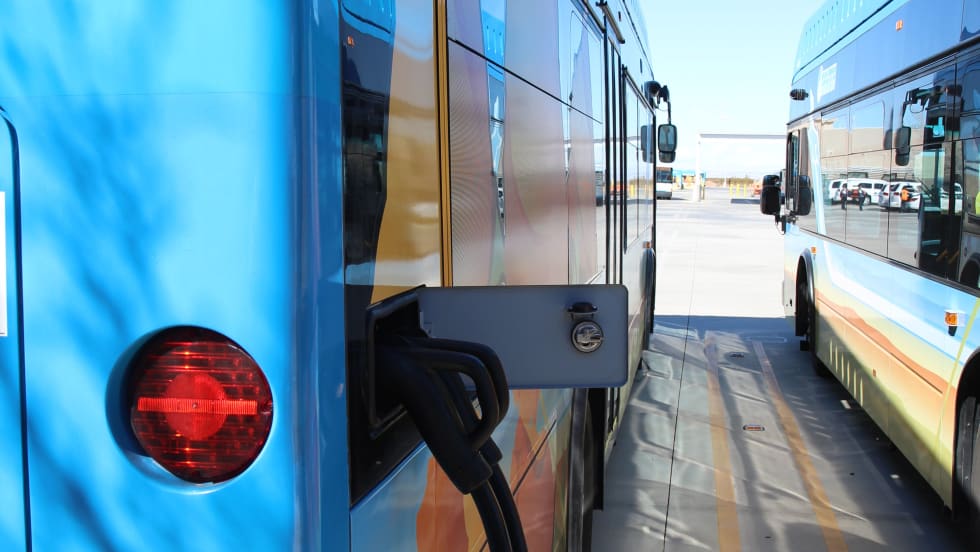
Electric utilities can accelerate electric bus and truck deployment
Electric utilities are an important early investor in charging programs for all EVs, including trucks and buses for several reasons.
Read More →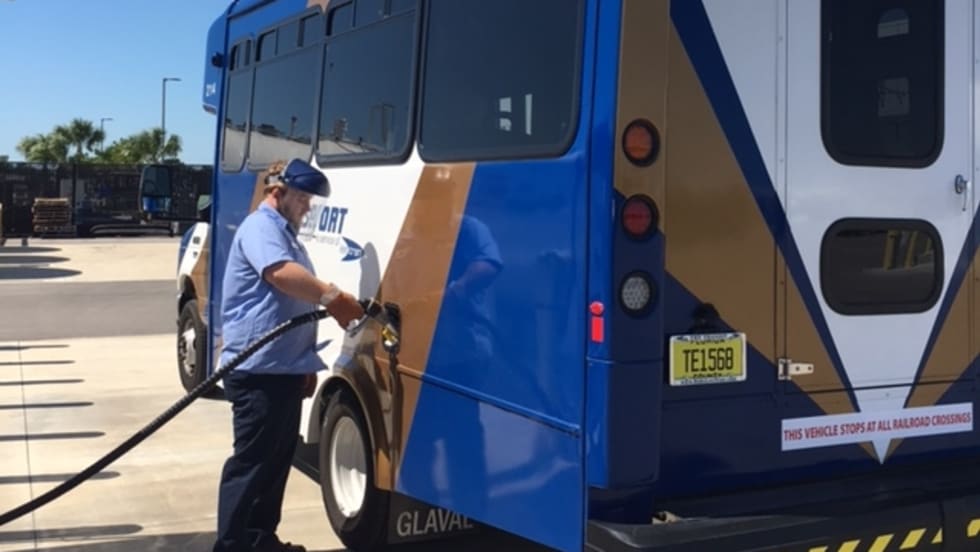
Transit Agencies Could Benefit from VW Funding
Volkswagen was found guilty and agreed to pay up to $14.7 billion to settle allegations of cheating emissions. As part of the lawsuit, Volkswagen is required to establish and fund an Environmental Mitigation Trust, known as EMT. Over the next 10 years, $2.9 billion from the VW settlement will fund environmental mitigation projects that reduce emissions of NOx.
Read More →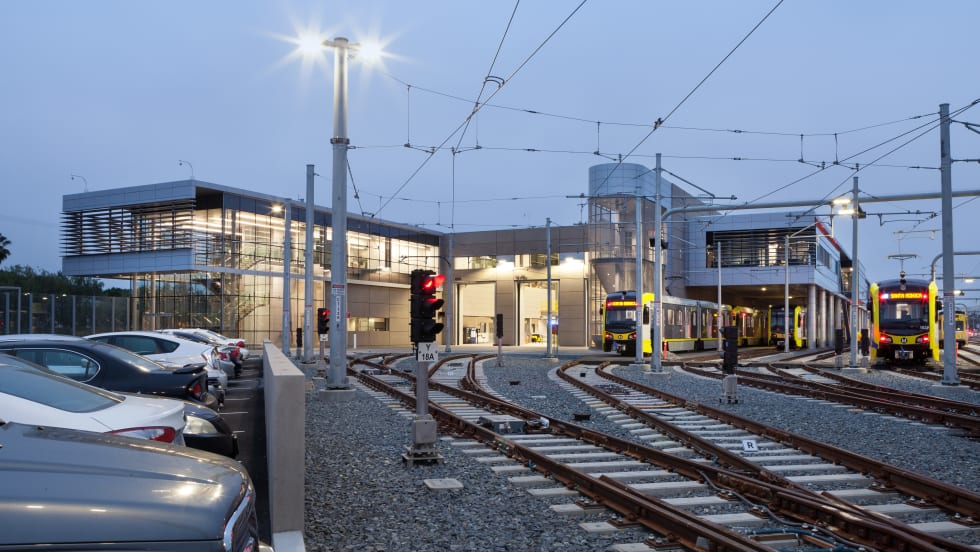
How to pick the right sustainability ratings certification for your transit agency
Rating systems have become the currency of sustainability. The right sustainability ratings system provides an important third-party verification of your agency’s commitment to creating facilities that reduce carbon emissions, save water, create healthier work environments for your employees and have a positive impact on the communities they serve.
Read More →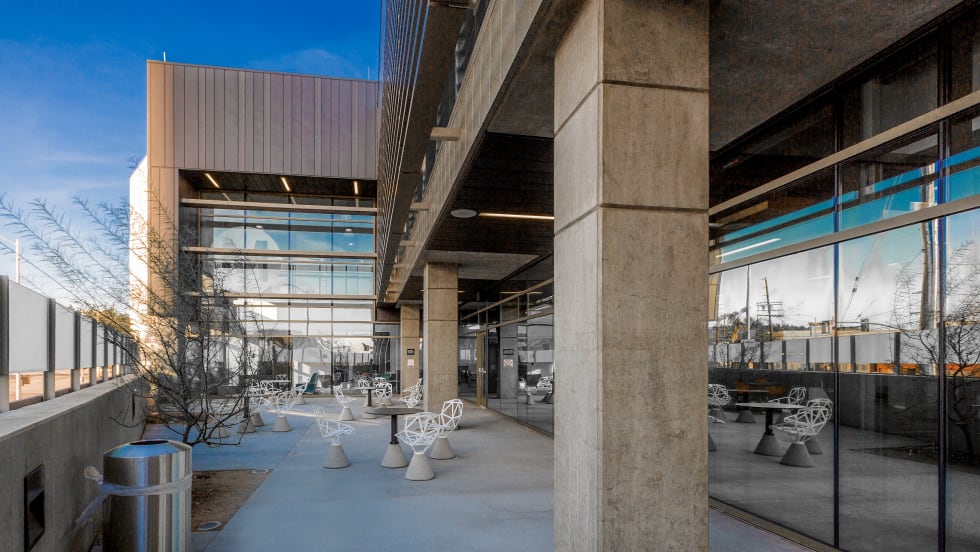
5 Transit Facility Design Elements to Boost Employee Health, Well-Being
Everyone needs to take a mental and physical break at some point in the workday, whether they’ve been concentrating on a computer screen, the road, or the underside of a bus, truck or train car. The tricky part for transit agencies is that each of these activities takes place in different surroundings, lighting conditions, room temperature and noise levels. With that in mind, consider the following factors in your facility design.
Read More →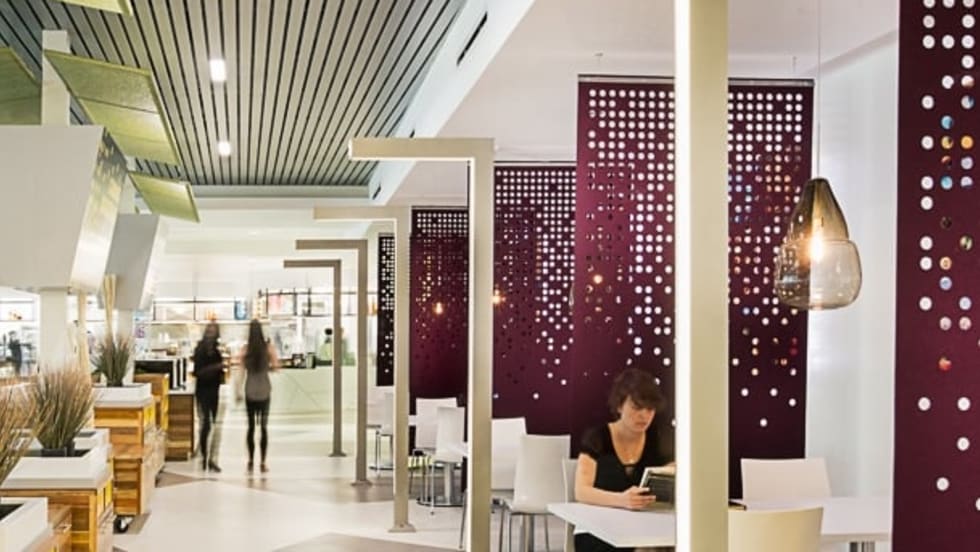
How Lighting Design Can Impact Transportation's Shift Workers
Shifts are long and varying, and facilities are often inadequate for transit employees to truly recharge and stay sharp on the job. But it doesn’t have to be that way. The quality of the environment within facilities can be designed to support shift workers and those with jobs that don’t follow traditional 9-to-5 schedules. Two key elements that can be utilized to support vehicle operator health; creating spaces with adaptability for varied activities and quality lighting that supports the adaptability of the space.
Read More →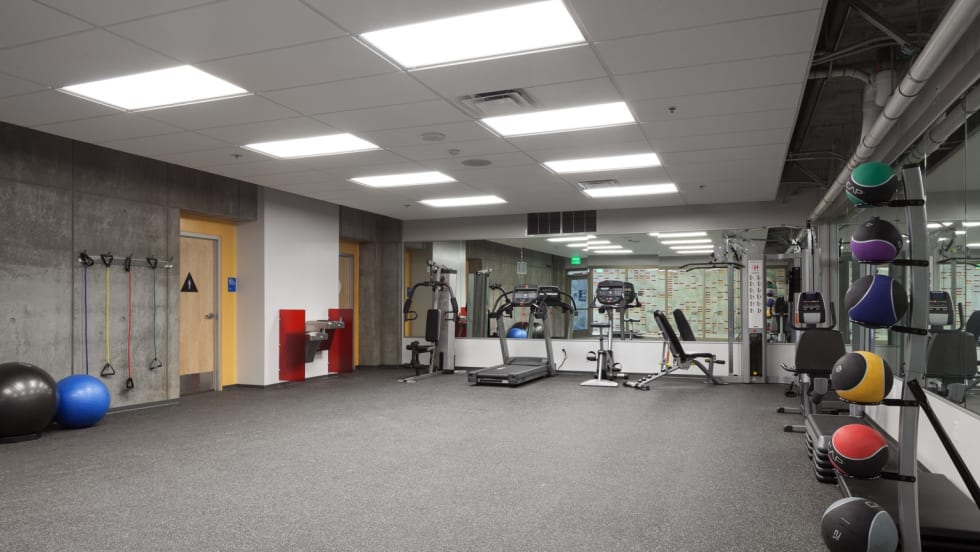
How Transit Facility Design Empowers Employees, Supports Active Lifestyles
Most transit facilities have a break room for operators to use between shifts — typically an artificially lit space with a TV, vending machines, and cafeteria-style tables and chairs. The trouble is, every person has a different way of relaxing. Besides exposure to daylight and nature, key components of wellbeing are social cohesion and a sense of empowerment. The key here then is to empower employees to choose the best way to relieve their own stress around shifts.
Read More →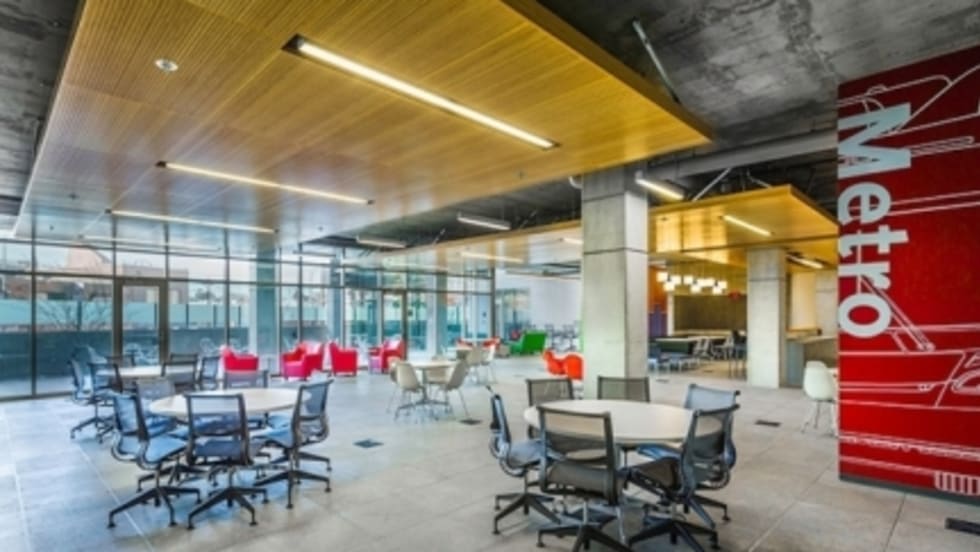
The Benefits of Taking a Leadership Role in Transit Workplace Well-Being
A health and wellness revolution is underway in America. Concurrently, there is a growing public health initiative to promote safer, more accessible recreation facilities and active transit options. Transit agencies are uniquely positioned in the overlap of these two movements. By promoting health and well-being, agencies have an opportunity to show leadership and innovation in a truly holistic approach to total worker health, while benefiting workforce productivity and happiness.
Read More →
Va. transit fleet kicks off major CNG transition
GRTC is a member of the Virginia Clean Cities (VCC) coalition, which over the years has hosted a variety of workshops, webinars and other training opportunities for fleets interested in transitioning to CNG. Another coalition member — the City of Richmond — inaugurated its fleet of CNG refuse haulers in 2011, which set the stage for GRTC’s transition. View the YouTube video to see how VCC helped the city implement its CNG fleet.
Read More →