




“Cities and private companies must take steps to safeguard data and ensure that individual privacy — a foundation of democratic society — is protected.”
Safeguard my personal data — our democracy depends on it
“Cities and private companies must take steps to safeguard data and ensure that individual privacy — a foundation of democratic society — is protected.”
July 31, 2019
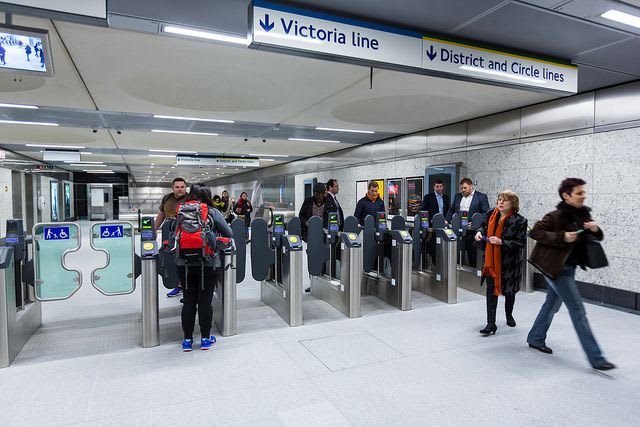
Transport for London's North Ticket Hall at Victoria Station.
Transport for London
3 min to read
Transport for London's North Ticket Hall at Victoria Station.
Transport for London
The importance of privacy was instilled in me at a fairly young age. I remember watching my parents tear off the mailing labels from the covers of their latest issue of Newsweek and other mail that was being recycled or trashed to prevent identity theft. Back in the day, when online shopping was in its infancy, they were also wary of providing their credit card info. Following their example, I used to pay for my early Amazon purchases with a check. This is when they still only sold books. While I’m still concerned about privacy and my data being compromised, unless you’re living off the grid, using everyday technology makes it pretty impossible to not leave a data trail. With the use of mobile phones and apps, credit cards, social media, and public transportation smart cards, the opportunity to collect personal data is omnipresent.
Mining data for human behavior
According to a Massachusetts Institute of Technology (MIT) study, “merging those data sets could provide rich information about how humans travel, for instance, to optimize transportation and urban planning, among other things.” But, the researchers warned, “While the growing practice of compiling massive, anonymized data sets about people’s movement patterns can provide deep insights into human behavior for research, it could also put people’s private data at risk.”
Beginning in July, Transport for London (TfL) will begin collecting passenger’s Wi-Fi connection data from Wi-Fi enabled London Underground stations to understand how people navigate the network to provide better, more targeted information to its customers, according to the TfL. The system will automatically de-personalize data, with no browsing or historical data collected from any devices. Any customers who do not wish for their Wi-Fi connection data to be collected will need to turn Wi-Fi off on their devices to opt out.
Unmasking the anonymous
Anonymized data that contains “location stamps” (geographical coordinates and time stamps) of users are extremely specific to individuals and can be used for nefarious purposes, according to the MIT report. “Anonymized” data can be unmasked, according to the researchers. “Given only a few randomly selected points in mobility datasets, someone could identify and learn sensitive information about individuals.”
According to a TechCrunchreport by Jonathan Schreiber, protestors at a march in Hong Kong, fearing that the governement would track their data and location, waited in line to pay cash for a single-use card for the rail service rather than use the system's smart card.
While I am concerned about "Big Brother" watching, it's the numerous data breaches that are really freaking me out. Most recently, U.S. Customs and Border Protection data was hacked, compromising tens of thousands of photos of license plates and images of drivers taken at border checkpoints, according to The Washington Post. Don’t even get me started on the invasiveness of facial-recognition technology.
Access, management of mobility data
In June, the National Association of City Transportation Officials and the International Municipal Lawyers Association released best practices for the access and management of mobility data. Like the report, I agree that “cities and private companies must take steps to safeguard data and ensure that individual privacy — a foundation of democratic society — is protected.” And, better yet, let customers opt out of providing their data. Either that, or people will go back to paying cash or stop using your service.
Janna Starcic is the executive editor of METRO Magazine.
Subscribe to Our Newsletter
More Blog Posts
How Propane is Keeping EVs on the Road
Propane-powered EV charging offers reliability and scalability without sacrificing emissions goals.
Read More →
2022 Bringing Renewed Energy
Having already been on the road for a couple of conferences, both folks in the public transit and motorcoach sectors have a lot of optimism the ship is starting to correct itself, and it’s good to see all the energy out on the show floors and in the halls.
Read More →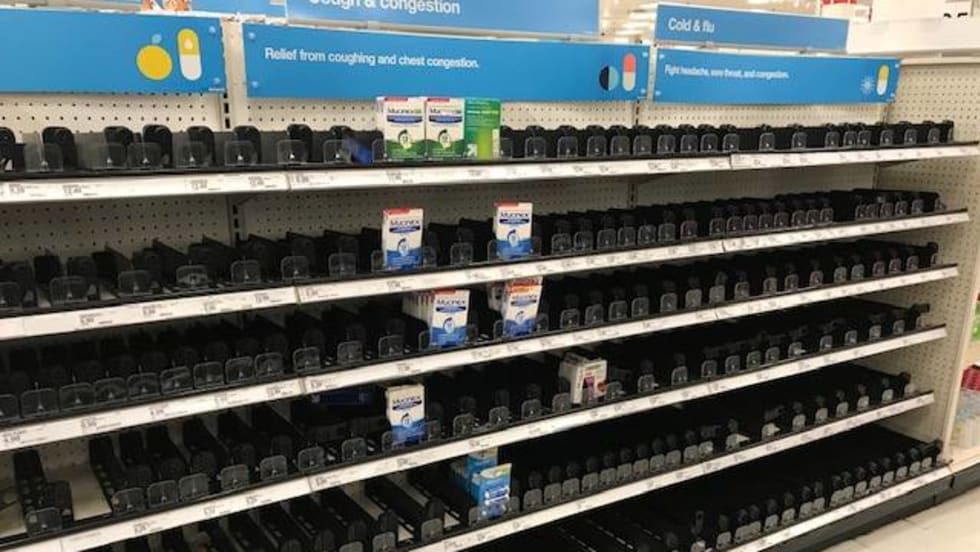
Have you thanked your 'essential' service worker today?
When panic surrounding the coronavirus began to ramp up in my area, I’ll admit, I was right there with everyone else stockpiling up...
Read More →
Leadership should ride transit — 'just like us'
Recently, media outlets in Boston were all atwitter when Massachusetts Gov. Charlie Baker was spotted riding the T.
Read More →
Transit can no longer ignore the benefits linked to offering free fares
Six years ago, Tallinn, the capital of Estonia, became “the world's first" to introduce free public transport for all its residents.
Read More →
Fighting against human trafficking is everyone's duty
U.S. traffickers have been shown to use all modes of transportation to find their next victims. Initiatives are being placed to combat trafficking and empower operators to act.
Read More →
Focusing on ‘abilities’ gives those with disabilities a ‘sense of purpose’
I recently learned about a program offered by Transport for London that provides “people with mild to moderate learning disabilities and those on the autism spectrum the chance to gain skills and work experience.”
Read More →
Come Together to Shut Down the Shutdown, Fund a Transit Bill
As I write this, we are a few days away from another potential government shutdown if negotiations on border security are not hammered out.
Read More →
New Year, New Hopes for the Motorcoach Industry
Hiring and retaining drivers is the greatest challenge facing motorcoach operators, according to 70% of respondents of METRO Magazine's 2019 Motorcoach Survey. The public transit industry is not immune to this issue either.
Read More →
When voting 'yes' says 'no' to funding for transportation
I’m crossing my fingers that by the time you read this, the proposition repealing California’s gas tax and vehicle fees (SB 1) will have failed.
Read More →