



Transit agencies invest in propane vehicles
Propane autogas, the term used for propane when used in an on-road engine, has both economic and environmental benefits.
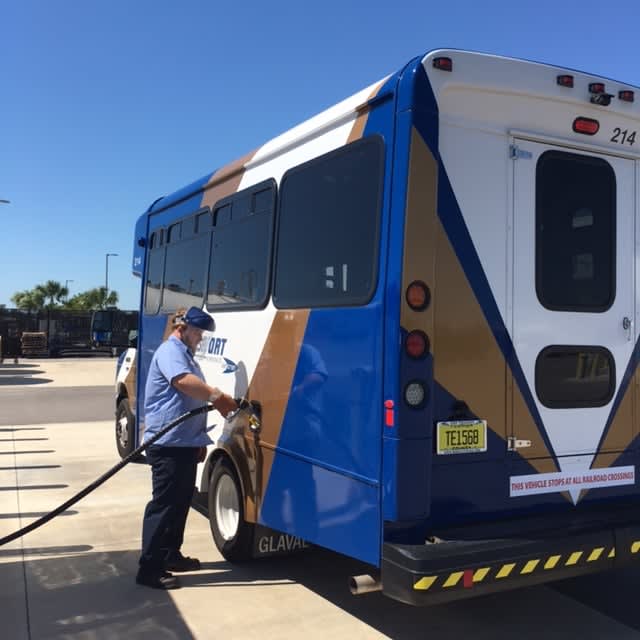
Propane autogas, the term used for propane when used in an on-road engine, has both economic and environmental benefits.
ROUSH CleanTech

Propane autogas, the term used for propane when used in an on-road engine, has both economic and environmental benefits. ROUSH CleanTech
Transit fleets looking to decrease their emissions, save budget, and choose a sustainable fuel turn propane autogas. Across America, dozens of transit agencies operate these clean advanced technology vehicles, from Florida’s Broward County Transit and Lee County Transit to Michigan’s Suburban Mobility Authority for Regional Transportation and Flint Mass Transportation Authority to California’s San Diego Metropolitan Transit System.
Propane Transit Models
Many manufacturers offer propane autogas vehicles. For example, Ford prepares its medium-duty vehicles with engines prepped from the factory for gaseous fuels like propane autogas. ROUSH CleanTech then equips the Ford E-450 or E-550 chassis with the propane fuel system, which includes two propane tank options: the aft-axle tank with 41-usable gallons and the extended-range, 64-usable gallon tank. The Ford E-450, with up to 14,500 lbs. GVWR, has completed Federal Transit Administration’s New Model Bus Testing Program (Altoona Testing) and can be purchased using a transit agency’s FTA funds.
These bus options can be upfitted to meet the transit agency’s specifications.
Propane Autogas Benefits
Propane autogas, the term used for propane when used in an on-road engine, has both economic and environmental benefits.
On average, propane autogas costs about 50% less than diesel and up to 40% less than gasoline. In addition to fuel savings, transit fleet operators experience lower costs for oil changes and routine maintenance due to the fuel’s clean-burning properties. Propane vehicles have no cold-start issues and warm up quickly. Transit fleet operators report saving time and money on equipment and staff. And the engines are very quiet, allowing for drivers to focus on the road ahead.
Propane autogas has the added environmental benefit of reducing emissions. Vehicles that run on propane autogas emit fewer greenhouse gases, smog-producing hydrocarbons, and particulate emissions than conventional fuels.

Propane Fueling Options
Propane autogas fueling infrastructure costs less than any other fueling station — conventional or alternative. An agency can install an onsite propane station, contract with a propane supplier to perform fueling services, or fill up at a public station.
Many propane vehicle manufacturers will connect owners directly with propane providers. These professionals specialize in helping fleets choose the right fueling option based on fleet size, routes, budget, and facility space. Many fleet operators choose to install onsite stations. This allows transit agencies to install fueling infrastructure on their property.
Some agencies opt for mobile fueling. In this scenario, the propane supplier comes to an agency location and fuels vehicles onsite with a propane delivery truck.
Plus, there are public stations. There are thousands of propane autogas fueling stations across the U.S. and stations in every state. A listing of public propane stations can be found at the U.S. Energy Department’s Alternative Fuels Data Center.
An Abundant, Domestic Fuel
The U.S. is rich in propane and using this domestic resource will help insulate fleets from the instability of foreign oil prices. Currently, more than 90% of U.S. propane supplies come from domestic production, making propane autogas a readily available alternative to imported oil. By fueling with propane, a fleet can extend its positive impact on the environment and our nation while saving even more budget.
For transit agencies, this advanced clean transportation solution creates the opportunity to transition fleets to clean, cost-effective propane autogas.
Todd Mouw is president of ROUSH CleanTech
More Bus

CTDOT Taps STV for Electric Bus Facility Design
The firm will work with CTDOT and RVT to define the facility layout, operational requirements, and long-term flexibility for RVT’s growing electric fleet.
Read More →
Ford to Leave JTA After More Than 10 Years as CEO
He plans to continue his work advancing innovative mobility solutions to improve the quality of life in communities across the nation. He did not announce specific plans.
Read More →
Transit Leaders Push for Bus Procurement Reforms to Reduce Costs
Industry experts said reducing unnecessary bus customization and modernizing purchasing practices could help transit agencies buy more vehicles, improve reliability, and make better use of limited funding.
Read More →
Executive Order Aims to Improve Transit Access Across California
The order directs state agencies to streamline transit project delivery, improve coordination, and expand access to bus and passenger rail services across California.
Read More →
Biz Briefs: Endera Delivers to California, Safety Vision Teams with San Antonio's VIA, and More
From manufacturers and suppliers to transit agencies and motorcoach operators, these updates offer a snapshot of the projects, partnerships and business moves driving the industry forward.
Read More →
VIA's Silver Line Clears Environmental Review, Advances Toward Construction
The VIA Rapid Green Line is currently under construction, with service expected to begin in April 2028.
Read More →
Modernizing Mobility with CharterUP CEO Armir Harris
From digital transformation to evolving customer demands, CharterUP's Armir Harris offers his perspective on the transportation industry's next chapter.
Read More →
CTTC Enhances Transit Workforce Pipeline Through New Partnerships and Leadership
The group's latest initiatives focus on developing talent, expanding training opportunities and addressing workforce needs across the transit sector.
Read More →
Biz Briefs: Montréal Debuts Nova Electric Buses and More
In this edition of Biz Briefs, we spotlight the latest developments shaping the future of mobility.
Read More →
The Hidden Cost of Fuel Data Inaccuracy in Public Transit Fleets
In today's transit environment, accurate fuel and mileage data are critical to reducing costs, minimizing downtime, and improving fleet performance.
Read More →