




Keep Reading: Bus Coalition Leaders Push to Protect Transit Funding in Critical Reauthorization Year
Transit Leaders Push for Bus Procurement Reforms to Reduce Costs
Industry experts said reducing unnecessary bus customization and modernizing purchasing practices could help transit agencies buy more vehicles, improve reliability, and make better use of limited funding.
July 6, 2026
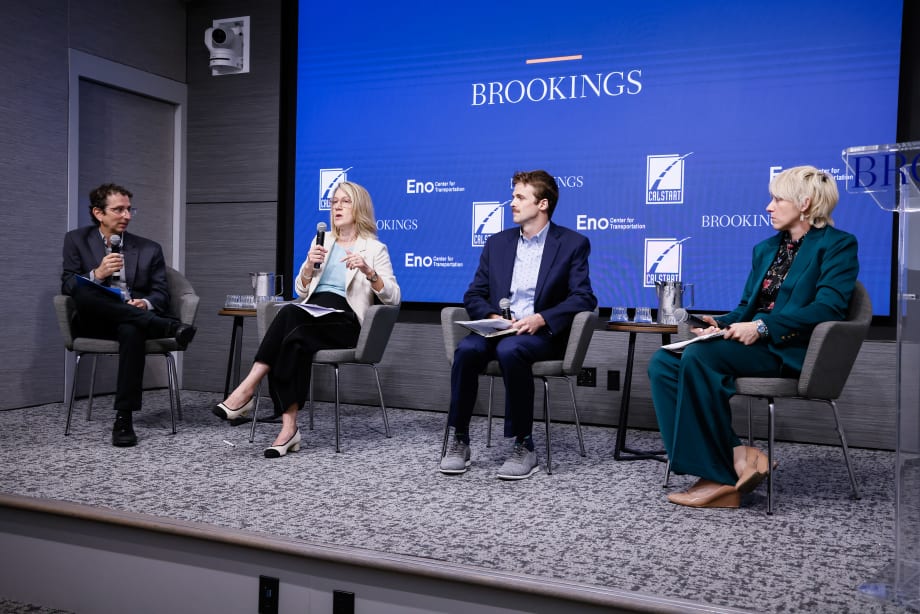
L to R: Philip Plotch, principal researcher and senior fellow at Eno Center for Transportation; Lisa Jerram, senior director of bus operations and new vehicle technologies at the American Public Transportation Association; Michael Dorgan, policy manager at the Center for Transportation and the Environment; Holly Arnold, administrator at the Maryland Transit Administration.
Credit:
Paul Morigi
2 min to read
- Transit experts advocate for reducing unnecessary customizations in bus procurement to lower costs.
- Modernizing purchasing practices is suggested to enable agencies to acquire more vehicles and enhance service reliability.
- Reforming bus procurement could lead to better allocation of limited transit funding resources.
*Summarized by AI
Transit industry leaders are urging reforms to bus procurement practices, arguing that reducing unnecessary customization and modernizing purchasing processes could help agencies stretch limited funding and improve service reliability.
During a Brookings Institution event, in partnership with CALSTART, former Maryland Transportation Secretary Paul Wiedefeld, U.S. Rep. Maxwell Frost (D-FL), and representatives from Eno Center for Transportation, the American Public Transportation Association (APTA), Maryland Transit Administration (MTA), and the Center for Transportation and the Environment discussed the factors driving higher bus costs.
Speakers said that extensive bus customization, declining competition among manufacturers, and inconsistent procurement practices have increased vehicle prices and delivery times. Frost highlighted bipartisan legislation directing the Government Accountability Office to study rising bus procurement costs and identify opportunities for reform.
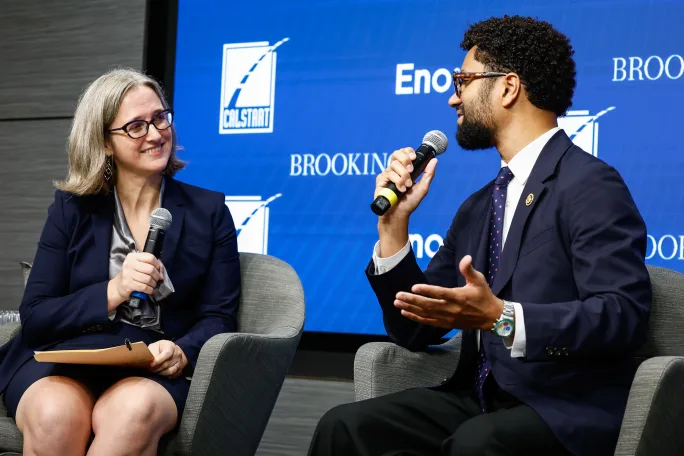
U.S. Rep. Maxwell Frost (right) highlighted bipartisan legislation directing the Government Accountability Office to study rising bus procurement costs and identify opportunities for reform.
Credit:
Paul Morigi
Panelists also stressed that stable, predictable funding would allow transit agencies to plan larger, multi-year bus purchases that can lower costs and improve fleet replacement schedules.
MTA Administrator Holly Arnold said her agency has reduced unnecessary bus customization, saving about $17,000 per vehicle while maintaining operational needs. Those savings can be redirected toward additional buses and system improvements.
According to Eno, the event also comes during the current reauthorization cycle for surface transportation. The current bill passed through the House’s Transportation and Infrastructure Committee includes provisions to lower bus costs.
Rather than eliminating customization entirely, panelists advocated for greater use of standardized specifications, shared procurement contracts, and stronger collaboration among transit agencies, manufacturers, and federal policymakers.
"We're doing this so riders can get from point A to point B," Arnold said, noting that more affordable buses ultimately mean more reliable and frequent transit service.
More Bus

More Than a Summer Job: Building the Next Generation of Transit Talent
The Delaware River Port Authority and PATCO have transformed their internship program into a hands-on professional development experience that introduces students to the breadth of transportation careers — and creates a pipeline for future employees.
Read More →
LA Metro Board Awards 220 Battery-Electric Bus Contract to ENC
The contract, which is the largest base award of battery-electric buses by a U.S. transit agency, will be built in Southern California, sustaining good jobs as LA prepares to welcome the world in 2028
Read More →
Public Transit Conference Returning to GFX in 2027, Call for Papers Now Open
The Call for Papers is now open, allowing transit agency professionals and industry experts to help shape the PTC educational program by submitting session ideas for consideration.
Read More →
Indian River Transit’s Community-Focused Approach Earns National Recognition
Named APTA’s 2026 Outstanding Public Transportation System in its size category, Florida’s Indian River County transit system continues to grow ridership through fare-free service and a focus on evolving community needs.
Read More →
ENC Lands MATA Contract and More in Biz Briefs
In this edition of Biz Briefs, we spotlight the latest developments shaping the future of mobility.
Read More →
From Surviving to Thriving: Building Stronger Transportation Organizations
Bus Business Consultants founder Brian Dickson shares lessons on leadership, organizational health, and creating options for long-term success in a changing transportation industry.
Read More →
Everett Transit, Community Transit Outline Consolidation Agreement
The proposed agreement calls for a 50% increase in bus service in Everett, a new microtransit zone, continued paratransit service, and the transfer of Everett Transit operations to Community Transit.
Read More →
SEPTA Details Accelerate Vision for Transit System
The plan outlines investments in trolley modernization, new Metro and Regional Rail vehicles, accessible stations, and more frequent bus and rail service.
Read More →
Report: Transit Bus Manufacturing Supports 34,100 Jobs, $5.1B in GDP
The “Buses Mean Business” report examines the transit bus manufacturing industry’s economic footprint, supply chain, and rising demand for vehicle replacements.
Read More →
Biz Briefs: New Flyer Delivers in Columbus, Houston, Beep and Freebee Merge, and More
In this edition of Biz Briefs, we spotlight the latest developments shaping the future of mobility.
Read More →