




RELATED: Calif's BBB taps Lyft to transform Dial-A-Ride program
Laketran CEO learns realities of relying on transit
A construction accident left Ben Capelle with a severely broken leg and unable to drive for over two months.
August 29, 2019
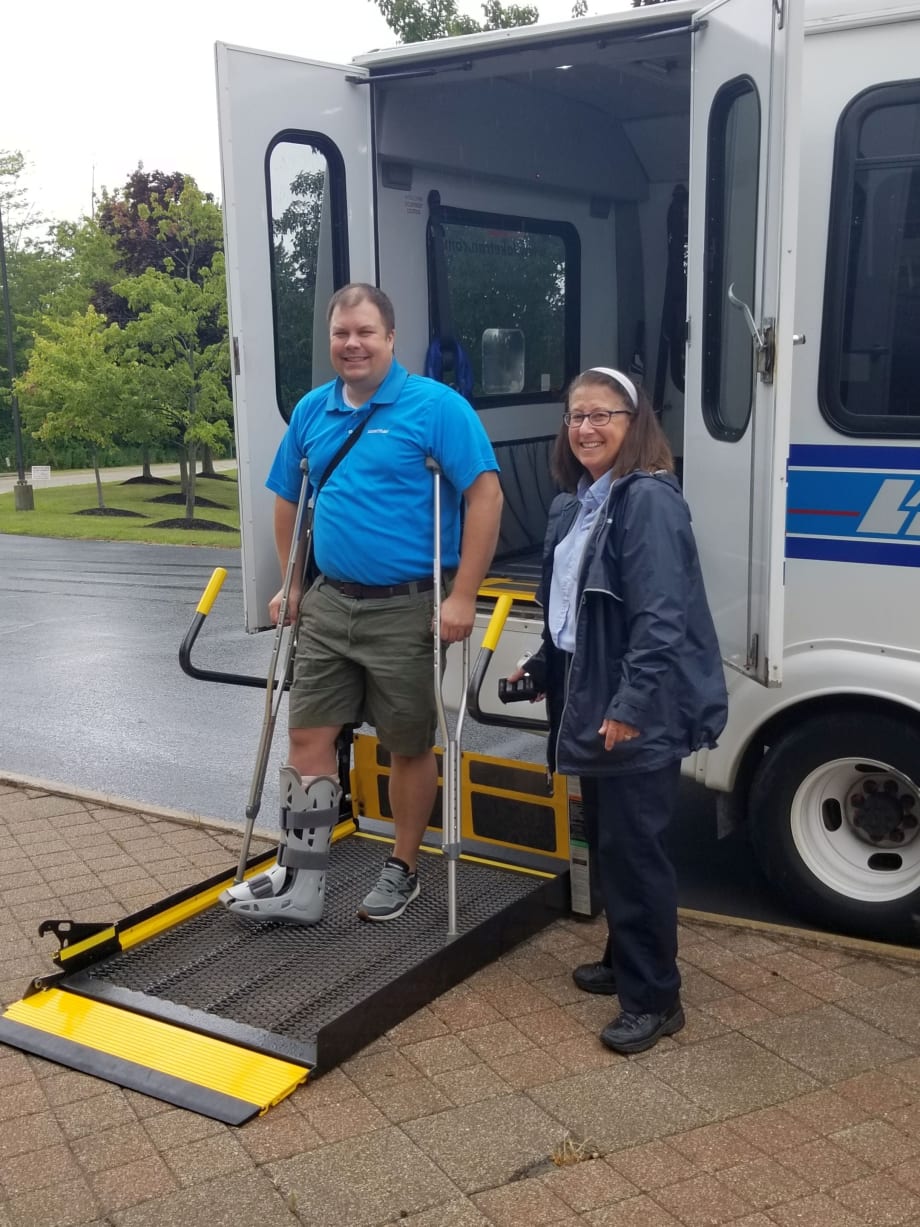
A construction accident at his home left Laketran CEO Ben Capelle (shown left with driver Patty Donner) with a severely broken leg and unable to drive for over two months, becoming completely reliant on public transportation.
Laketran
4 min to read
A construction accident at his home left Laketran CEO Ben Capelle (shown left with driver Patty Donner) with a severely broken leg and unable to drive for over two months, becoming completely reliant on public transportation.
Laketran
Laketran CEO, Ben Capelle relocated to Lake County when he was promoted to lead the Lake County public transit agency in 2017. While Capelle is a veteran transit rider when traveling around the region, it is usually been by choice.
This summer a construction accident at his home left him with a severely broken leg and unable to drive for over two months, becoming completely reliant on public transportation.
“I am 37 and live alone. When I first heard I would be unable to drive for two months, my first thought was I will have to rely on Dial-a-Ride and was thankful to live in Lake County. If I still lived in Cleveland, there would have been no way for me to get to work and I would have been isolated in my home for over two months,” shared Capelle who had moved from Cuyahoga County to be closer to work.
“All of my friends and family work and could help out with an occasional trip, but there was no one to help me get around every day.”
For the first two month of Capelle’s recovery, he was completely reliant on Dial-a-Ride.
Dial-a-Ride is Laketran’s door-to-door service primarily used by seniors and people with disabilities, but is available to the general public, which is unique to Lake County. Most transit systems restrict paratransit service eligibility to people with disabilities and in some communities is not even available to seniors.
“I am a perfect example as to why it’s important we provide Dial-a-Ride to everyone. You never know when you’re going to need it, and everyone deserves to be able to get around their community — to get to work, doctors, or wherever they need to go.”
“I’ve always been very proud of the services we provide to Lake County,” shared Capelle. “But truly relying on the service adds a new perspective. In many communities, I would have been unable to continue working during my recovery, because at 37 years old and not being permanently disabled, I would not qualify for Dial-a-Ride services they way services are typically offered by other transit systems. Because Laketran provides Dial-a-Ride access to the general public, I was able to continue working through my recovery.”
Capelle also took this opportunity to see how our service affects customers’ daily lives.
“I immediately told the Laketran employees that I wanted no special treatment and I will book my rides and pay a fare just like every other customer.”
“It wasn’t quite “Undercover Boss” but I definitely learned a lot about our service, when using it first hand,” shared Capelle.
“I’ve worked for many transit systems, both public and private providers, and I can confidently say Laketran has the most professional and caring drivers in Ohio.”
“The interaction I had with customers was time well spent. Almost everyone on board I talked to was completely dependent on Laketran to get around because they do not drive so they use Laketran to do their shopping, get to work or doctors. Many customers shared how they get tired relying on friends and family to get them around and riding Laketran gave them more options and independence.”
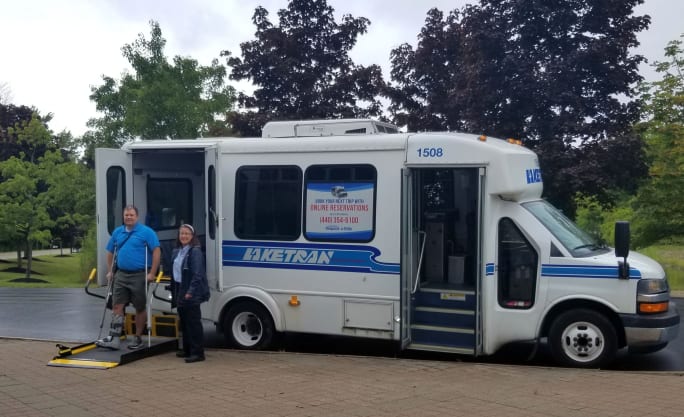
Dial-a-Ride is Laketran’s door-to-door service primarily used by seniors and people with disabilities. Laketran
“But there were some challenges too. Laketran prioritizes medical and work trips, so I had to try five times to find a bus available to get my hair cut and it took nearly a month.”
“I know we’re operating beyond our capacity and there were times I had to get picked up an hour before I had to get to work or it took that long to get home, so I learned how to wait and fill some downtime.”
Customers shared similar stories
“Our Dial-a-Ride ridership has grown 18% over the past four years. With the growth of our aging population here in Lake County, we do not see it slowing down anytime soon. And that’s what our upcoming levy is going to fix.”
“I was able to be part of our test group for our new Request-a-Ride website which is one of the ways we’re trying to get the service to be more efficient. Dial-a-Ride customers can now schedule or cancel Dial-a-Ride reservations online and pay for their trips at the same time. Plus, you can now see your bus on a real-time map when it’s on its way to pick you up.”
“I’ve been in the industry for 18 years and never thought I was going to be someone completely dependent on a bus to get me where I need to go. You just never know. One incident can change your life and it can happen at any time to anyone – and while not everyone uses Laketran every day, I hope people understand that it’s important to be there when you do need it.”
More Management

METRO Opens Submissions for 2026 Motorcoach Awards
Nominations are now being accepted for METRO Magazine’s Operator of the Year and Innovative Operator of the Year awards.
Read More →
New York MTA Advances Final Contract for Second Avenue Subway Expansion
Contract Four is the largest in the Second Avenue Subway Phase 2 project and includes construction of station infrastructure, tracks, and signals for the subway expansion, MTA officials said. Work on Contract Four will begin in 2027.
Read More →
Transit Agencies Highlight Safety Gains at National Summit
Leaders from 15 major transit systems shared crime-reduction results and safety initiatives while discussing the role of continued federal support.
Read More →

NITA Names New Leadership, Expands Reduced-Fare Program at First Board Meeting
The new regional transit authority appointed its first board chair and interim executive director while extending reduced fares across CTA, Metra, and Pace for eligible riders.
Read More →
Beyond the Checklist: A Structured Approach to Transit Maintenance
Reliability-Centered Maintenance helps transit agencies move beyond routine checklists to focus limited resources on the assets and failures that have the greatest impact on safety, reliability, and service.
Read More →
APTA 2026 Nominating Committee Selects Leadership Slate, Names Chair and Vice Chair Nominees
Leadership changes will help shape the association’s priorities and its representation of the transportation industry during the 2026–2027 term.
Read More →
DART Launches Major Security, Fare Enforcement Initiative
The 90-day demonstration will deploy coordinated security teams at five light rail stations while testing controlled access and gathering data to guide future investments.
Read More →
Sponsored•September 9, 2026
Advancing Fare Collection Through Technology and Innovation
Learn about delivering 1300 gates at 91 stations while managing fare evasion. Explore the large scale deployment, solution customization and real-world results that affect the region. Prepare for deployment in your region now.
Read More →
Game Day in Motion: Moving Millions During the 2026 World Cup
Between packed transit stations and team motorcoaches, see how agencies and operators across North America tackled the transportation demands of the 2026 FIFA World Cup.
Read More →
Surface Transportation Extension Averts Shutdown, Leaves Transit Funding Gap
The stopgap keeps federal transportation programs moving, but missing advance funding could complicate the transit and rail projects agencies are planning next.
Read More →